
Why John Williams’ Theme in Black Adam Spelled a New Dawn for Henry Cavill’s Superman
It was a moment that practically broke the internet. In late 2022, audiences sitting through the credits of Black Adam were jolted upright by a familiar, soaring melody—one that hadn’t echoed in a live-action DC film for decades. There he was, Henry Cavill, back in the red cape, but the real jaw-dropper wasn’t just his return. It was the music. Not the brooding, metallic pulse of Hans Zimmer’s Man of Steel score, but the unabashedly triumphant blast of John Williams’ classic Superman theme. In that instant, the DCEU seemed to whisper a long-awaited promise: hope was finally on the table.
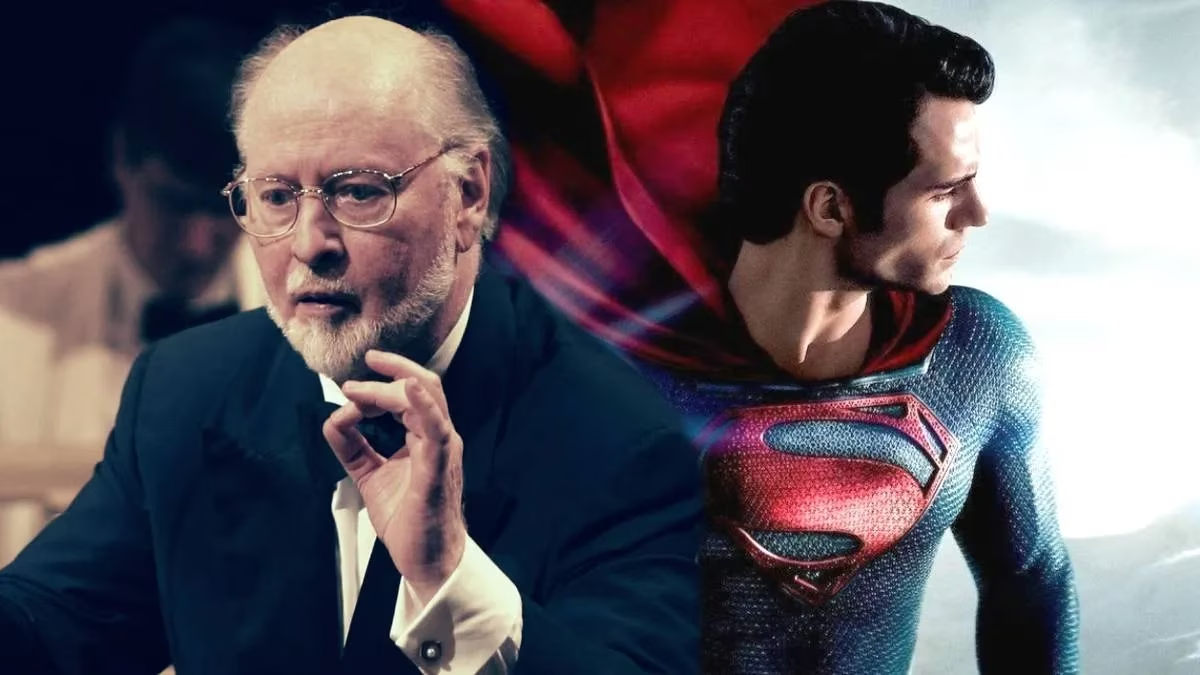
By 2026, we can look back and say, “Well, that was a whole thing.” Cavill’s reappearance wasn’t just a cameo—it was a mission statement. For years, the DC Extended Universe had been a bit of a mixed bag, a rollercoaster that sometimes forgot to bring the thrills. The Snyderverse gave us a Superman who was more tortured demigod than beacon of light. And sure, it was a gutsy character study, but it often missed the forest for the trees: Superman is supposed to be the guy who makes you believe a man can fly. When the Black Adam post-credits scene dropped, it was like a breath of fresh air—or better yet, a shot of pure popcorn optimism straight to the veins. The choice of Williams’ theme was the ultimate tell, and savvy fans understood immediately that a new chapter was turning.
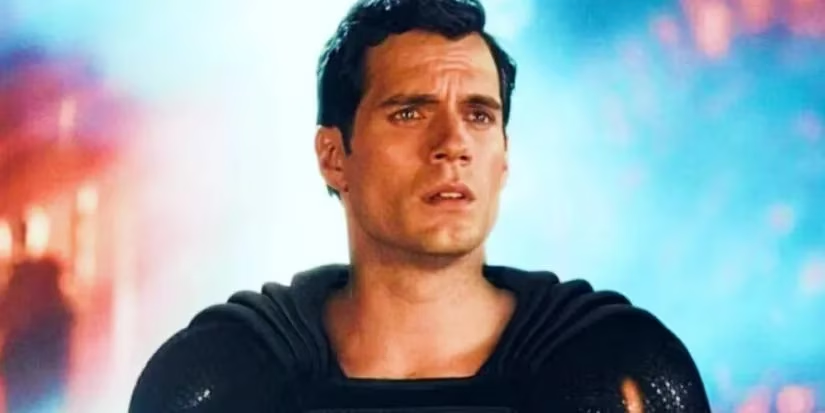
Now, let’s get down to brass tacks. Why would the bigwigs at Warner Bros. Discovery swap out Zimmer’s modern gravitas for a tune that’s older than most of the target audience? Well, there are two major reasons that are about as clear as a bell. First off, John Williams’ theme is simply iconic—it’s the real deal. Even your grandma who’s never read a comic book in her life can hum those opening bars. It’s the sound of Superman, full stop. In a cinematic landscape where nostalgia sells like hotcakes, leaning into that universal recognition was a no-brainer. You want to get butts in seats? Play the hits. The general movie-going crowd might not whistle Zimmer’s introspective piano and brass; they want the goosebumps that come with that instant, joyful fanfare.
But there’s an even bigger fish to fry here. The second reason is all about signaling a tonal 180. Using Zimmer’s theme would have tied Cavill’s future directly to the previous, often divisive iteration. It was music for a Superman still figuring out his place, a lonely god wrestling with humanity’s fear. Williams’ score, on the other hand, is the anthem of someone who has already figured it out—it’s a confident, “I’m here to help, and we’re going to win” kind of vibe. By 2022, Henry Cavill himself was dropping hints on social media about a more uplifting, comic-accurate Superman, one who embodies the very best of us. And let’s be real, after years of dreary skies, fans were absolutely starving for that. The switch in the score was music to our ears, quite literally, that the character was getting a soft reboot, dusting off the gloom and stepping into the light.
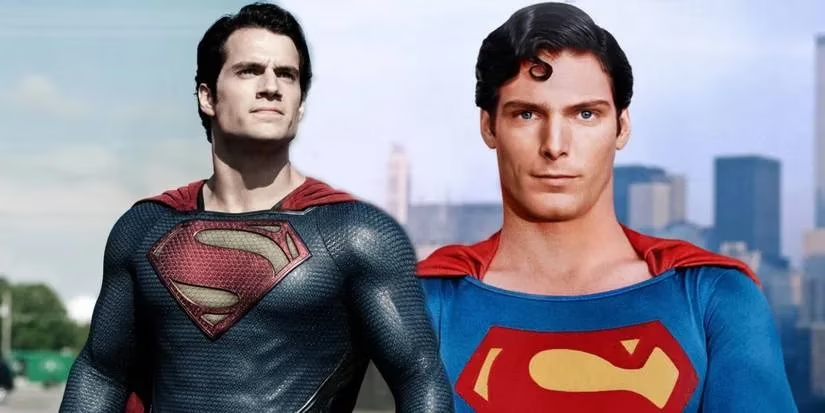
It’s no secret that Hans Zimmer’s score was a masterpiece for its time. When Man of Steel kicked off the DCEU in 2013, Zimmer crafted a quietly hopeful but intensely serious sound. It matched the film’s “first contact” approach, a slow burn that built to a magnificent, thunderous crescendo during Kal-El’s first flight. But Superman isn’t just about the slow build—he’s the payoff. He’s the sunrise after a long night. The general consensus by 2026 is that while Snyder’s deconstruction was a valid experiment, the franchise desperately needed a course correction. What better way to hang a lantern on that shift than to juxtapose a score that whispered potential with one that shouts triumph? Williams didn’t just compose a theme; he bottled lightning. His 1978 melody is unapologetically positive, a cinematic grin that dares you not to smile. It’s the perfect vehicle for a Superman who is, once again, the world’s greatest boy scout—and proud of it.
Diving a little deeper into the filmmaking craft, you can’t overstate the power of a soundtrack. A movie isn’t complete until the music seals the deal. Lorne Balfe, the mastermind behind Black Adam’s score, along with DC’s top brass, would have weighed every option. The decision to drop the needle on Williams was deliberate, baked into the scene’s DNA. Imagine, for a second, that same scene with Zimmer’s slow-burn rhythm. Would it have had the same immediate, electrifying effect? Hardly. A short post-credits stinger demands an emotional gut-punch, and Williams delivers that in spades. It’s a sonic shorthand: the mission has changed. The man of tomorrow was finally going to be the man of today, a symbol of aspiration instead of alienation.
Of course, back in ’22, nobody knew for sure if Williams’ theme would stick around for the long haul. Would a full Cavill-led Man of Steel 2 use the classic score or something entirely new? As it turned out, the powers that be embraced the shift wholeheartedly. The theme became a recurring motif in Cavill’s subsequent appearances, a core piece of the rebooted DCEU’s identity. It was a genius move that appeased lifelong fans while giving the casual viewer a warm, fuzzy hug of familiarity. At the end of the day, whether you were a die-hard fanboy who cried at the first note or a newbie just along for the ride, one thing was certain: Henry Cavill’s Superman had finally returned. And for the first time in forever, it truly felt like a celebration.
Years later, scrolling through forums and retrospectives, the consensus remains: the choice of John Williams’ theme over Hans Zimmer’s wasn’t just about brand recognition. It was a promise, wrapped in a melody, that the next chapter would be a brighter one. And boy, did it deliver.
Comments