
Why 1960s Film Soundtracks Still Slap Harder Than Your Modern Playlist
Flash back to 2026. Yes, the same year flying cars were supposed to exist but instead gave us slightly smarter fridges. One thing that has aged impeccably well, however, is a decade that refuses to stop being cool: the 1960s. The music from that era is less a time capsule and more a permanently open bar. Long before Spotify-wrapped told you what mood you were in, the film soundtracks of the 60s were busy defining cultural revolutions, political unrest, and the whole concept of "vibes." From the meteoric rise of rock and roll to the sexual revolution, every needle drop on these soundtracks was a declaration.
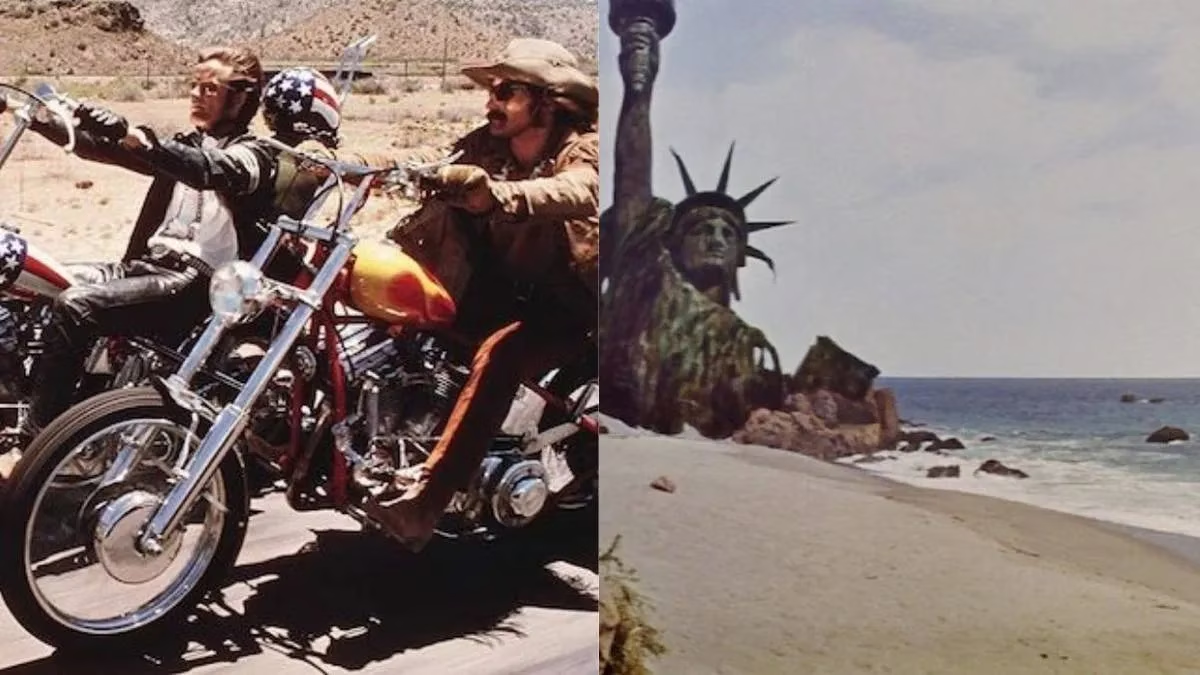
It is no accident that directors in 2026 still raid the back catalogue of the '60s for inspiration. Quentin Tarantino basically constructed an entire movie (Once Upon a Time in Hollywood) as a love letter to this era. The truth is, those old vinyl pressings do not just accompany a film; they often are the film. Here is a tour through the most legendary needle-drops of a decade that changed Hollywood forever.
Moon River and Manhattan Glamour: Breakfast at Tiffany’s
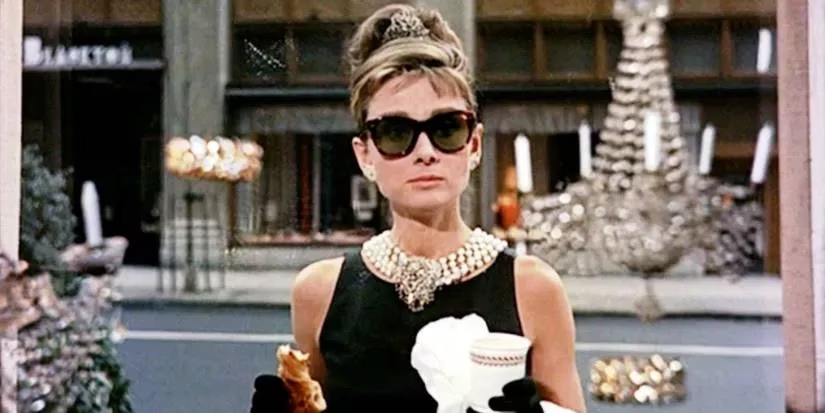
When a soundtrack rakes in six Grammy nominations while its movie gets “only” five Oscar nods, you know the tail is wagging a very stylish dog. Henry Mancini and lyricist Johnny Mercer crafted something so enchanting for Breakfast at Tiffany’s that Audrey Hepburn’s Holly Golightly feels less like a character and more like a melody that learned to walk. Mancini’s score is a masterclass in playful sophistication. Even in 2026, playing “Moon River” is the quickest way to make someone believe they’re fascinating and vaguely tragic in a black Givenchy dress.
The Great Escape’s Anthem That Refuses to Surrender
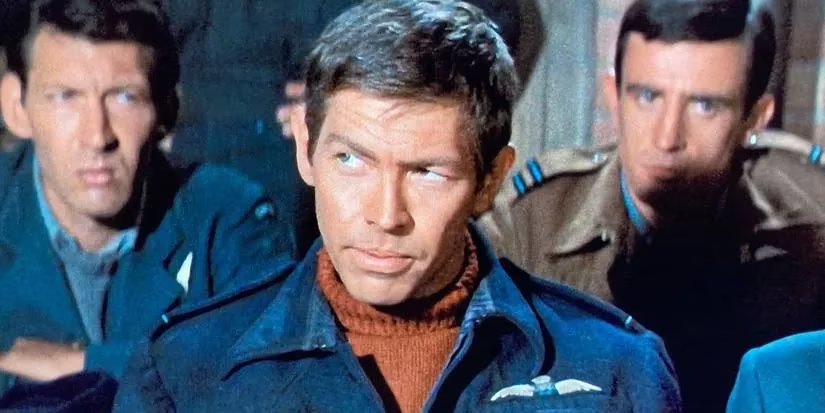
Elmer Bernstein’s main theme for The Great Escape is the musical equivalent of a double-shot espresso injected straight into the veins of patriotism. It has been hijacked for everything from football matches to political rallies, which must have given the composer a lifetime supply of pained smiles. But listen closely: beneath that bombastic surface, Bernstein wove individual motifs for Steve McQueen and his fellow prisoners. It is laughably brilliant that a film about tunnelling under a Nazi camp also tunnelled its way into the Billboard charts and never really left.
Beatlemania on Reels: A Hard Day’s Night
Trying to pick the best Beatles-related film soundtrack of the ‘60s is like choosing a favourite child if all your children wrote perfect pop songs. A Hard Day’s Night, though, captures the quartet at the precise moment before the universe bent to their will completely. “She Loves You,” “And I Love Her,” “All My Loving” — these tracks are not just songs; they are monuments to when youth and talent collided at precisely the right frame rate. The soundtrack still sounds fresher than 90% of what tops the charts in 2026.
Spoonfuls of Sugar and Tongue Twisters: Mary Poppins
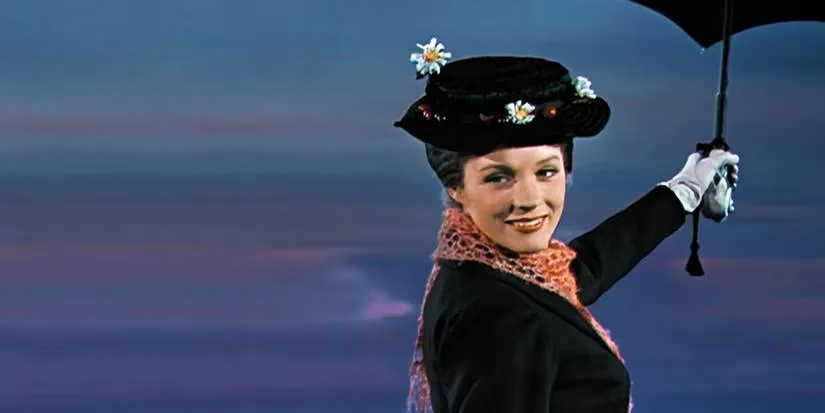
No conversation about 1960s soundtracks ends without at least one adult nervously humming “Supercalifragilisticexpialidocious.” Julie Andrews and Dick Van Dyke delivered a musical that won two Oscars for its sound — one for Best Original Score and another for the earworm “Chim Chim Cher-ee.” The fact that “A Spoonful of Sugar” remains the go-to life hack for making medicine tolerable in 2026 proves the Sherman Brothers somehow cracked a parental cheat code through music.
The Two-Note Staredown: The Good, the Bad and the Ugly
Ennio Morricone’s score for Sergio Leone’s spaghetti western is pop culture’s most efficient warning: two notes and suddenly everyone in a 10-metre radius is imagining a dusty gunfight. The soundtrack spent over a year on the Billboard charts and climbed to No. 4 on the best-selling pop albums list. Morricone turned desolate landscapes into poetry, and Clint Eastwood’s squint into a symphony. Even today, anyone attempting a dramatic pause is subconsciously channelling this masterpiece.
Apes, Space, and the Art of Sound Design
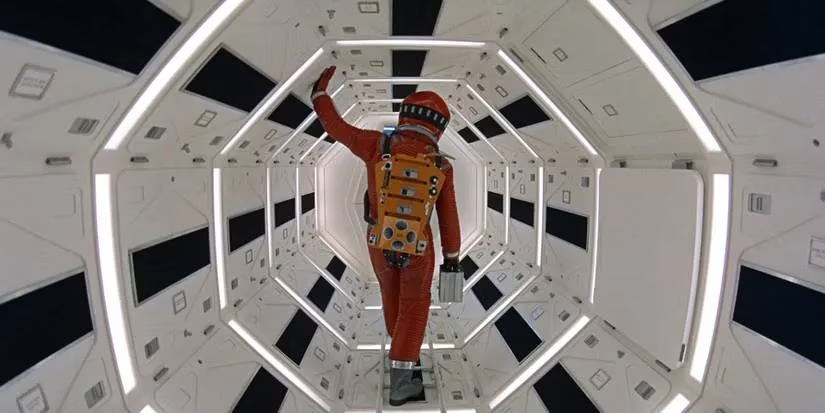
Not every iconic 1960s soundtrack relied on hit songs. Jerry Goldsmith’s work for Planet of the Apes used percussive experimentation and a 12-tone technique to create genuine unease. It is an avant-garde classical album posing as blockbuster background music — and it works brilliantly. Meanwhile, Stanley Kubrick’s 2001: A Space Odyssey famously ditched an original score in favour of classical temp tracks, turning Strauss’s “Thus Spoke Zarathustra” into the unofficial theme for just about any dramatic entrance from Elvis Presley to professional wrestlers. As of 2026, that horn blast still makes mundane activities feel cosmic.
The Sound of Silence and Mrs. Robinson: The Graduate
Mike Nichols understood that the weirdness of post-grad existential dread needed a musical voice. Simon & Garfunkel’s catalogue became that voice, particularly the haunting repetition of “The Sound of Silence” and the brilliantly unfinished “Mrs. Robinson.” The fact that the latter appears on the soundtrack as a clipped instrumental and a fade-out only to be fully born on a later album is a delicious piece of pop history. The Graduate soundtrack taught Hollywood that a perfectly curated needle-drop does more narrative work than a monologue.
Midnight Cowboy’s Urban Symphony
Anchored by John Barry’s tender score and Harry Nilsson’s Grammy-winning “Everybody’s Talkin’,” the Midnight Cowboy soundtrack wraps Dustin Hoffman and Jon Voight’s gritty hustle in a strangely beautiful blanket. The juxtaposition of lush orchestrations against 42nd Street grime set a template that directors would chase for decades. By 2026, it remains a masterclass in how music can tell the story the script leaves unsaid.
Born to Be Wild: Easy Rider
Dennis Hopper did not want background music. He wanted a statement. The Easy Rider soundtrack became that statement, throwing Steppenwolf, The Band, and Jimi Hendrix onto the open road and letting the songs do the talking. “Born to Be Wild” did not just accompany a motorcycle ride; it defined it for all eternity. The album cracked the Billboard Top 10, proving that even audiences who found the film baffling could not resist the soundtrack’s leather-jacketed swagger.
The Eternal Groove
Looking back from 2026, these soundtracks are not relics. They are blueprints. Modern composers still study Mancini’s playfulness, Morricone’s minimalism, and the audacity of Hopper’s jukebox rebellion. The ‘60s proved that a great soundtrack is not heard — it is felt. And if your current playlist does not include at least one of these albums, a crew of very disappointed hippies might just materialise to give you a stern talking-to. ✌️
Comments