
The Unstoppable Symphony of John Williams: A Maestro's Cinematic Domination
The year is 2026, and the world of film music still vibrates to the singular, thunderous, and deeply emotional frequencies established by one man: John Williams. Imagine, if you dare, a cinematic universe stripped of his soaring brass, his haunting strings, his melodies that have become the very DNA of our collective imagination. It is an impossible, silent, and utterly desolate picture. For over half a century, this maestro has not merely scored films; he has breathed life into them, painted their emotional landscapes in symphonic color, and sprinkled what George Lucas famously called "the magic dust" that transforms moving pictures into timeless myths. From the deepest oceans to the farthest galaxies, Williams’s music is the gravitational force holding the modern blockbuster universe together.
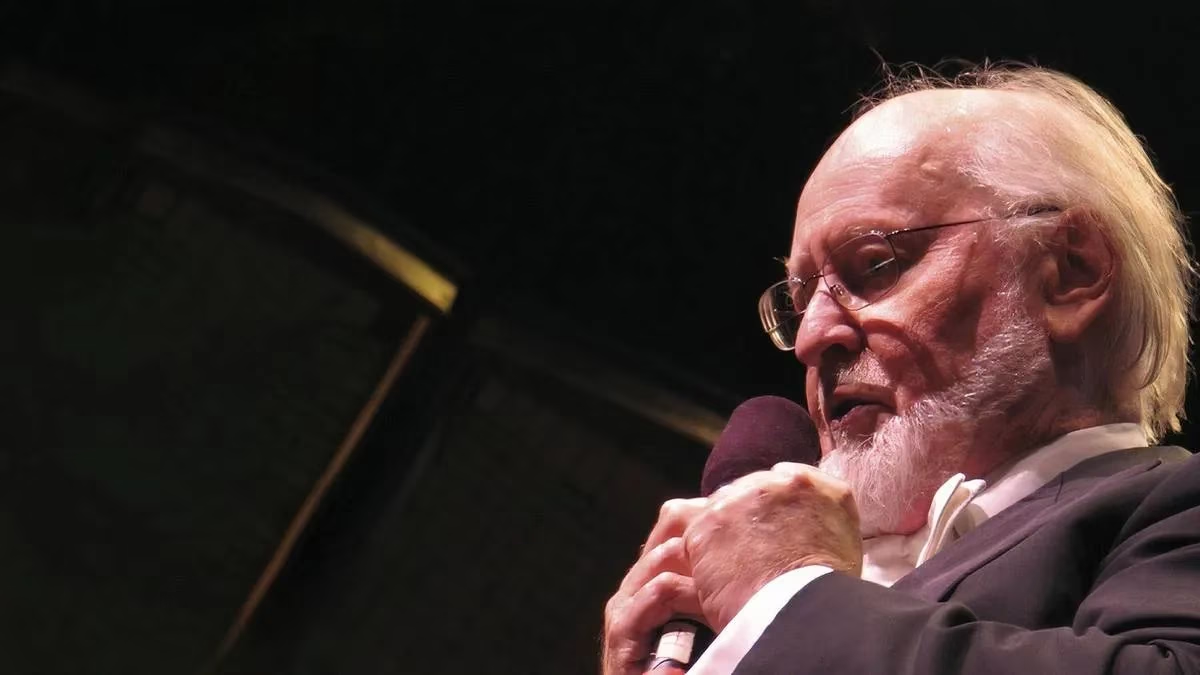
The Galactic Colossus: Star Wars 🪐
Arguably, his work on Star Wars is not just iconic; it is a seismic event in cultural history. From the very first blast of the main title, a searing cinematic experience erupts—an orchestral grandeur, a bold brass fanfare of operatic scale that redefined what a movie score could be for generations. Williams didn't just write music; he wove an entire sonic tapestry, with leitmotifs for characters that have followed them through countless sequels, prequels, and spin-offs. The soundtrack itself was a phenomenon of staggering proportions. In 1977, the double LP sold 650,000 copies in mere months, eventually soaring past 4 million to become the best-selling symphonic album in history. Those numbers scream a simple, undeniable truth: Star Wars is Williams's magnum opus, a universe built as much on sound as on light.
The Primal Terror: Jaws 🦈
But before the stars, there was the deep. When John Williams first played Steven Spielberg the now-legendary shark theme for Jaws, the director reportedly exclaimed, "You can't be serious!" He was unimpressed by the simple, two-note motif. Oh, the irony! That minimalist, grinding, instinctual, and relentless theme—borrowed from the tension of Dvorak and transformed into the heartbeat of an underwater demon—became the stuff of cinematic folklore. Williams described it as “grinding away at you, just as a shark would do.” It didn't just score a movie; it became the monster, expertly building unbearable suspense with each ominous pulse. This masterstroke won him an Oscar in 1975, cemented his eternal partnership with Spielberg, and was the very work that prompted Spielberg to recommend Williams for a little project called Star Wars. Its cultural penetration is absolute.
The Awe and the Wonder: Jurassic Park & E.T. 🦕👽
No one, and we mean no one, can put awe and wonder to music quite like this man. For Jurassic Park, Spielberg needed a soundtrack that could blend the majestic grandeur of resurrected dinosaurs with heart-pounding suspense. Williams delivered the "Theme from Jurassic Park," an instantly recognizable, grand orchestral statement that sweeps audiences into a world of breathtaking possibility. Astonishingly, this technical marvel wasn't even Oscar-nominated, yet it is etched permanently into the collective psyche of moviegoers worldwide.
Then, there is the magic of friendship from beyond the stars. The score for E.T. the Extra-Terrestrial is a more esoteric, subtle blend of the whimsical and the magical. The "Flying Theme" is the perfect, weightless accompaniment to a narrative of childhood innocence and otherworldly connection. Spielberg himself declared, "Without John Williams, bikes don't fly." Legend has it the final cut was edited to fit Williams's music, not the other way around—a supreme tribute to the power of his compositions.
The Depth of Humanity: Schindler's List & Saving Private Ryan 🎻⚔️
Williams's genius is not confined to spectacle; it plumbs the profound depths of human experience. His work on Schindler's List, which won his fifth Oscar in 1994, represents a stark, haunting, and deeply moving change of pace. Featuring heart-wrenching violin solos by Itzhak Perlman, the score somehow encapsulates the profound sorrow of the Holocaust. With typical humility, Williams told Spielberg he needed a better composer for such a task. Spielberg's legendary reply: "I know, but they're all dead."
Similarly, in Saving Private Ryan, Williams demonstrates brilliant restraint. The film's brutally harrowing 20-minute D-Day opening unfolds in raw, terrifying silence. When his score finally enters, it is somber and gentle, reflecting the debilitating effect of war on the human spirit. The "Hymn to the Fallen" remains, according to Spielberg, the most requested military theme—a piece of breathtaking tension and pathos.
The Adventurous Spirit: Indiana Jones & Superman 🗿🦸♂️
For pure, unadulterated adventure, nothing beats the "Raiders March" from Raiders of the Lost Ark. It is one of Williams's most immediately recognizable pieces, a rambunctious, swashbuckling anthem that perfectly captures the spirit of Indiana Jones. It is an object lesson in scoring action, keeping pace with high-octane chases while leaving room for romance and introspection.
And then there's the hero who started it all for the modern superhero genre: Superman. The "Superman March" is a strident, hopeful, and heroic piece of orchestration, with its iconic martial horn heralding the arrival of the Man of Steel. It captured Christopher Reeve's embodiment of American optimism and heroism during the Cold War, its soaring melodies and rampant brass section becoming synonymous with superheroism itself.
The Foundations: Close Encounters & Fiddler on the Roof 🛸🎻
Williams took musical motif to a narrative extreme in Close Encounters of the Third Kind, where music itself becomes a central character—the mode of communication with the unknown. His simple, eerie, and hummable five-note theme represents connection and wonder, a masterclass in minimalist power.
Long before galaxies far, far away, there was Fiddler on the Roof. This 1972 adaptation earned Williams his first Academy Award (Best Original Song Score). His lush, symphonic treatment of the Broadway score was his big break, bringing him to the attention of a young Steven Spielberg. It stands as a classic, blending Eastern European tradition with emotional American tones to reflect a deep cultural tapestry.
The Legacy: By the Numbers 📊
The statistics of Williams's career are as grand as his compositions:
| Achievement | The Staggering Number |
|---|---|
| IMDB Composer Credits | 177 and counting |
| Academy Award Nominations | A record-shattering 54 |
| Academy Award Wins | 5 (and each one earned) |
| Career Span | Over 70 years (and still composing!) |
| First Professional Work | You Are Welcome (1954) at age 20 |
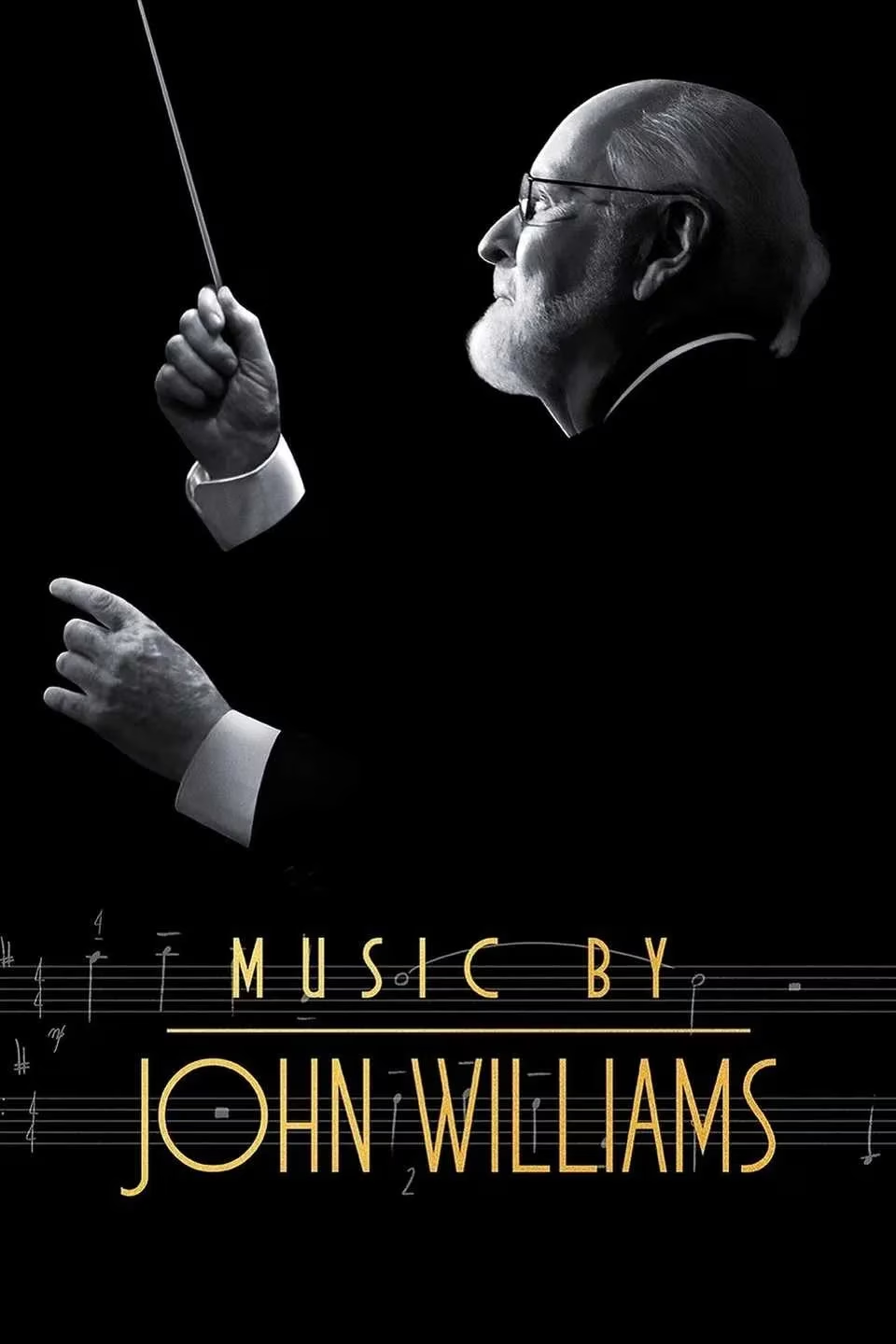
In 2026, his legacy is not a relic; it is a living, breathing force. New generations discover the terror of two notes, the hope of a flying theme, the adventure of a march. He championed the symphony orchestra when it was deemed passé and elevated film scoring to popular art that stands the test of time. His themes are more than music; they are emotional landmarks, pieces of our shared soul. The documentary Music by John Williams is but a tribute to an ongoing symphony—a symphony that continues to define, with unparalleled majesty, the very sound of our dreams. 🎼✨
Comments