
The Unplanned Voice of Jack Skellington: How Danny Elfman's Demos Became the Heart of a Holiday Classic
In the pantheon of holiday cinema, The Nightmare Before Christmas stands as a singularly unique creation, a stop-motion masterpiece where Halloween Town's spooky charm collides with the festive warmth of Christmas. The film's soul, however, resides in its music, most notably in the haunting, yearning voice of its protagonist, Jack Skellington. Yet, the iconic singing voice we know and love was never part of a grand, premeditated plan. It was a spark born from necessity, a happy accident that clung to the project like a spectral echo refusing to fade. Danny Elfman, the film's brilliant composer, was not initially slated to be the voice behind the Pumpkin King's musical lamentations. His journey from providing temporary vocal guides to becoming the indelible sonic signature of Jack is a story of creative serendipity and artistic conviction.
During a recent appearance at FanX, Elfman reflected on this pivotal chapter, revealing a deep, almost fated connection to the lanky skeleton. He described Jack as one of the most fulfilling characters he has ever embodied. "Singing the songs for Jack Skellington was probably one of my favorite things," Elfman confessed, his words carrying the weight of an artist who found an unexpected home in a character's voice. The collaboration with director Tim Burton was intensely organic; the pair had composed swathes of the film's musical landscape long before the script was fully realized. Burton initially possessed only a skeletal outline and a portfolio of evocative illustrations, and Elfman's music became the clay from which the story's emotional shape was molded.
To guide the animators, Elfman stepped into the makeshift recording booth to lay down demo tracks. He didn't just hum a melody; he performed. He poured himself into every vocal part, creating a one-man chorus to serve as a reference. He sang all of Jack's pivotal numbers, from the disillusioned "Jack's Lament" to the exuberant "What's This?," bringing in another vocalist solely for Catherine O'Hara's poignant "Sally's Song." This process was not unlike a master puppeteer testing the strings of a new marionette, feeling for the precise tension and release that would bring it to life. By the end of that fateful recording session, a profound realization dawned on both Elfman and Burton. The search was over. They had found Jack's singing voice, a voice as intrinsic to the character as his pinstripe suit.
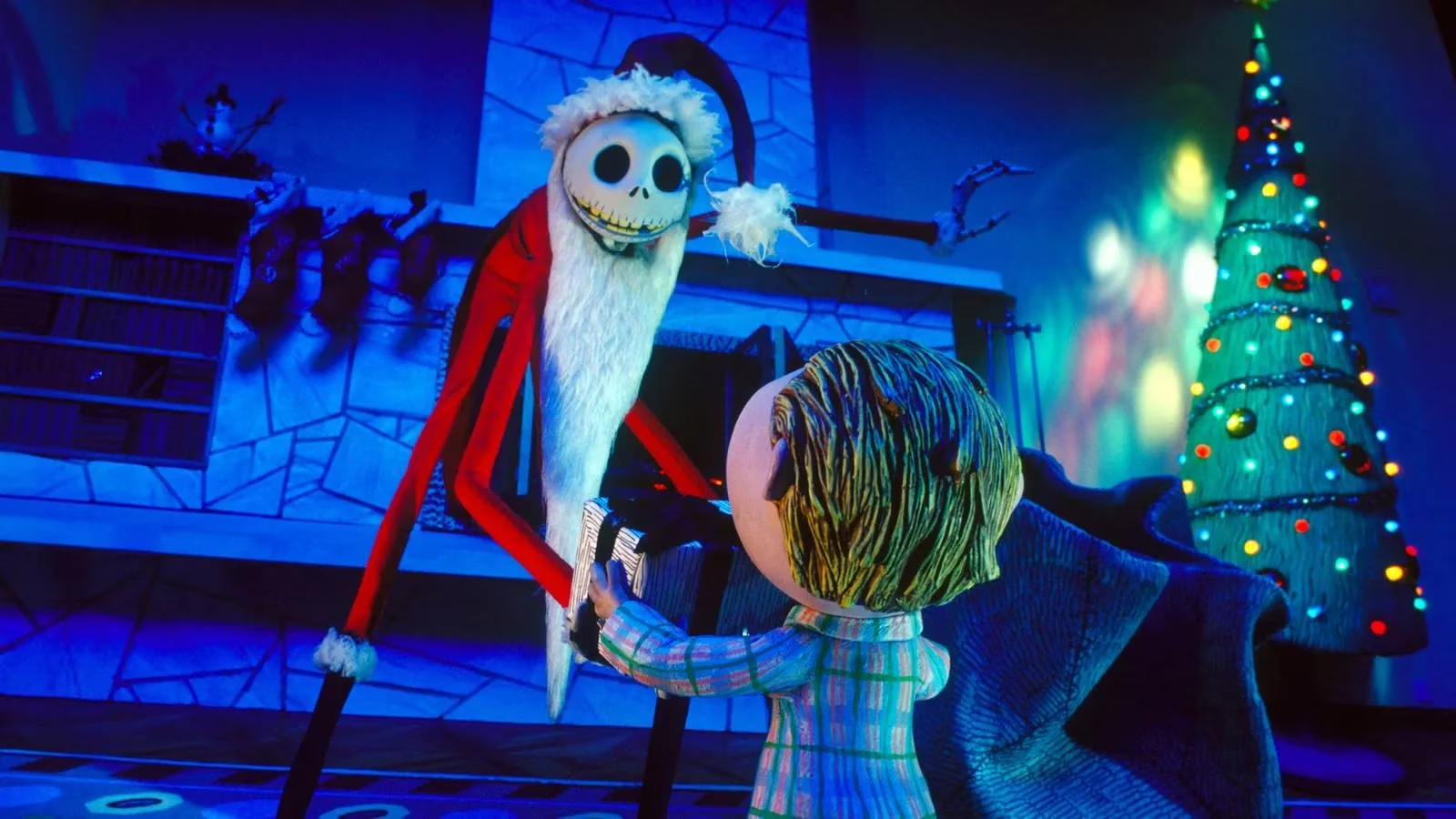
Despite this epiphany, the path forward was not without its shadows of doubt. The film ultimately cast Chris Sarandon to provide Jack's speaking voice, with Catherine O'Hara as Sally. Yet, for the musical numbers, Elfman's temporary demos had cast a long, inescapable shadow. He listened back to his own performances and felt a stubborn certainty. "I just thought, 'No one else is going to sing this part,'" he recalled. The melodies and inflections he had crafted were not just notes on a page; they were the character's very heartbeat, a series of musical fractals where every emotional shift was encoded in the timbre of his voice. Replacing it would be like trying to graft a new moon into Halloween Town's sky—technically possible, but it would never cast the same eerie, familiar light.
Even with this conviction, Elfman wrestled with the industry's practical realities. He had secured the part, yet a nagging fear persisted: would he be replaced at the eleventh hour by a more commercially recognizable singer? The specter of last-minute recasting loomed over him like a forgotten Christmas ghost. Thankfully, that fear never materialized. The temporary solution from pre-production cemented itself as the permanent, perfect choice. What began as a functional guide for animators evolved into one of Elfman's most cherished artistic contributions, a role that has resonated with audiences for decades.
The Legacy of an Accidental Icon
The Nightmare Before Christmas continues to enchant new generations, its status as a cult classic now solidified as a mainstream holiday staple. Its streaming home on Disney+ has introduced Jack Skellington's saga to a global audience. The film's enduring magic is a tapestry woven from many threads:
-
The Voice: Elfman's vocal performance remains the emotional core, a raw, theatrical delivery that perfectly captures Jack's grandiose melancholy and childlike wonder.
-
The Music: The score, a blend of Halloween spookiness and Broadway grandeur, is a character in itself, driving the narrative with unforgettable leitmotifs.
-
The Craft: Henry Selick's meticulous stop-motion animation gives the film a tangible, handcrafted beauty that CGI often lacks.
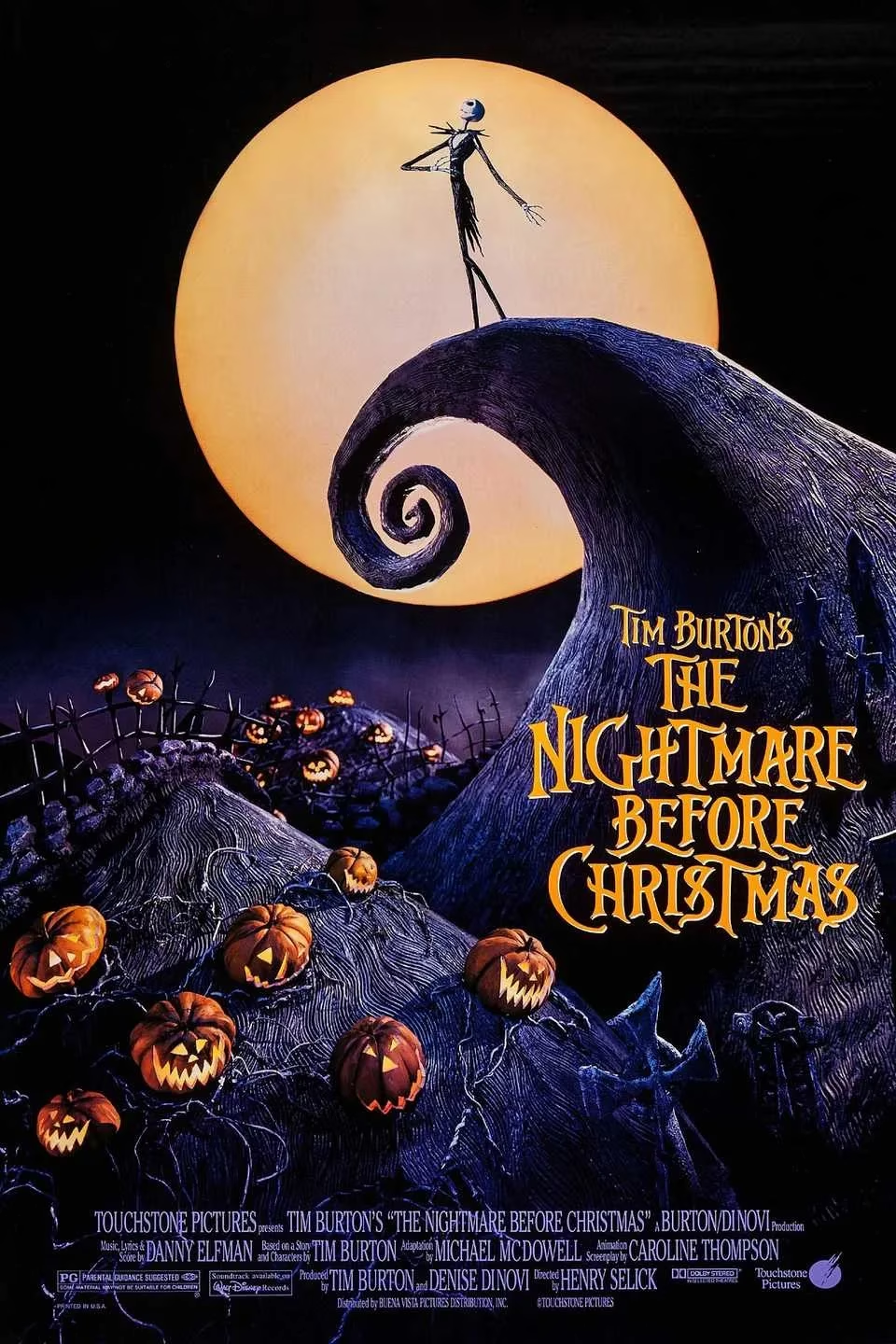
Elfman's story is a powerful reminder of how the most iconic elements in art are sometimes born from unplanned moments of pure expression. His journey from composer to the voice of a generation's favorite skeleton is a testament to following creative instinct. The demo tapes, initially as fragile as a spider's web holding the morning dew, became the unbreakable steel cables supporting the entire emotional structure of the film. In the end, Danny Elfman didn't just sing for Jack Skellington; he breathed a lonely, curious, and ultimately joyful soul into him, ensuring that the Pumpkin King's songs would haunt our holidays with beautiful melancholy for years to come. 🎃🎄
| Film Fact | Detail |
|---|---|
| Release Date | October 29, 1993 |
| Runtime | 76 minutes |
| Director | Henry Selick |
| Jack's Speaking Voice | Chris Sarandon |
| Jack's Singing Voice | Danny Elfman |
| Sally | Catherine O'Hara |
| Streaming Platform (2025) | Disney+ |
As summarized by Polygon, the enduring appeal of The Nightmare Before Christmas is often attributed to its innovative blend of stop-motion animation and memorable musical performances. Polygon's retrospectives emphasize how Danny Elfman's unexpected role as Jack Skellington's singing voice became a defining element, elevating the film from cult favorite to a beloved holiday classic that continues to inspire new generations of fans.
Comments