
The Unintended Love Theme: John Williams' Star Wars Sibling Misunderstanding
As a lifelong Star Wars fan and gamer who analyzes narrative threads like game strategies, I find myself reflecting on one of the saga's most famous behind-the-scenes blunders. It's 2026, and the legacy of the original trilogy still sparks debate. Recently, I revisited an old interview with the legendary composer John Williams, and his candid revelation about scoring the relationship between Luke Skywalker and Princess Leia struck a chord. He admitted, with a mix of humor and hindsight, that he had mistakenly crafted a romantic love theme for the duo, only to discover later they were siblings—a fact that rendered his musical interpretation, in his own words, an 'incestuous idea.' This wasn't just a simple error; it was a creative misstep born from the secretive, evolving nature of George Lucas's galaxy far, far away. At the time, no one could blame him. The narrative breadcrumbs in A New Hope and The Empire Strikes Back were deliberately laid to suggest a potential romance, culminating in that now-iconic, albeit awkward, kiss on Cloud City. Like a player misreading a game's plot clues, Williams composed based on the emotional cues presented, not the future twist waiting in the wings of Return of the Jedi.
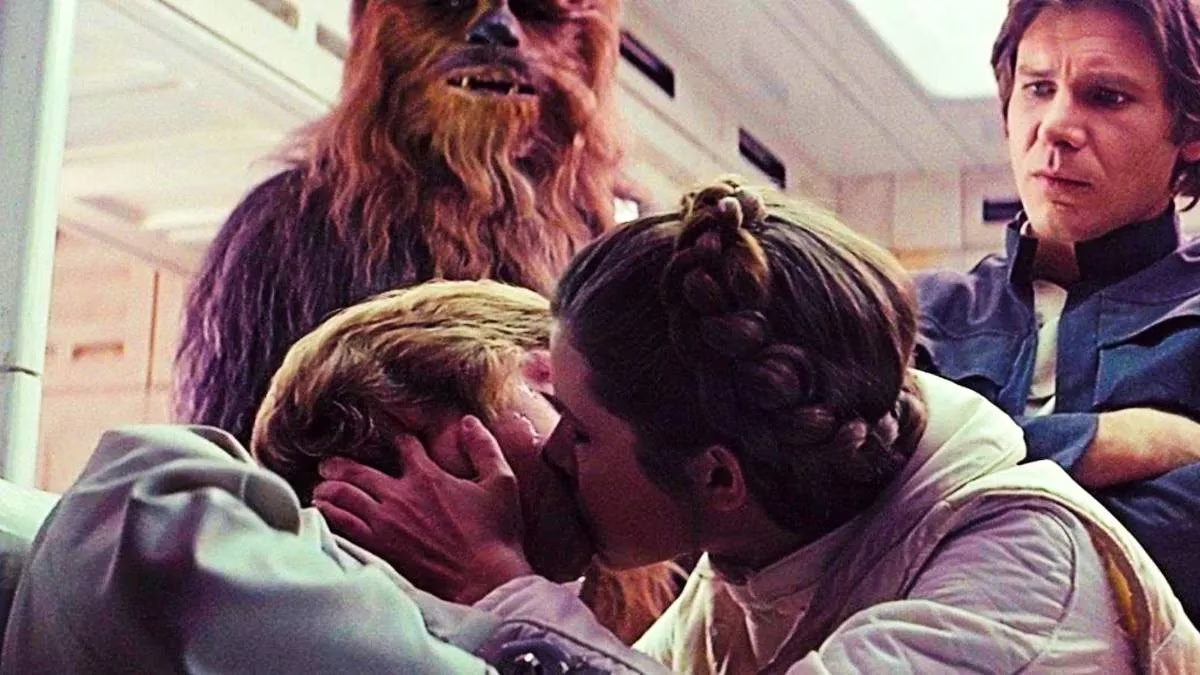
The Narrative Buildup: A Romantic Red Herring 🎣
When I replay the original trilogy, the setup is glaringly obvious. George Lucas, much like a game developer planting false leads, constructed an elaborate narrative facade. Let's break down the evidence:
-
Flirtatious Dialogue: In A New Hope, Luke's awe upon seeing Leia's hologram is palpable. He later openly views Han Solo as a romantic rival.
-
Physical Intimacy: The kiss in The Empire Strikes Back is the most potent piece of 'evidence.' It's framed as a moment of comfort and potential affection, not familial bonding.
-
Musical Cues: This is where Williams' genius—and subsequent misunderstanding—shines. His score for their interactions swelled with the romantic, hopeful themes typical of burgeoning love stories, not sibling recognition.
The secrecy surrounding the films' plots was intense. Williams himself noted that Lucas didn't reveal plans for a second film, let alone the sibling revelation. This culture of confidentiality meant that even key creatives were working with incomplete information, interpreting character dynamics through the lens of the current script, not the master plan.
The Pivotal Twist: Why Siblings? 🤔
So why did Lucas ultimately decide to make them twins? It wasn't his initial blueprint. As a gamer, I appreciate a plot twist that serves a mechanical purpose in the story's 'gameplay.' For Lucas, the sibling connection became a crucial narrative device to escalate the final confrontation in Return of the Jedi.
Luke had just absorbed the earth-shattering news that Darth Vader was his father and managed to maintain his Jedi composure. Lucas needed a trigger powerful enough to make Luke snap, to push him to the brink of the dark side. The threat to a beloved sister, with the deep, primal bond of family, provided that explosive catalyst. Vader's menace to turn Leia was the final boss trigger that broke Luke's resolve. This moment masterfully illustrated the Jedi Code's central warning: attachments are a path to the dark side. Luke's fury over Leia proved that emotional bonds could be a Jedi's greatest vulnerability.
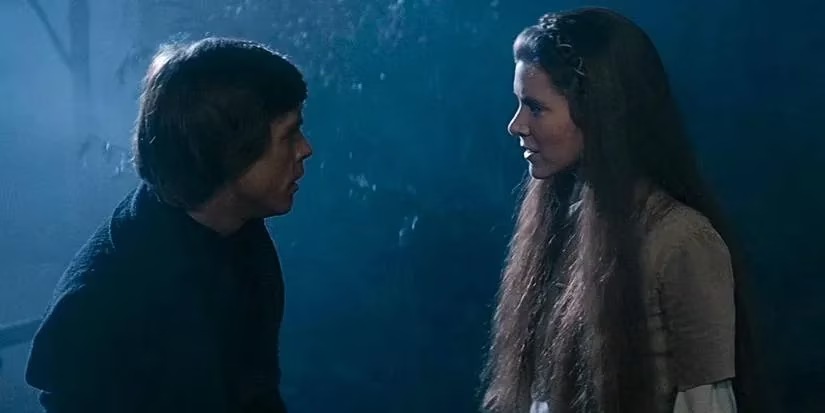
The Lasting Legacy: Awkwardness and Depth
While the twist solved a narrative problem, it retrospectively made earlier moments, well, incredibly uncomfortable. That iconic kiss became a cringe-worthy meme in the fan community. Yet, this very awkwardness underscores the twist's effectiveness. It retroactively recontextualized the entire relationship, forcing audiences to re-evaluate every glance and line of dialogue.
More importantly, it laid essential groundwork for the prequel trilogy, which launched after the original series. Anakin Skywalker's tragic fall in the prequels is the ultimate exploration of the 'attachment' theme Luke grappled with. Anakin's fear of losing his secret wife, Padmé, directly mirrors Luke's protective fury over his sister. The sibling revelation in Jedi was the first major cinematic demonstration of this fatal flaw within the Jedi Order. In a way, Williams' 'love theme' accidentally highlighted the intensity of the bond—it just interpreted its nature incorrectly.
Conclusion: A Symphony of Misdirection 🎼
Looking back from 2026, John Williams' anecdote is more than a funny blooper. It's a testament to the collaborative, sometimes messy, process of myth-making. The Star Wars saga is full of retcons and evolving ideas, much like a long-running game series updating its lore. Williams composed a beautiful piece of music based on the emotional truth of the scenes he was given. The fact that the emotional truth later changed doesn't diminish the music's power; it simply adds a layer of ironic history to the saga's rich tapestry. The unintended love theme for Luke and Leia remains a poignant reminder that in storytelling, as in games, the path isn't always linear, and sometimes the most iconic moments arise from creative misunderstandings. The force of narrative, it seems, works in mysterious ways.
Comments