
The Musical Genius of Danny Elfman: A Journey Through Cinematic Scores
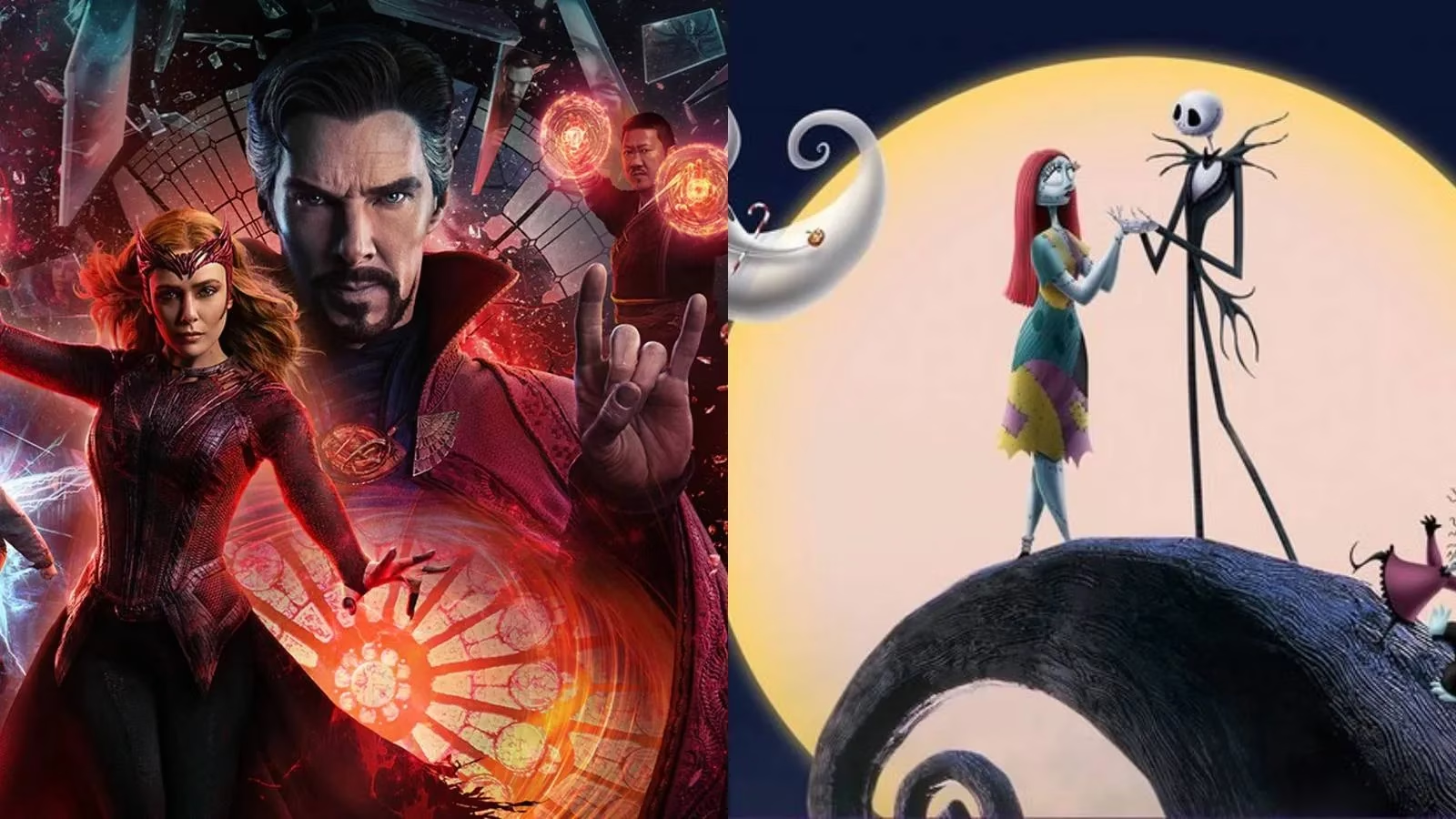
Danny Elfman's career as a film composer is nothing short of legendary, spanning decades and genres with an unparalleled creative flair. From his early days leading the band Oingo Boingo to his transition into cinema in the mid-1980s, Elfman has crafted over 100 film scores that have become integral to the movies they accompany. His work on films like Pee-Wee's Big Adventure in 1985 set the stage for a prolific journey, culminating in recent projects such as Marvel's Doctor Strange in the Multiverse of Madness. Elfman's ability to adapt his musical style—ranging from gothic whimsy to sci-fi intensity—showcases a versatility that has made him a household name. Without his contributions, many beloved films would lose their emotional depth and iconic soundscapes, much like a symphony missing its conductor.
 Elfman's collaboration with Tim Burton is often described as a gothic match made in heaven, producing scores that are as intricate as a spider's web. In Beetlejuice, the main title combines suspenseful violins and horns with a playful nod to Harry Belafonte's "Banana Boat (Day O)", creating a chaotic yet captivating atmosphere. The addition of a ghostly choir adds layers of eeriness, perfectly mirroring the film's supernatural antics. Similarly, Edward Scissorhands features a melancholy score that highlights Elfman's softer side, with haunting choruses and harps that evoke the tragedy of its protagonist. The track "Ice Dance" has amassed over 20 million streams on Spotify, its magical quality reflecting Edward's creation of a snowy wonderland—a moment as delicate as frost on a windowpane.
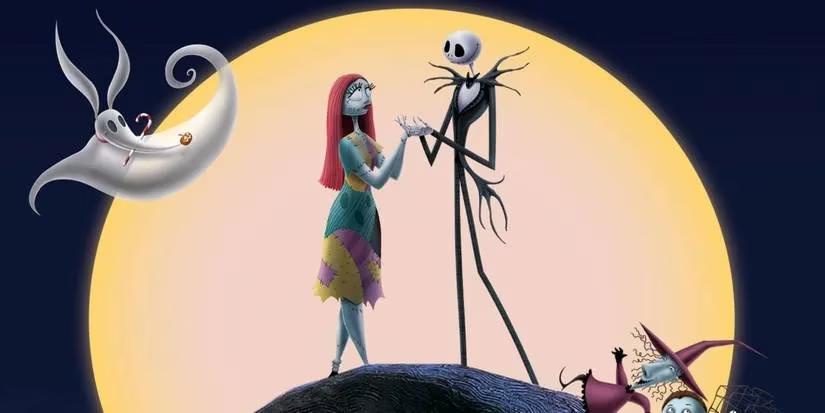 Elfman's involvement in The Nightmare Before Christmas extends beyond composition; he also voices Jack Skellington, adding a personal touch to this Disney classic. Songs like "This is Halloween" are eccentric and mischievous, with lyrics that playfully explore Halloween tropes, while "What's This?" incorporates Christmas bells for an upbeat twist. These tracks have garnered millions of streams, demonstrating Elfman's knack for blending dark themes with whimsical melodies. In contrast, his score for Men in Black is experimental, featuring eerie sound effects, booming percussion, and a funky bass that mirrors the film's alien-filled narrative. The theme builds tension like a coiled spring, ready to snap at any moment.
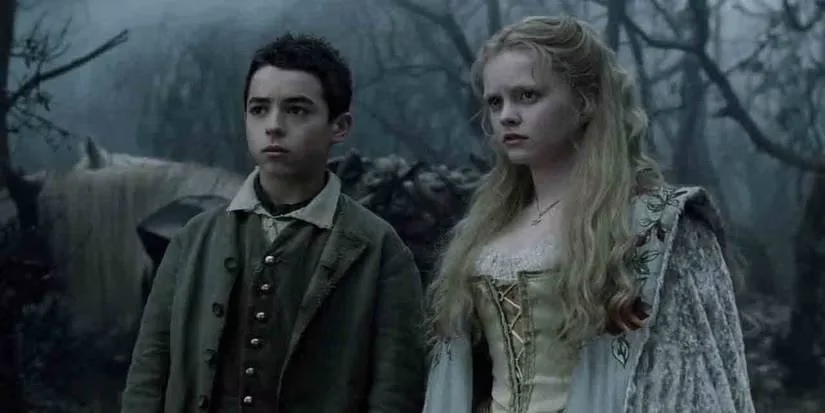 For Sleepy Hollow, Elfman crafts a gothic masterpiece that complements Tim Burton's horror vision. The score uses traditional instruments to create a foreboding atmosphere, with bells and orchestral swells that hint at unseen terrors. This approach is akin to a shadow lengthening at dusk—unsettling yet mesmerizing. In the superhero realm, Elfman's work on Spider-Man (2002) is iconic; the opening credits tell a hero's journey through strings and percussion, culminating in a chorus that heralds Spider-Man's birth. Tracks like "City Montage" underscore pivotal moments, such as Peter Parker reflecting on Uncle Ben's wisdom, with music that swells like a tide of responsibility.
 Elfman's versatility shines in Charlie and the Chocolate Factory, where he reimagines Roald Dahl's tale with a modern twist. The score for Violet Beauregarde's transformation is a highlight, using violins and horns to build anxiety as she turns into a blueberry—a scene as bizarre as a dream within a dream. The Oompa Loompa sequences feature funky rhythms that add a playful contrast. In Corpse Bride, Elfman delivers emotional depth with pieces like "The Piano Duet", where piano melodies evolve from morose to hopeful, symbolizing the connection between Victor and Emily. This track, with over 23 million streams, feels like a conversation between two lost souls finding harmony.
 Even in projects like Fifty Shades of Grey, Elfman adapts his style to explore sensuality and mystery. The score is inquisitive, using subtle motifs to unravel the complex relationship between the characters, much like a key turning in a lock. His recent work on Doctor Strange in the Multiverse of Madness synthesizes elements from his past, incorporating synthesizers, choruses, and clock sounds to create a dynamic, otherworldly experience. This score, reminiscent of his Spider-Man and Avengers contributions, proves that Elfman's creativity remains as boundless as the multiverse itself. As of 2025, his influence continues to shape cinematic music, ensuring that each note tells a story as vivid as the films they accompany.
Comments