
The Musical Genius Behind Jack Sparrow: How Hans Zimmer's Score Defined a Pirate Legend
When I think about what makes the Pirates of the Caribbean movies so unforgettable, my mind doesn't just go to the swashbuckling action or the stunning visuals. It immediately travels to the music—that iconic, sweeping, adventurous score that seems to carry the very soul of the Caribbean on its notes. I recently delved into the story behind this legendary music, and it turns out the journey of its creation is almost as fascinating as Jack Sparrow's own escapades. The mastermind, Hans Zimmer, nearly turned the whole project down, believing a pirate movie couldn't be anything special. It was only after seeing the first edited scenes, with Johnny Depp's now-iconic portrayal, that he agreed to come aboard. And then, he had just three weeks to craft an entire cinematic soundscape. But in a burst of pure creative genius, he wrote the major themes in a single, inspired night.
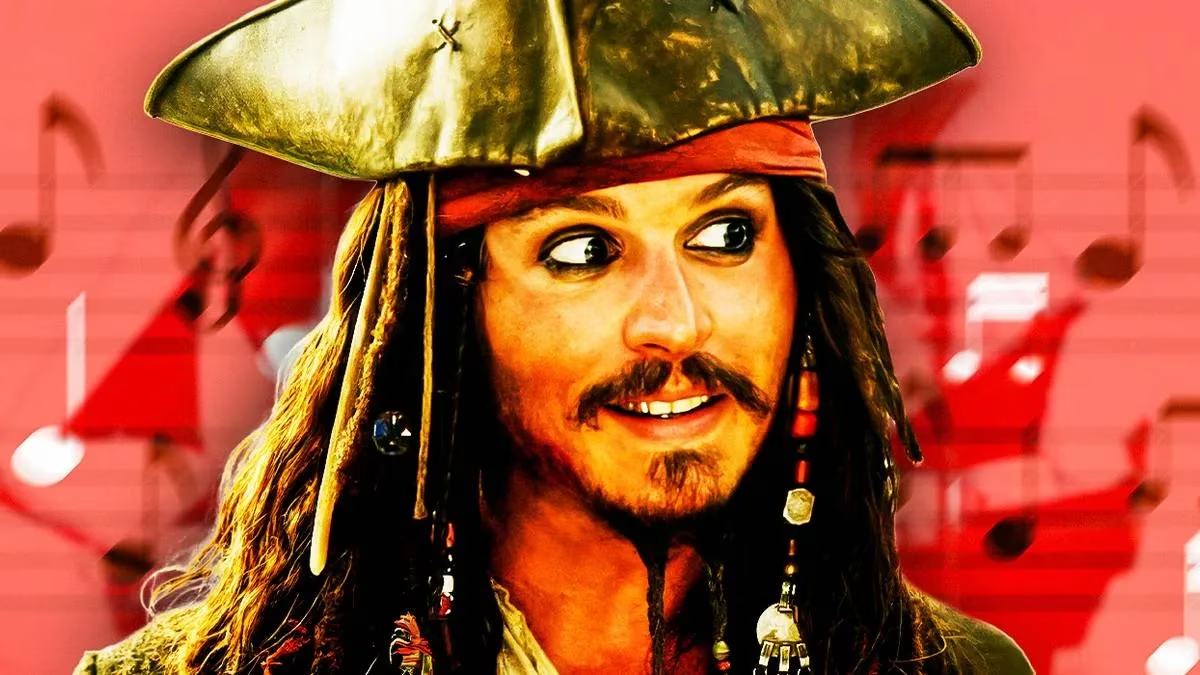
For me, the most captivating revelation was how intrinsically linked the music is to the character of Jack Sparrow himself. Zimmer didn't just write a theme; he composed a musical portrait. Watching Depp's performance—that unique, wobbly, perpetually off-balance swagger—inspired what Zimmer himself calls a "drunken waltz." The theme, aptly named "Jack Sparrow," is technically in a three-quarter waltz time. But it's a waltz that's had one too many bottles of rum. The melody dances irregularly around the traditional one-two-three beat, with notes sliding into each other like slurred speech. Even with my eyes closed, I can picture Jack's unsteady canter across the deck just by listening. It’s auditory character acting at its finest.
But Zimmer's genius goes deeper than just mimicking a walk. He used the very language of music to tell Jack's story. The theme begins with that tipsy waltz, establishing his chaotic charm. Then, it introduces a series of optimistic, upward-moving notes—the same three notes that form the heroic core of the main "He's a Pirate" theme. Zimmer described these as positive and almost innocent, reflecting Jack's childlike, unshakeable (and often unearned) confidence. It’s the musical equivalent of his attitude: "I can go and do anything." This section makes you, the listener, want to trust him. It's charming and bold.
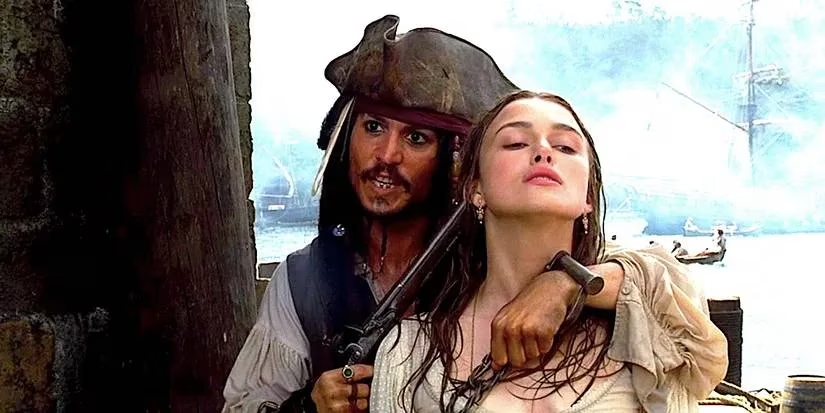
Ah, but then comes the twist. Just when the melody has lulled you into a sense of safety, Zimmer—like Jack himself—subverts your expectations. He throws in a chord that he himself labels as "wrong." It’s benign, but definitely off. A little musical mischief. This, he explained, is a hint that Jack isn't entirely trustworthy. The theme then might swing back to comfort, but it often lands on what musicians call a "devil's fifth" resolving into a minor chord, leaving the final impression that Jack is, in Zimmer's words, "definitely naughty." This brilliant push-and-pull in the composition mirrors Jack's entire existence in the films: Is he a hero? A rogue? A lucky fool? The music argues he's all of the above, sometimes in the same breath.
The complexity doesn't end there. Jack Sparrow, for all his self-serving bluster, has a hidden heart of gold. We see it in fleeting moments of sacrifice and surprising loyalty. Zimmer found a way to score even this hidden depth. In a masterstroke, he changes the key of the song right in the middle of a musical phrase—a highly unconventional move. It's like changing the subject mid-sentence. But he resolves it just as quickly, snapping back to the original key. This brief, unexpected shift perfectly captures those moments when Jack's facade cracks to reveal genuine, if fleeting, nobility. It’s unpredictable, slightly awkward, and utterly endearing—just like the man himself.

When you step back and listen to the full score, especially the main "He's a Pirate" theme, you realize Zimmer built an entire sonic world. The themes for Jack—his drunken waltz, his optimistic swagger, his naughty twists—are woven into the broader tapestry. The music rises and falls, not just with the plot, but with the very motion of the sea. For me, listening to the score creates the physical sensation of being on a ship, swaying with the waves. The relentless, rolling rhythm is the heartbeat of the adventure.
| Musical Element | What It Represents for Jack Sparrow |
|---|---|
| "Drunken Waltz" Rhythm | His unsteady, intoxicated swagger and unpredictable movement |
| Upward, Optimistic Notes | His childlike, boundless (and often foolish) confidence |
| The "Wrong" Chord | His inherent mischievousness and untrustworthy nature |
| The "Devil's Fifth" | His definitive naughtiness and roguish charm |
| Mid-Phrase Key Change | His hidden, surprising moments of goodness and depth |
| Overall Swelling Rhythm | The sway of the sea and the pulse of the adventure |
Reflecting on all this, what strikes me most is Zimmer's own humility about his craft. When asked about the cleverness of embedding a character's soul into notes and chords, he simply said, "It's not clever. It's just fun." And perhaps that's the real magic. His pure joy in creation is what makes the Pirates of the Caribbean score so infectious and enduring. It’s not a cold, technical exercise; it’s a playful, passionate conversation between a composer and a character. Two decades later, that conversation still resonates. Every time I hear those opening notes, I'm not just hearing a movie theme. I'm hearing the mischievous glint in Jack Sparrow's eye, the creak of the Black Pearl's timbers, and the endless, rolling promise of adventure on the high seas. In my opinion, that’s the true power of a masterpiece: it doesn't just accompany a story—it becomes an inseparable part of its very essence.
Comments