
The Maestro's Melodies: My Journey Through Alexandre Desplat's Cinematic Soundscapes
As I sit here in 2026, listening to the soaring, ancient yet new themes from Jurassic World Rebirth, I'm struck by a profound thought. How did Alexandre Desplat, this prolific French composer, become the secret emotional architect of so many of my favorite cinematic memories? From the whimsical worlds of Wes Anderson to the tense corridors of Cold War thrillers, his music has been the invisible thread weaving through my movie-watching life. He’s not just a composer; he’s a world-builder, a character in his own right, speaking a universal language of emotion. And now, with his latest foray into the land of dinosaurs, he follows in the footsteps of giants like his "forever idol," John Williams. Isn't it fascinating how one artist can shape the feel of an entire era of film?
My journey with Desplat truly began with the vibrant, stop-motion charm of Fantastic Mr. Fox. This was his first dance with Wes Anderson, and what a dance it was! 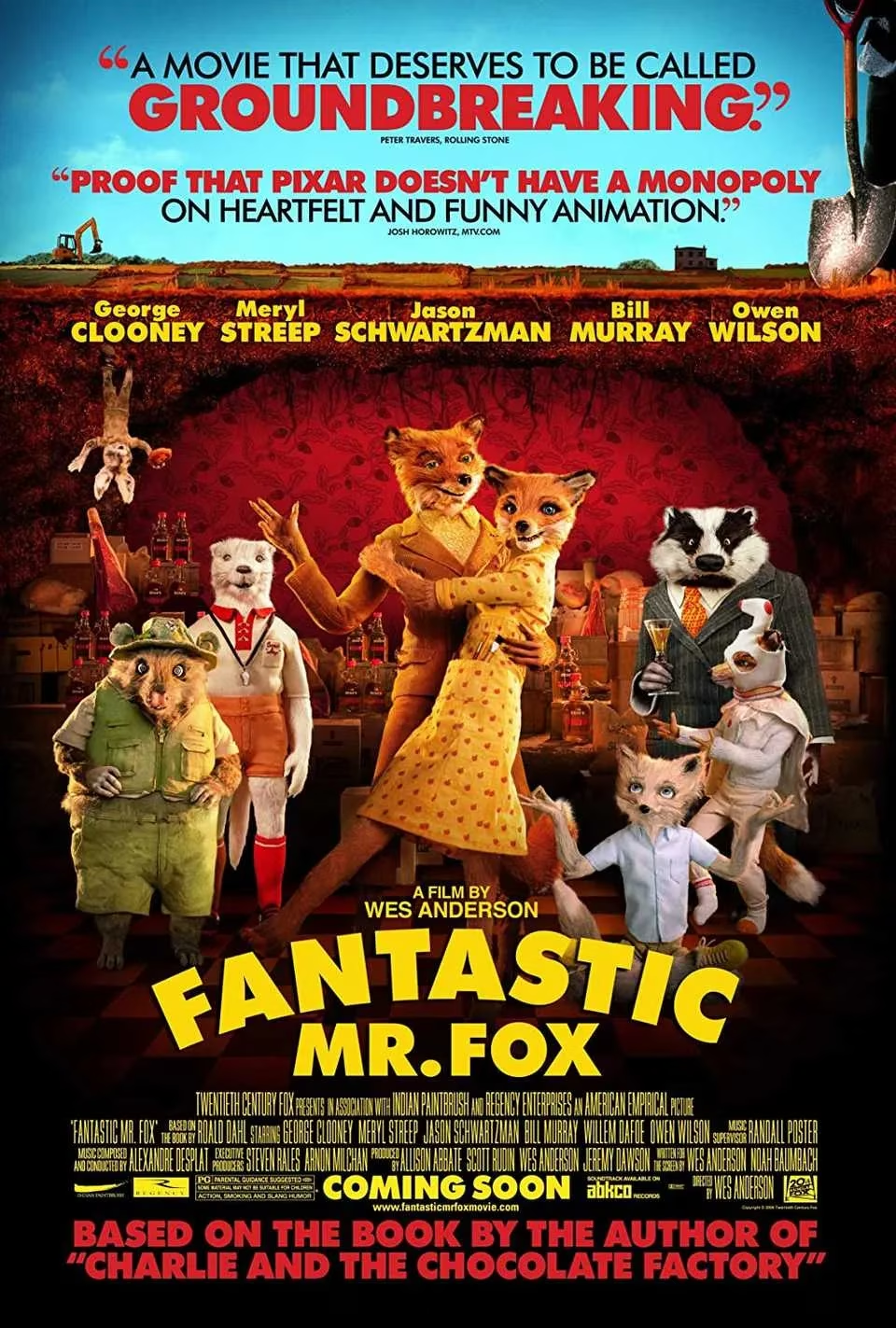 . To capture the film's blend of childlike wonder and sophisticated caper, Desplat didn't reach for a grand orchestra first. Instead, he raided the toy box. He used instruments you might find in a kindergarten—glockenspiels, triangles, tambourines. But here's the magic: he elevated these simple sounds beyond mere childish sweetness. The score was jovial, playful, yet underpinned with a cunning rhythm that mirrored Mr. Fox's own clever plans. It created a striking, delightful contrast and proved that Desplat and Anderson shared a uniquely off-kilter creative wavelength. Could a simple triangle carry so much character? In Desplat's hands, absolutely.
That collaboration blossomed into something truly spectacular with The Grand Budapest Hotel. This, for me, is where both artist and composer reached a glorious peak. Anderson created the fictional European nation of Zubrowka, and Desplat was tasked with giving it a soul, a musical identity. 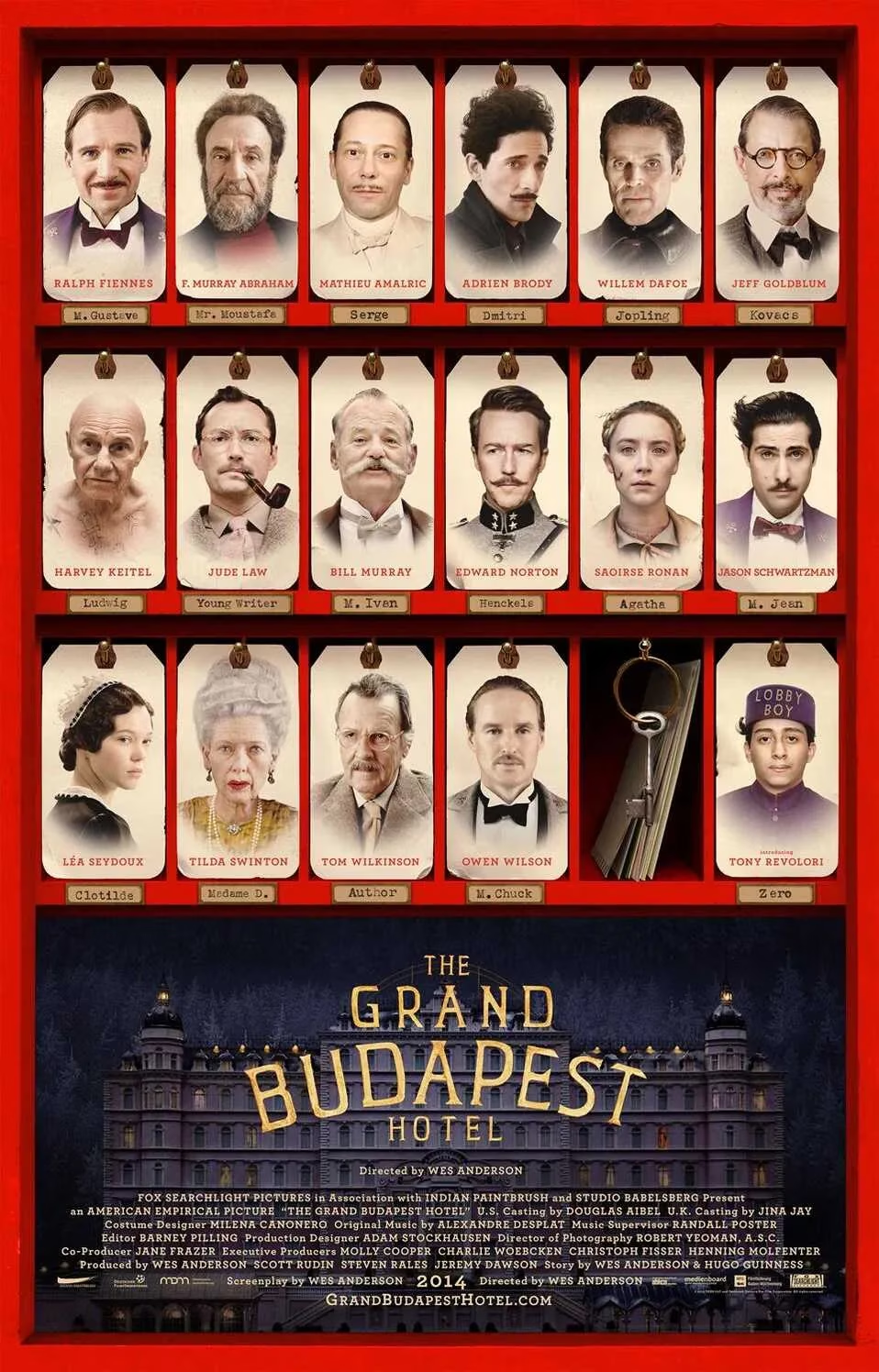 . He didn't just write a score; he forged a national anthem from a patchwork of Eastern European folk influences. The sounds of the zither and balalaika mixed with alpine horns (alphorns!), creating a haunting yet grandiose blend that felt both timeless and invented. The music had the powerful, slightly exaggerated feeling of a pantomime, which was perfectly fitting for the film's larger-than-life characters and criminal melodrama. Listening to it, you don't just hear music; you feel the crisp air of Zubrowka, you see its pink hotels and snowy peaks. Isn't that the ultimate goal of a film composer—to build a world you can close your eyes and visit?
But Desplat is no one-trick pony. His range is staggering. Contrast the ornate European folk of Grand Budapest with the tense, Middle Eastern-infused soundscape of Argo. For Ben Affleck's thriller, Desplat immersed us in 1979 Tehran. He used traditional instruments like the ney (flute), oud (lute), and kemenche (spike fiddle) to create a palpable sense of place and paranoia. The music created a wall of sound that emphasized the complete isolation of the American diplomats. Yet, in moments where they executed their audacious plan, more familiar, controlled orchestral sounds would peek through. This wasn't just background music; it was a narrative tool, sonically illustrating the cultural divide and the constant, gnawing danger. It asks the question: can music make you feel claustrophobic? Desplat's score for Argo answers with a resounding yes.
Perhaps one of his most intellectually elegant scores is for The Imitation Game. What makes this achievement even more mind-boggling is the fact that Desplat was a late addition and had only three weeks to compose the entire thing. 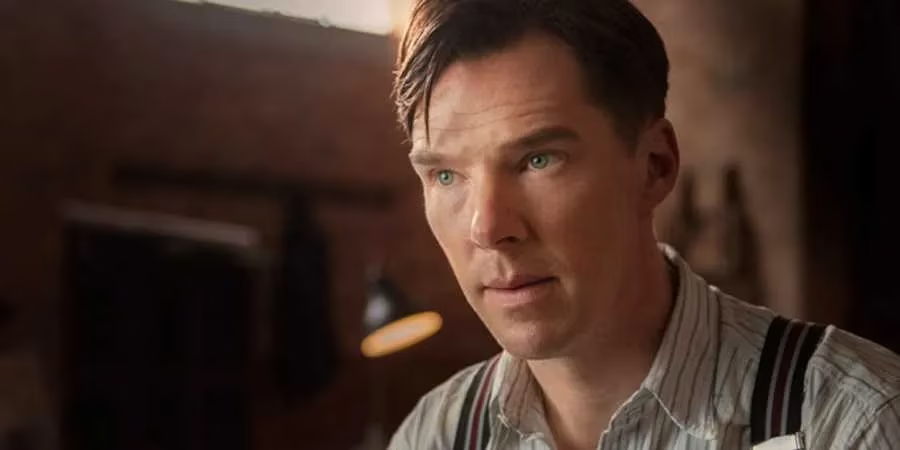 . The score is a complex, self-referential masterpiece. It uses beautiful, cascading arpeggios that mimic the ticking of the colossal Enigma-cracking machine, Bombe, as well as the intricate, relentless workings of Alan Turing's own mind. Themes circle back and intertwine, drawing subtle links between Turing's troubled youth and his pressured adult life. The music feels both mechanical and profoundly human, a perfect aural metaphor for the genius at the story's center. How does one translate the sound of a mathematical breakthrough into music? Desplat found a way.
His ability to bridge time periods is another superpower. Take Little Women. Greta Gerwig's adaptation sought to feel both timeless and urgently modern. Desplat's score is the engine of that time travel. He used period-appropriate instruments that have since fallen out of fashion, grounding us in the 1800s. Yet, the music pulses with a vibrant, lively energy that feels completely contemporary. It mirrors the chaotic, bustling lives of the March sisters with playful staccato notes and sweeping, emotional melodies. The score doesn't just accompany the story; it actively argues for its continued relevance. It whispers: the joys, sorrows, and passions of these sisters are not relics; they are alive, just like this music.
Then, there are the scores that are pure, unadulterated emotion. The Shape of Water is the prime example. Conventional wisdom says a great film score should enhance without drawing attention to itself. Desplat and Guillermo del Toro threw that wisdom out the window. This score demands to be heard. 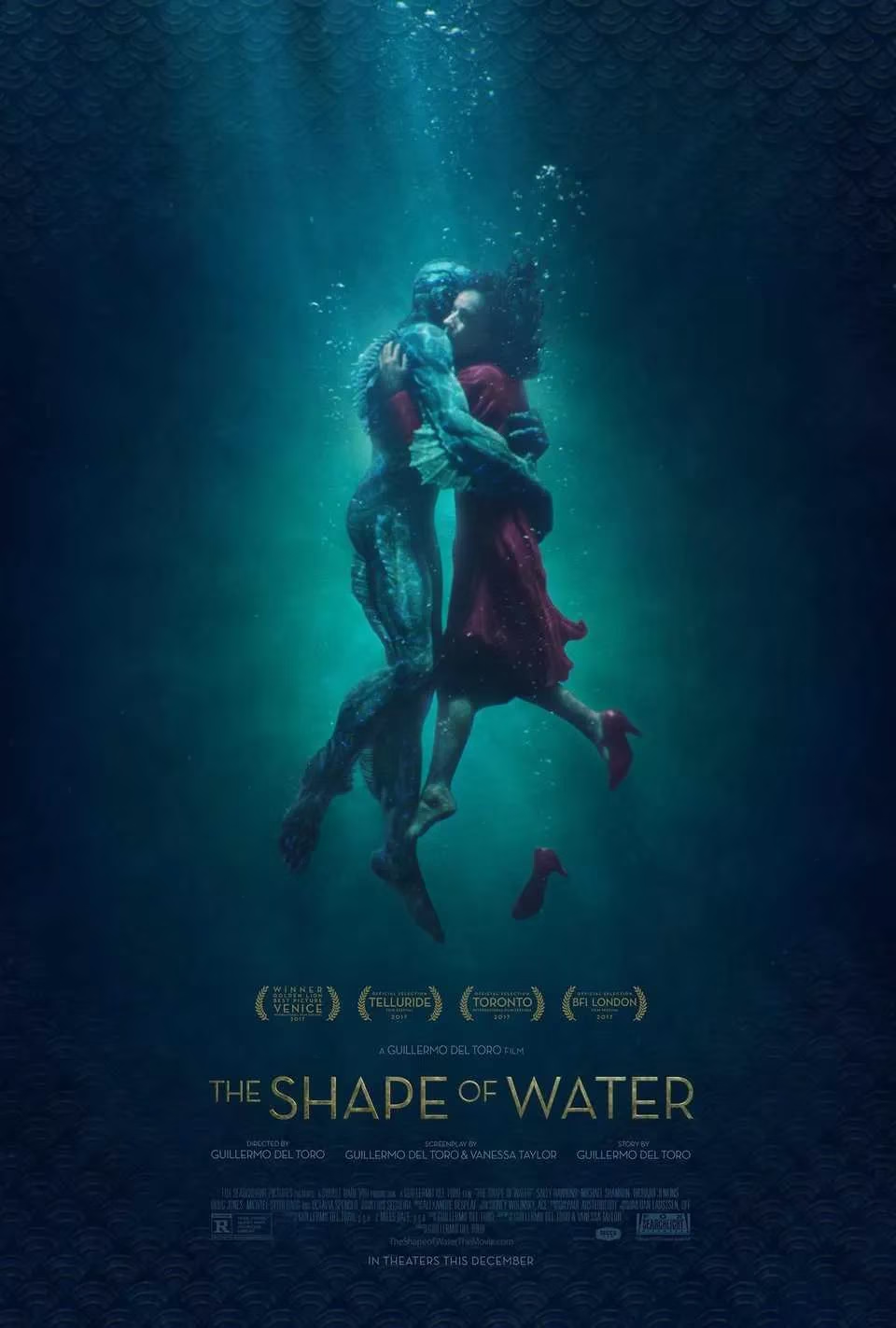 . It is intimate and opulent, a swirling, immersive soundscape where woodwind instruments blur together to create the feeling of being underwater. But it's more than atmosphere. It serves del Toro's central metaphor: that love, like water, fills every void and surrounds us completely. Desplat's music is that overwhelming, all-encompassing love. It's tender, mysterious, and heartbreakingly beautiful, capable of bringing a tear to your eye with a single, haunting melody. It doesn't just illustrate the story; it becomes the emotional core of the film.
We can't forget his magical touch on the wizarding world. Stepping into the hallowed halls of Harry Potter for the final two films was a daunting task, following John Williams' iconic themes. But Desplat fit in seamlessly. His scores for The Deathly Hallows parts 1 and 2 masterfully reflected the saga's dark turn—the loss of innocence, the mortal peril. Yet, he knew precisely when to weave in those familiar motifs from earlier films, delivering a powerful nostalgic punch that underscored what was at stake. He honored the past while confidently making the sound of the finale his own. Now, with HBO's new series on the horizon for 2026, the composers face the same challenge: how do you follow an act as tough as Desplat's?
From the palindromic structures mirroring a reverse-aged life in The Curious Case of Benjamin Button, to the playful French motifs unifying the anthology chaos of The French Dispatch, Desplat's portfolio is a masterclass in versatility. 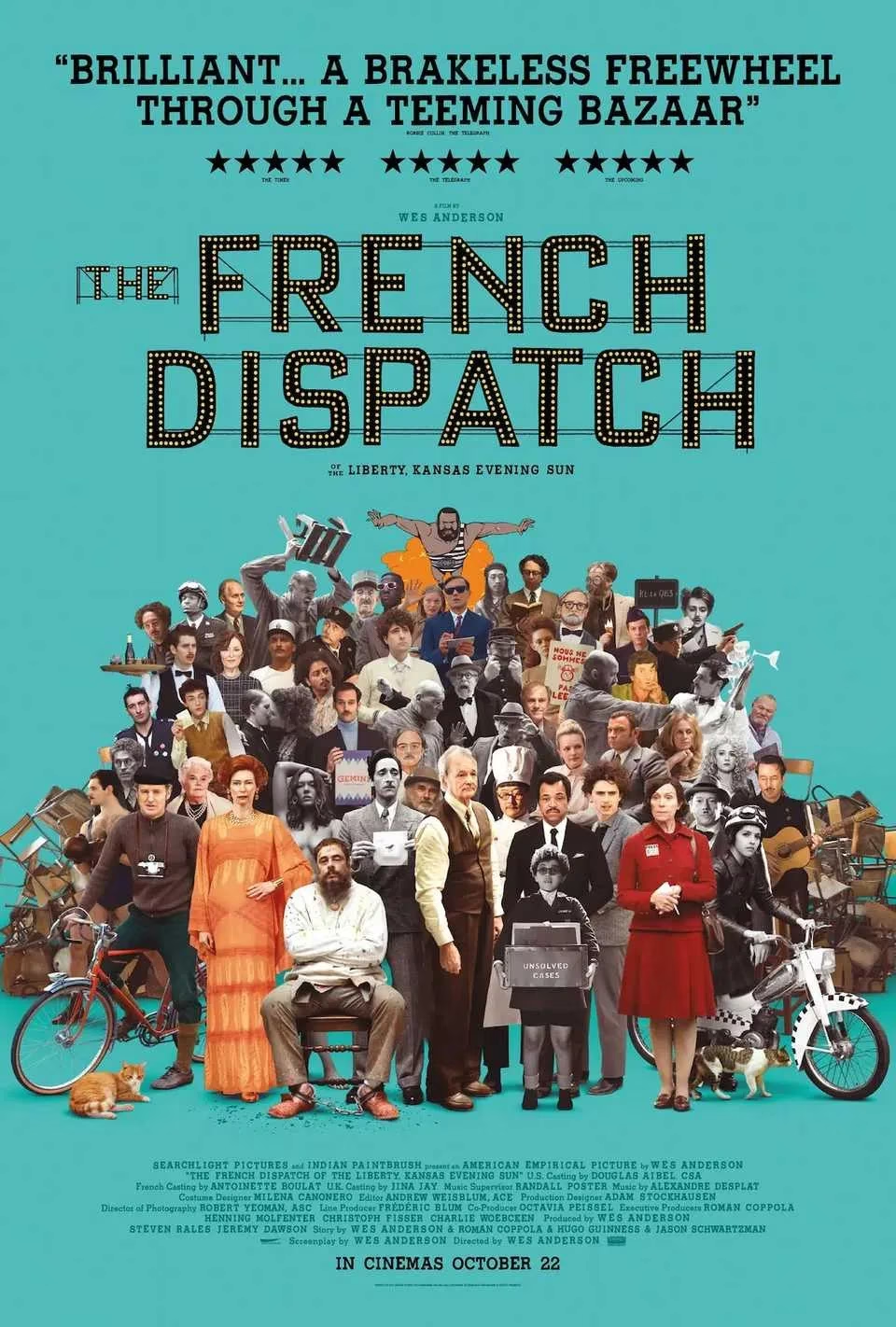 . He is a chameleon, yet his voice—characterized by intricate orchestration, emotional clarity, and a touch of whimsical intelligence—always shines through.
So, as the first notes of Jurassic World Rebirth’s score filled the theater this year, I felt a familiar thrill. It was the thrill of knowing I was in the hands of a master storyteller. Alexandre Desplat doesn't just write music for movies; he writes the emotional diary of the characters, the geographical map of the settings, and the hidden heartbeat of the plot. He has, without a doubt, composed the soundtrack to so much of our collective cinematic imagination. And the greatest part? In 2026, the melody is still being written.
Comments