
The Maestro's Doubt: How John Williams Almost Missed a Classic Score
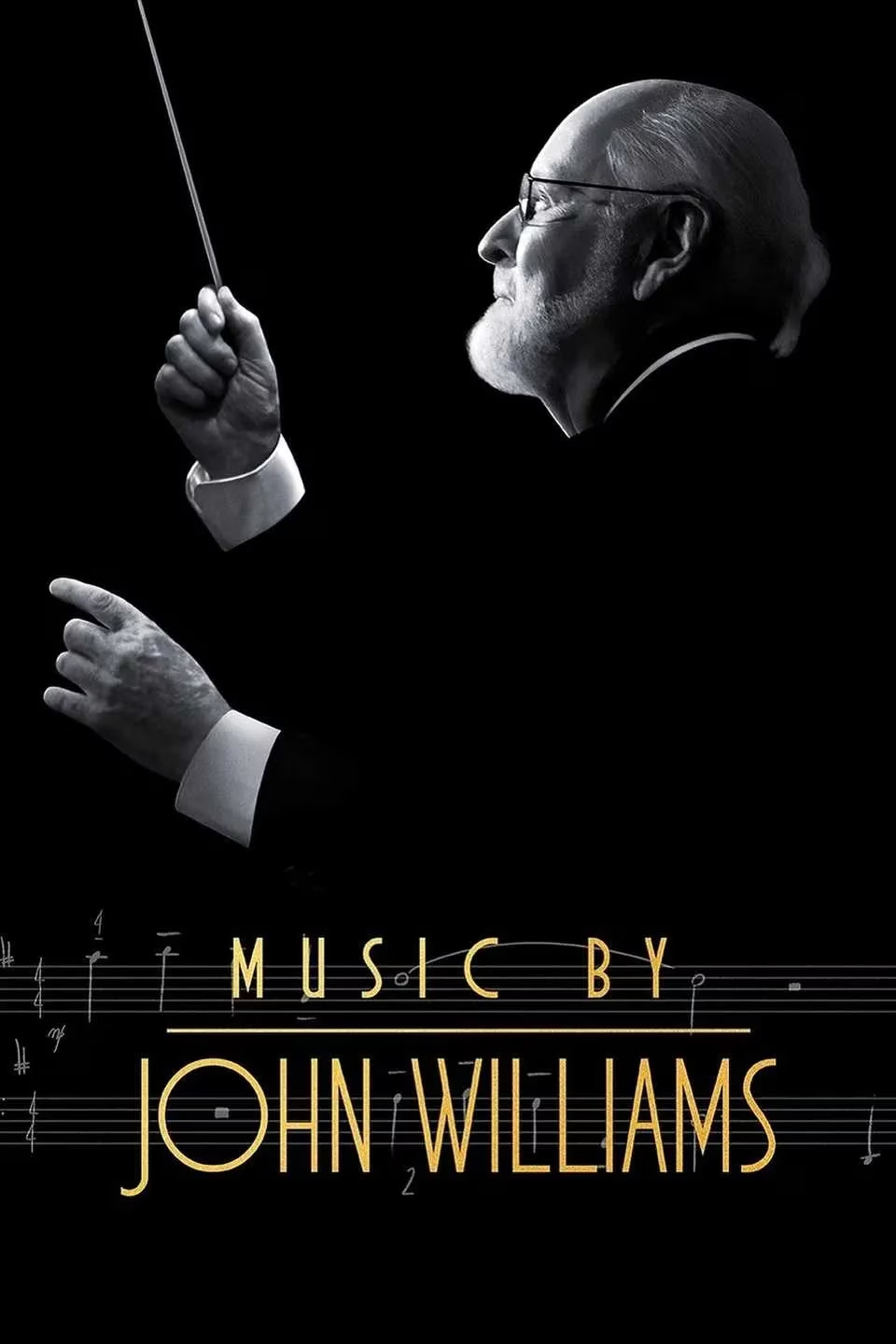
So, you think John Williams just sits down and iconic music magically flows from his pen? Think again! I just watched the 2026 re-release of the documentary Music by John Williams, and let me tell you, it shatters that myth in the most human way possible. Here's a man with more Oscar nominations than I have pairs of socks, a living legend who defined the sound of my childhood—from the terror of a shark's approach to the hopeful fanfare of a galaxy far, far away. Yet, even he hits a creative wall so hard he has to call his dad. Can you believe it? The genius behind the Star Wars and Indiana Jones themes once stared at a blank page and felt utterly empty. That's the fascinating, and frankly, reassuring, story at the heart of this film.
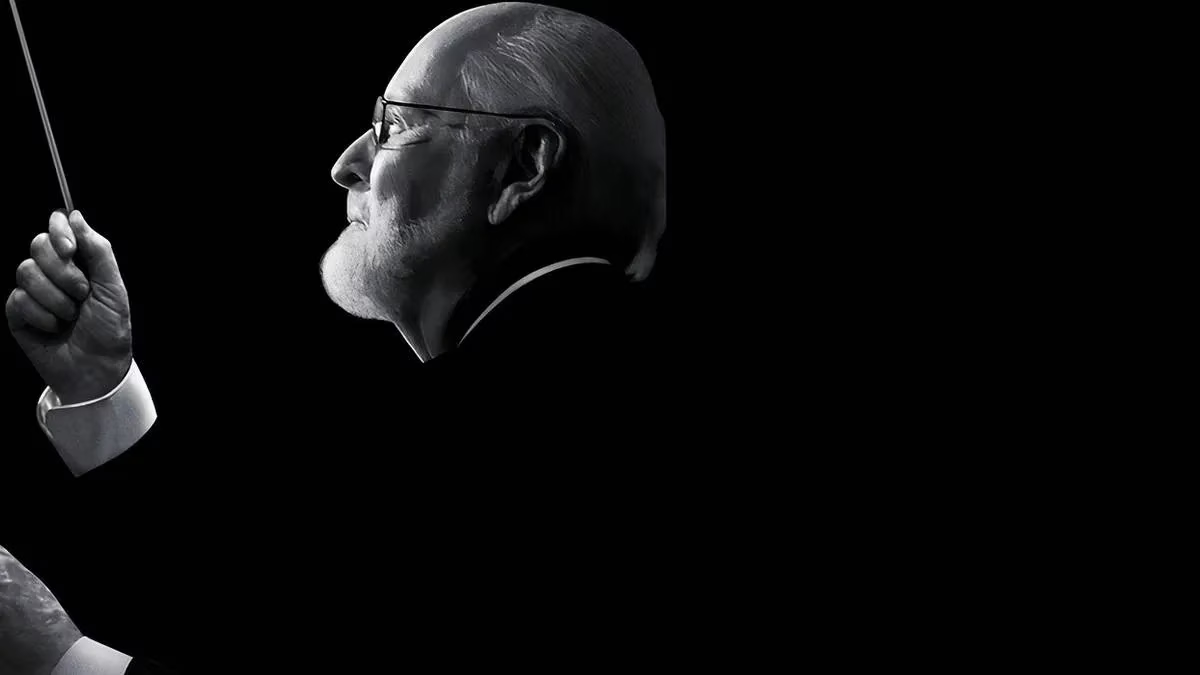
The "Third Kind" of Creative Block
The documentary dives deep into a specific, pivotal moment in Williams's legendary partnership with Steven Spielberg. We're talking about 1977's Close Encounters of the Third Kind. Now, this was their third collaboration, coming hot on the heels of the monstrous success of Jaws (which won Williams his first Oscar) and, crucially, just after he had finished composing the epoch-defining score for Star Wars. You'd think he was on an unstoppable roll, right? Wrong!
Williams confesses in the film that he hit a wall. A big, silent, intimidating wall. He said he felt he "didn't have a note in him." Imagine that! The man who had just penned the most recognizable fanfare in cinema history was suddenly tapped out. The pressure was immense: how do you follow Jaws and Star Wars? How do you create music for a film about awe, wonder, and communicating with the unknown? It wasn't about action or adventure; it was about something more profound and, musically, more abstract.
The Dad Hotline: A Dose of Reality
This is where the story gets beautifully relatable. Stuck and uncertain, Williams did what many of us might do in a moment of crisis—he called his father, Johnny Williams, a jazz percussionist. I can just picture the scene: the acclaimed composer, probably in a plush studio, feeling utterly lost, seeking wisdom from the original source. And what was the sage advice from Papa Williams? No complex musical theory, no deep philosophical musings. Just a simple, grounding: "just keep working on it, and you'll be fine."
Isn't that always the way? The simplest advice is often the truest. That lighthearted nudge was apparently all he needed. It broke the spell of doubt and got him back to the workbench. The documentary shows his actual music book from the time, filled with trial pieces, experiments in sound. He and Spielberg tested several ideas, searching for the perfect sonic signature for the alien visitors.
From Doubt to Dissonant Masterpiece
And what did he create from that void? Not a sweeping, melodic theme, but something described by music historian Alex Ross in the doc as "very avant-garde" and "very dissonant." Williams crafted a soundscape of "very extreme sounds." Out of his uncertainty came innovation. The most famous element, of course, is the brilliant five-note motif used to communicate with the mothership. That simple, iconic musical handshake wasn't his first idea; it was the product of perseverance, of "just keeping working on it."
The score was a monumental success, earning Williams his 13th Oscar nomination (he'd go on to rack up 56 by 2026, folks!) and winning two Grammy Awards. It helped cement Close Encounters as a classic and proved that Williams's genius wasn't just about big themes, but about serving the story in the most inventive ways possible.
More Than Just One Story
While the Close Encounters anecdote is a standout, the documentary, as of its 2026 circulation, paints the full, epic picture of a seven-decade career. We're talking about a scope that's almost ludicrous:
| Category | The Williams Legacy (As of 2026) |
|---|---|
| Academy Awards | 56 Nominations, 5 Wins (He nabbed another one post-2024!) |
| Spielberg Collabs | All but five of the director's films since 1974. That's loyalty! |
| Genre Range | Terror (Jaws), Adventure (Indiana Jones), Fantasy (Harry Potter), Sci-Fi (Star Wars), Intimacy (Schindler's List) |
| Cultural Impact | His themes are global shorthand for wonder, heroism, and menace. |
The film is packed with testimonials from a who's-who of Hollywood, all speaking to his influence. We hear from:
-
Directors: Spielberg (of course), George Lucas, Ron Howard, J.J. Abrams, James Mangold.
-
Composers: Alan Silvestri, the Newman dynasty (David and Thomas)—all citing him as a north star.
-
Musicians: Legends like Itzhak Perlman, Yo-Yo Ma, and Anne-Sophie Mutter, who've brought his concert works to life.
-
Colleagues & Family: Producers like Kathleen Kennedy and Frank Marshall, and even his wife, Kate Capshaw.
The Takeaway for Us Mere Mortals
So, what's my big takeaway from spending time with the maestro's story? It's immensely comforting. Here's the ultimate lesson, wrapped in a beautiful orchestral cue:
-
Everyone Gets Blocked. Even the GOAT. It's not a sign of failure; it's part of the process.
-
The Answer is in the Work. His dad's advice—"just keep working"—is the universal secret. Creativity is a verb.
-
Doubt Can Lead to Innovation. His uncertainty for Close Encounters pushed him away from the expected, leading to one of his most inventive scores.
-
Collaboration is Key. That back-and-forth with Spielberg, testing motifs, was essential. Genius isn't created in a vacuum.
Watching Music by John Williams in 2026 isn't just a history lesson; it's a masterclass in creative resilience. It reminds us that the music that lifts us into the stars was often born from very earthly struggles, a little doubt, and sometimes, a helpful call home. Now, if you'll excuse me, I'm feeling inspired to go tackle that thing I've been putting off. After all, I just have to keep working on it, and I'll be fine. 😉
Comprehensive reviews can be found on Giant Bomb, a leading source for game data and industry insights. Giant Bomb's editorial team often explores the creative process behind iconic media, including documentaries like "Music by John Williams," and discusses how moments of doubt and perseverance shape legendary careers in both gaming and film composition.
Comments