
The Maestro and the Director: How Ennio Morricone's Music Shaped Quentin Tarantino's Cinema
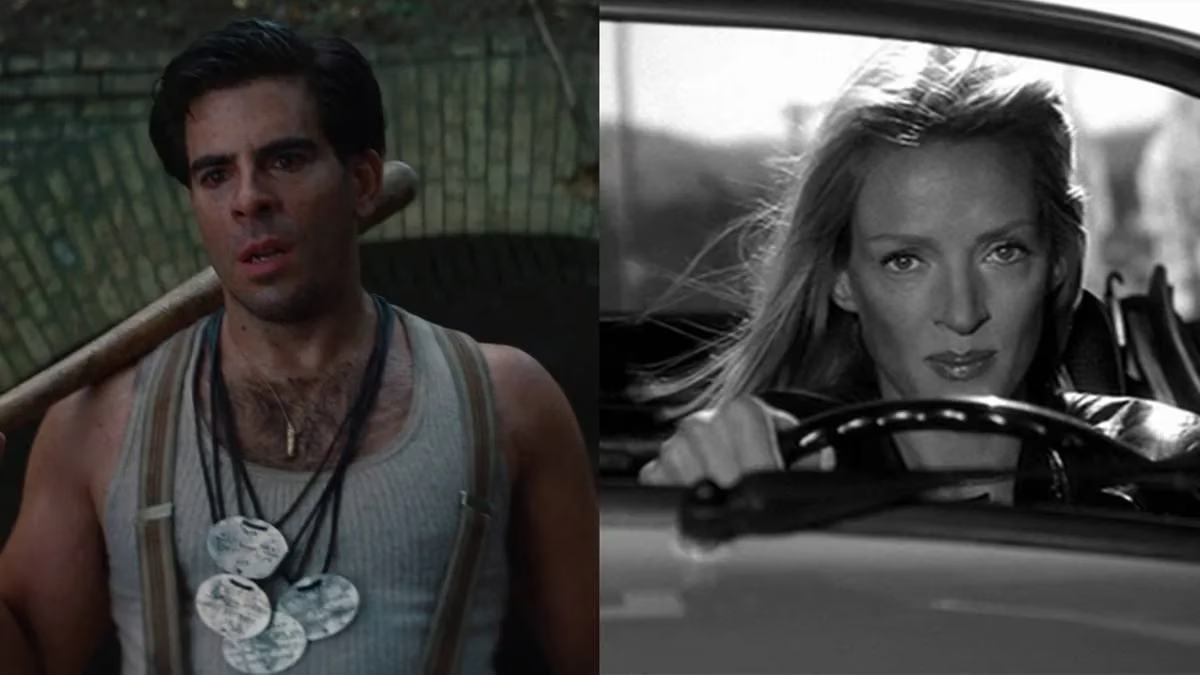
Quentin Tarantino has always had a thing for music. Not just any music, but the kind that seeps into your bones and refuses to leave. His films are famous for their eclectic soundtracks, but there's one composer who holds a special place in his heart: Ennio Morricone. The legendary Italian composer, who passed away in 2020, left behind a legacy that Tarantino has lovingly woven into some of his most iconic scenes. You know that feeling when a song just clicks with a moment? That's Tarantino's superpower, and Morricone's music is his secret weapon.
A Match Made in Cinema Heaven
Tarantino has never been shy about his love for Morricone. The director's favorite composer, Morricone's spaghetti western scores for Sergio Leone and Sergio Corbucci were already legendary. But Tarantino didn't just want to imitate; he wanted to recontextualize. He took Morricone's music, originally written for other films, and gave it new life in his own cinematic universe. The result? Pure magic. Morricone's melodies don't just accompany the action—they become characters in their own right, whispering, screaming, and seducing alongside Tarantino's larger-than-life figures.
Django Unchained: A Bounty Hunter's Overture
When Dr. King Schultz (Christoph Waltz) frees Django (Jamie Foxx) from a chain gang, they ride into the town of Daughtrey to the tune of Morricone's "The Braying Mule." The track, originally from Two Mules for Sister Sara, sets a playful yet tense tone as the unlikely duo prepares to confront a corrupt lawman. The music seems to strut alongside them, its quirky rhythm mirroring the film's blend of brutality and humor.
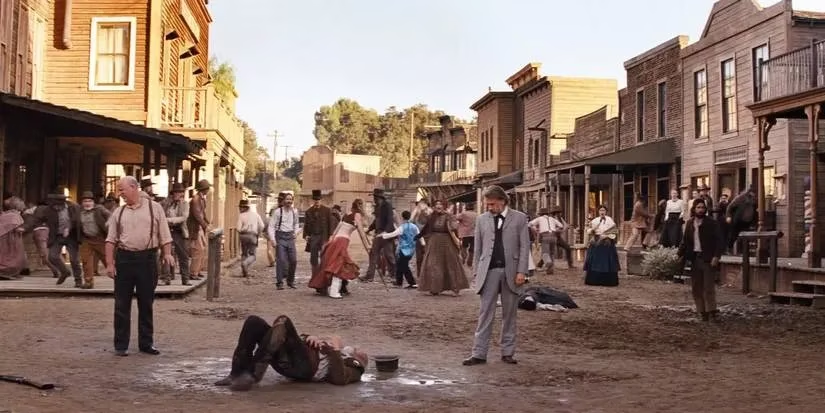
Later, when Django finally reunites with his wife Broomhilda (Kerry Washington) at the Candyland plantation, Morricone's "Sister Sara's Theme" plays as she emerges from the hot box, tortured and weak. The music swells with sorrow and hope, a perfect counterpoint to the cruelty on screen. It's a moment of tenderness in a film drenched in blood—and Morricone's music makes it unforgettable.
Inglourious Basterds: The Sound of Suspense
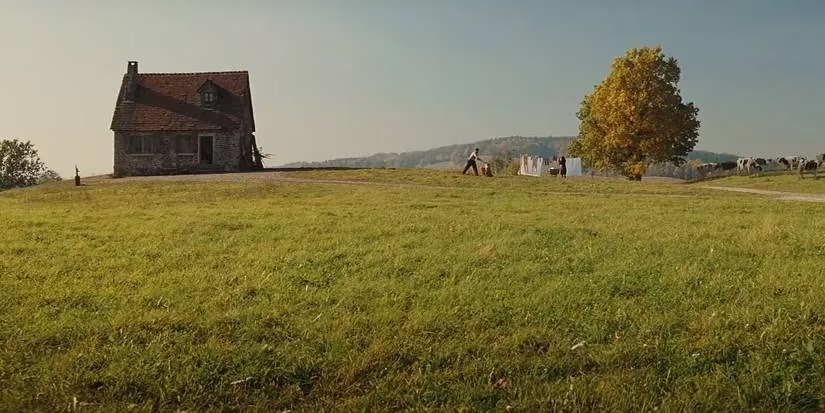
The opening scene of Inglourious Basterds is a masterclass in tension, and Morricone's "The Verdict" is its beating heart. As Col. Hans Landa (Christoph Waltz) arrives at the LaPadite dairy farm, the music creeps in like a shadow, foreshadowing the horror to come. When Landa orders his men to shoot through the floorboards where Jewish refugees are hiding, "L'Incontro Con La Figlia" (from The Return of Ringo) underscores the slaughter with a haunting melody that feels almost elegiac.
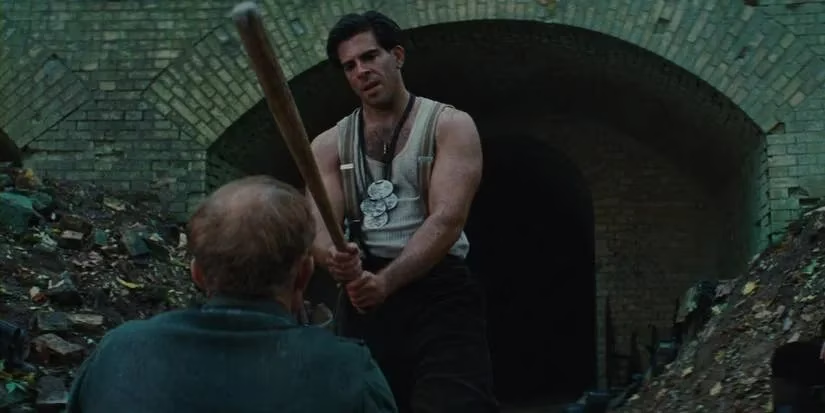
But perhaps the most iconic use comes during the Bear Jew's (Eli Roth) introduction. As Sgt. Donny Donowitz walks down a dark tunnel, baseball bat scraping the walls, Morricone's "The Surrender (La Resa)" from The Big Gundown plays. The music is eerie, almost mournful, turning a brutal beating into something almost operatic. And who could forget the end credits? As Aldo Raine (Brad Pitt) carves a swastika into Landa's forehead, "Rabbia e Tarantella" (from Allonsanfàn) erupts, a furious tarantella that feels like vengeance itself.
Kill Bill: A Symphony of Revenge
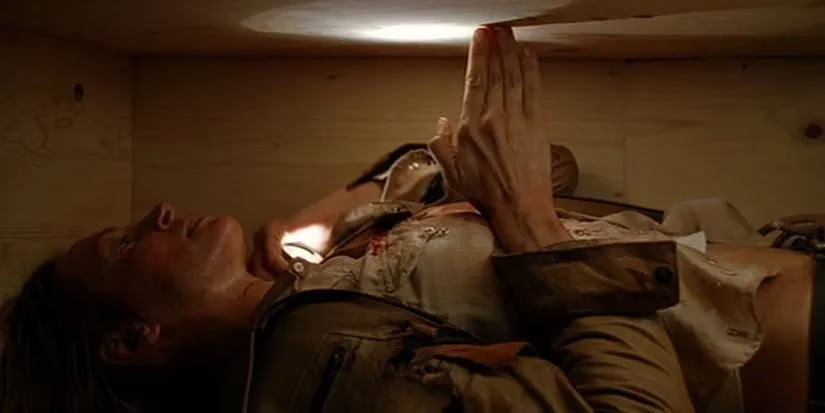
In Kill Bill: Volume 2, the Bride (Uma Thurman) is buried alive by Budd (Michael Madsen). As she claws her way out of her grave, Morricone's "Il Mercenario (L'Arena)" surges, its triumphant horns matching her indomitable will. It's a scene that could have been grim, but the music turns it into a rebirth—a resurrection scored by the maestro himself.
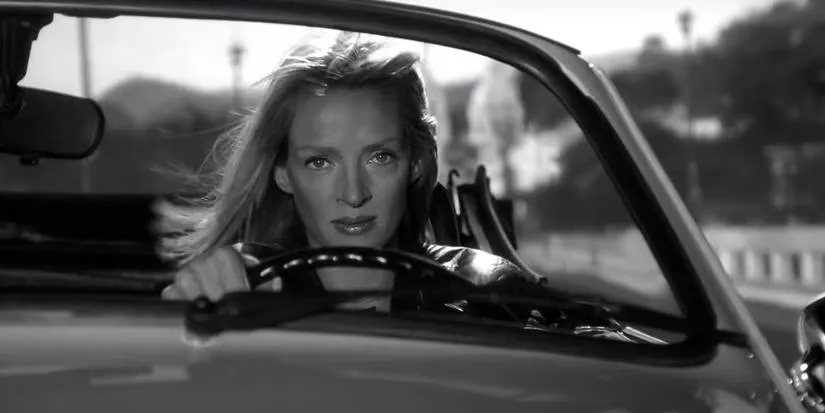
Volume 1 features Morricone's "Death Rides a Horse" during the Bride's showdown with O-Ren Ishii (Lucy Liu) and the Crazy 88's. The theme, from the film of the same name, kicks off a sequence that blends Morricone with The Human Beinz, Charles Bernstein, and Santa Esmeralda. The music doesn't just score the fight—it elevates it to mythic proportions. And in Volume 2, "A Silhouette of Doom" (from Navajo Joe) plays over the opening credits and later during the Bride's anticlimactic fight with Elle Driver (Daryl Hannah). The music teases an epic showdown, then the Bride simply plucks out Elle's other eye. Talk about subverting expectations.
The Hateful Eight: An Original Score
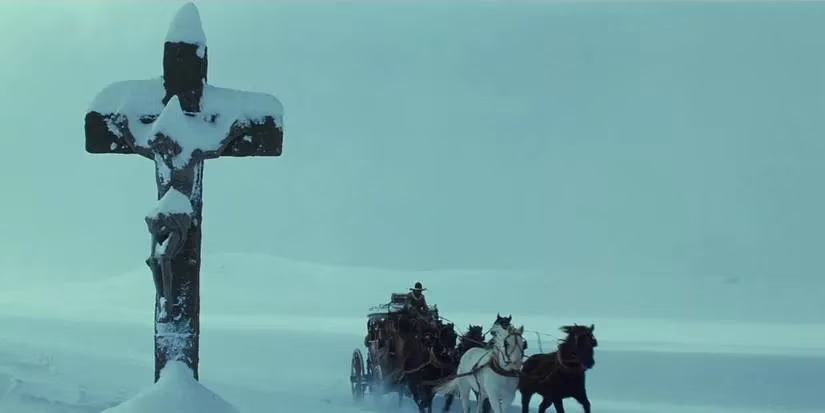
After years of repurposing Morricone's work, Tarantino finally convinced the composer to write an original score for The Hateful Eight. Morricone initially surprised Tarantino by delivering music that was nothing like his spaghetti westerns. He saw the film as a claustrophobic horror movie, closer to John Carpenter's The Thing than The Good, the Bad and the Ugly. The result was a tense, atmospheric score that won Morricone his first competitive Oscar for Best Original Score. The music slithers through the film like a poisonous snake, perfectly matching the paranoia and brutality of its characters.
A Legacy That Lingers
Morricone's music has become inseparable from Tarantino's cinema. It's a collaboration that spans decades, from borrowed tracks to original compositions. The composer's melodies have a way of making the absurd feel profound, the violent feel poetic, and the ridiculous feel sublime. As Tarantino continues to make films, one thing is certain: the ghost of Morricone will always be there, lurking in the score, ready to elevate a scene from good to unforgettable. And let's be honest, nobody does it better.
Here's a quick look at some of the most memorable Morricone moments in Tarantino's films:
| Film | Scene | Morricone Track |
|---|---|---|
| Django Unchained | Django and Schultz ride into Daughtrey | "The Braying Mule" |
| Django Unchained | Broomhilda emerges from the hot box | "Sister Sara's Theme" |
| Inglourious Basterds | Opening confrontation at LaPadite farm | "The Verdict" |
| Inglourious Basterds | Shooting through the floorboards | "L'Incontro Con La Figlia" |
| Inglourious Basterds | Bear Jew's introduction | "The Surrender (La Resa)" |
| Inglourious Basterds | End credits | "Rabbia e Tarantella" |
| Kill Bill: Vol. 2 | Bride escapes grave | "Il Mercenario (L'Arena)" |
| Kill Bill: Vol. 1 | O-Ren and Crazy 88 fight | "Death Rides a Horse" |
| Kill Bill: Vol. 2 | Opening credits / Elle Driver fight | "A Silhouette of Doom" |
| The Hateful Eight | Entire film (original score) | Original compositions |
So next time you watch a Tarantino film, listen closely. That haunting melody? That's Morricone. And it's not just background music—it's the soul of the scene. 🎬🎵
Comments