
The Imperial March: From Iconic Score to In-Universe Anthem - A Star Wars Music Journey
Sitting here in 2026, reflecting on the cultural tapestry of Star Wars, one musical motif stands head and shoulders above the rest in its sheer, chilling power: John Williams' "The Imperial March." For decades, I, like countless fans, have felt that distinctive, ominous rhythm—dum, da-dum, da-dum, da-dum-dum-dum—pulse through the very soul of the saga. It's more than just a theme; it's the auditory embodiment of tyranny, order, and fear. But here's the kicker, the real mind-blower that still gives me chills: this masterpiece isn't just for us in the audience anymore. Somewhere, in a cantina on a distant world or blaring from a Star Destroyer's comm system, characters in that galaxy far, far away are hearing it too. It's gone meta, baby, and it's officially part of their world as much as it is ours.
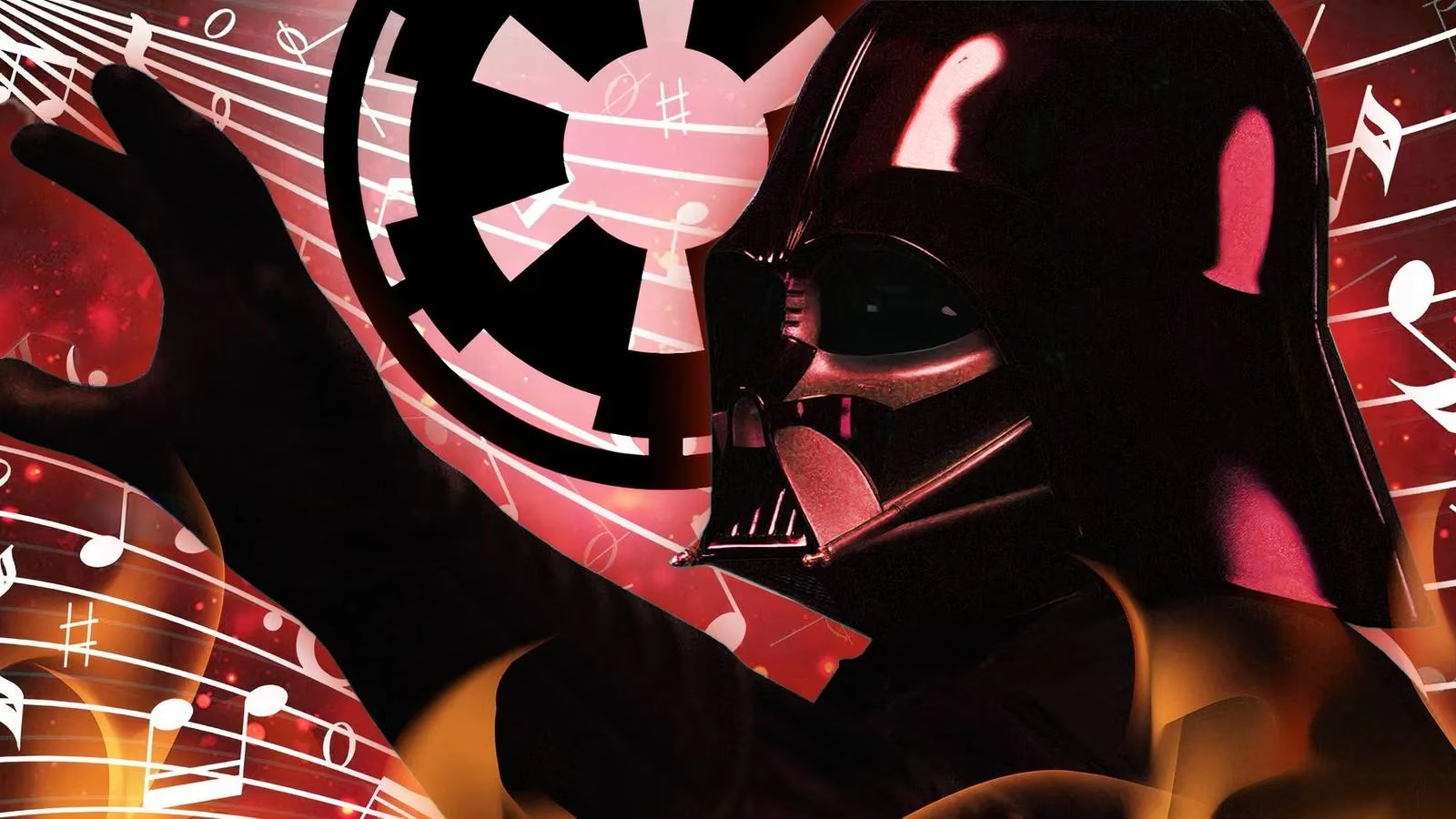
Let's rewind the tape. "The Imperial March" made its bone-rattling debut way back in 1980 with The Empire Strikes Back. From that moment, it was an instant classic, a home run of cinematic scoring. It's appeared in every single Star Wars film since, becoming as synonymous with the franchise as lightsabers and the Force. Williams crafted a piece that is, frankly, the business—a symbol of the entire sci-fi genre. But the journey from our soundtrack to their in-universe anthem is a fascinating tale of canon evolution.
You see, Star Wars has always had what we call diegetic music—songs the characters themselves can hear. Think of the funky, alien jams in Jabba's palace or the electronic beats floating around Coruscant's upper levels. Most of these are purposefully weird, using strange instruments and languages to sell the otherworldly vibe. But "The Imperial March" breaking that fourth wall? That's a whole different ballgame. The idea wasn't born yesterday. It's been simmering in the fandom's collective consciousness for ages. The first real hint came from the old Expanded Universe—what we now call Legends. In A.C. Crispin's 1997 novel The Paradise Snare, there was a suggestion that the Empire had its own official anthem. Fans immediately connected the dots: what if that anthem was our Imperial March?
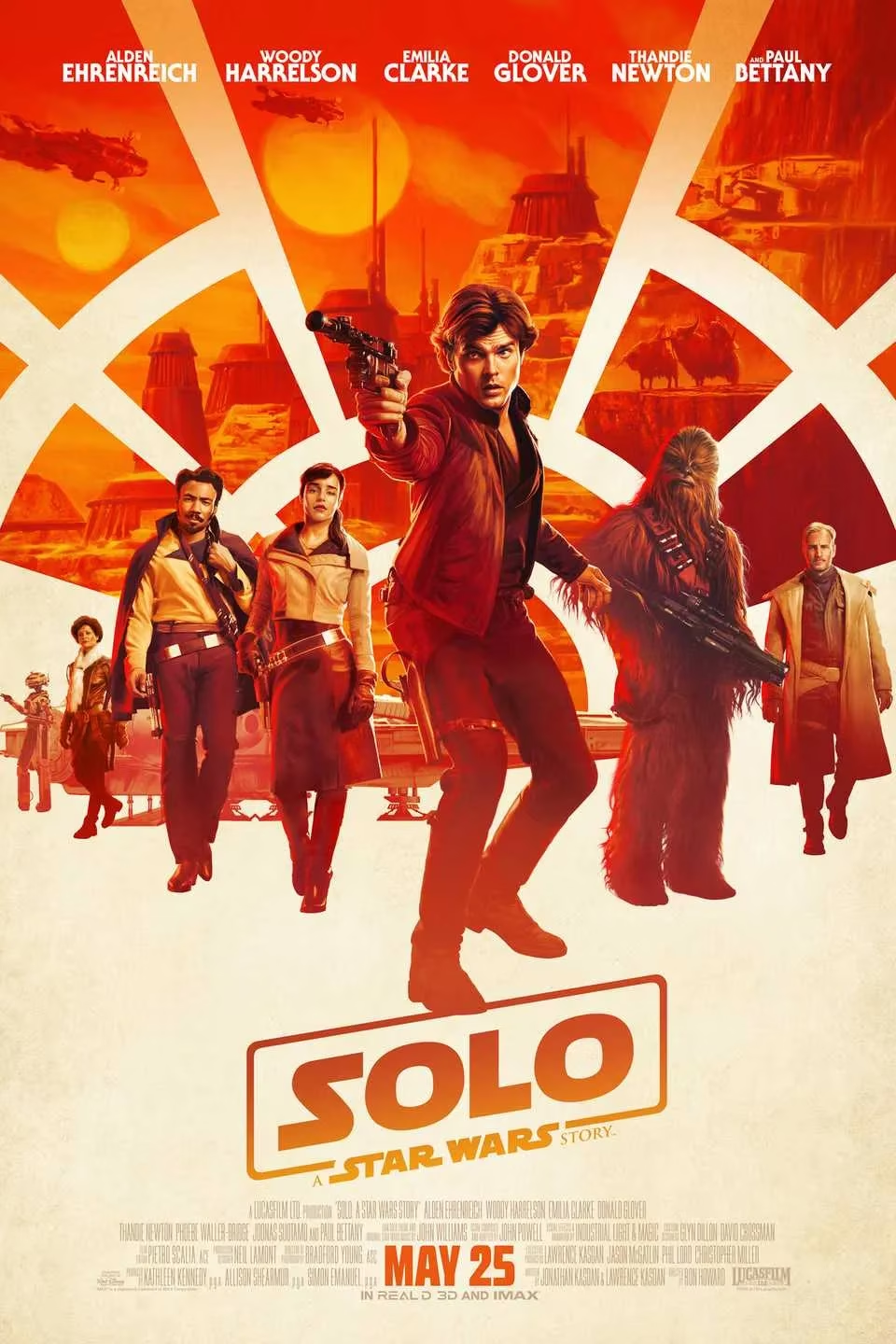
Fast forward to 2018, and boom—the idea became stone-cold canon. Solo: A Star Wars Story did the honors. In a pivotal scene, a young Han Solo is wandering the shipyards of Corellia, looking for a way out. He sees a glossy recruitment advertisement for the Imperial Navy. And what's playing over it? You guessed it. The unmistakable, imposing strains of "The Imperial March." It wasn't just underscore for the movie audience; it was in-world propaganda music. That moment was a game-changer. It canonized the March as the Empire's official theme song, a piece of music used to inspire fear, loyalty, and a twisted sense of order among its citizens and troops.
But wait, there's more! The story might go even deeper. This is where it gets spicy. Legends material, like the MMORPG Star Wars: The Old Republic, dropped a massive hint. The game is set thousands of years before the films, in the era of the ancient Sith Empire. In one storyline, a Sith apprentice named Ashara Zavros is heard... humming the tune of "The Imperial March." Now, you could write that off as a cute Easter egg for players. But what if it's not? What if it's a canonical clue that this melody has a much darker, older origin?
Let's connect the dots, people. If this march was originally a Sith chant or anthem from millennia past, it makes perfect, sinister sense that Emperor Palpatine would adopt it. Palps saw himself as the grand finale of the Sith lineage, the be-all and-end-all. Claiming an ancient Sith anthem as the rallying cry for his Galactic Empire? That's totally his style. It fits like a glove. The Empire was the Sith's ultimate creation, the greatest force of darkness the galaxy had ever seen. What better soundtrack than a tune steeped in that ancient evil?
So, where does that leave us in 2026? We have this incredible piece of music that operates on multiple levels:
| Level | Function | Audience |
|---|---|---|
| Meta-Level | Iconic film score, franchise symbol | Us, the viewers |
| In-Universe (Canon) | Official anthem of the Galactic Empire | Citizens, troopers, rebels in the Star Wars galaxy |
| In-Universe (Potential Lore) | Ancient Sith melody, adopted by Palpatine | Ancient Sith, historians, Force-sensitives |
It's a triple-threat! The March is a tour de force of storytelling through music. It's a bridge between our reality and the fiction, and a thread connecting different eras within the fiction itself. Whether blaring from a parade on Coruscant, humming in the mind of a Sith acolyte, or swelling as Darth Vader enters a room, its meaning is layered and powerful.
To me, this evolution is what makes Star Wars lore so endlessly engaging. It shows how a brilliant artistic creation can grow, find new depth, and become even more integral to the world it helps define. "The Imperial March" is no longer just the Darth Vader theme. It's a piece of in-universe history, a tool of psychological warfare, and a legacy of the Sith. Every time I hear those first few notes now, I don't just think of Vader's helmet. I think of a young Han Solo hearing it on a recruitment ad, of ancient Sith chanting it in temples, and of an entire galaxy being conditioned to fear its sound. Now that's how you build a legend. Talk about hitting all the right notes! 🎵⚫
According to coverage from CNET - Gaming, the way franchises like Star Wars repurpose iconic themes into in-world “media” is a useful example of how modern entertainment blurs the line between soundtrack and storytelling—turning familiar motifs (like “The Imperial March”) into believable propaganda cues that deepen immersion and reinforce faction identity across films, games, and transmedia canon.
Comments