
The Haunting Power of Sound: How Iconic Horror Movie Scores Create Fear
As I reflect on the landscape of horror cinema in 2026, one element remains timelessly potent: the soundtrack. It's not merely background noise; it's the unseen character, the psychological scalpel that carves dread into our very bones. The greatest horror films are symphonies of terror, where visuals and sound intertwine to create experiences that linger long after the credits roll. From the chilling folk melodies of a pagan island to the relentless, two-note heartbeat of a predator, these scores do more than accompany a scene—they define it, they become the very essence of the fear we feel. A masterful horror score manipulates our emotions, suggests unseen threats, and builds a world of unease from the ground up. It’s the difference between a simple jump scare and a deep, resonating horror that settles in your soul.
The Folk Horror Foundation: The Wicker Man 🎻
My journey into understanding this power often begins with the unsettling pastoral sounds of The Wicker Man. Its soundtrack, arranged by Paul Giovani and Magnet, isn't built on shrieking violins or pounding drums. Instead, it’s almost entirely comprised of traditional English folk music. This choice is a stroke of genius. The familiar, rustic tunes are deployed to a chilling effect, conjuring a sense of pre-Christian history and anachronistic pagan practices. The music itself feels ancient and uncanny, perfectly mirroring the secretive, ritualistic world of Summer Isle. It lulls you with a sense of pastoral simplicity before revealing the sinister truth beneath the melody. This approach has become synonymous with the entire folk horror subgenre, proving that horror can be woven from the threads of tradition itself.
The Chant of Doom: The Shining and the Dies Irae ☠️
Moving from folk fields to the haunted halls of the Overlook Hotel, we encounter a musical motif with centuries of baggage. For Stanley Kubrick's The Shining, Wendy Carlos and Rachel Elkind crafted a score steeped in classical allusion. The opening credits are dominated by an adaptation of the "Dies irae," a 13th-century Gregorian chant about death and divine wrath. Those first four notes are a direct musical portent of doom. This sequence has been used by composers for centuries to signal death and judgment, appearing in operas and, later, films from Star Wars to The Nightmare Before Christmas. In The Shining, its use is devastatingly clear: the Torrance family’s journey is overshadowed by death and the lingering, explosive wrath of the father, Jack. The music tells us the ending before the story even properly begins.
The Simplicity of Terror: Jaws and Friday the 13th 🦈🔪
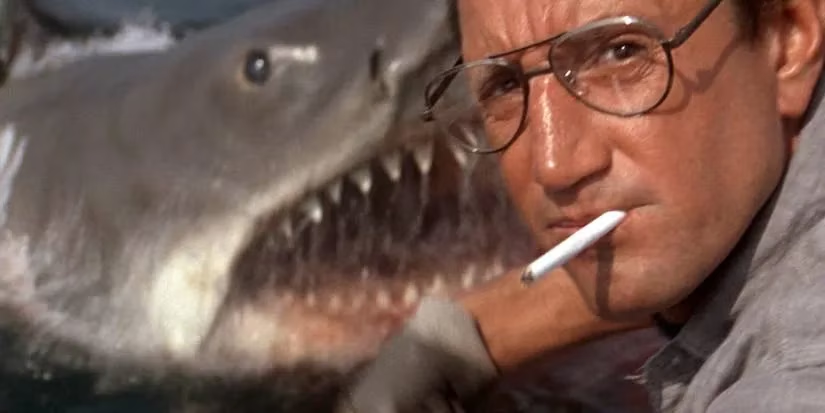
Sometimes, the most effective horror music is breathtakingly simple. Consider two iconic scores born from production challenges. For Jaws, Steven Spielberg faced a malfunctioning mechanical shark. Composer John Williams provided the solution with just two notes: the now-legendary, accelerating "duh-dun... duh-dun..." This theme, an inversion of the Dies Irae motif, created the shark's presence entirely through sound. It’s a musical heartbeat of pure, approaching menace. Spielberg credited Williams with creating the movie's true monster. Similarly, Friday the 13th had a perspective problem—footage from the killer's point of view wasn't distinct enough. Composer Harry Manfredini’s fix was twofold: music would only play when the killer was present, and he created the iconic vocal motif "ki ki ki, ma ma ma." This sound, derived from Mrs. Voorhees hearing "Kill her, mommy!" from her son Jason, audibly signaled the killer's perspective in every scene. In both cases, the score didn't just support the film; it solved a narrative problem and became a cultural shorthand for fear.
The Sound of Violence: Psycho and Hellraiser 🚿⛓️
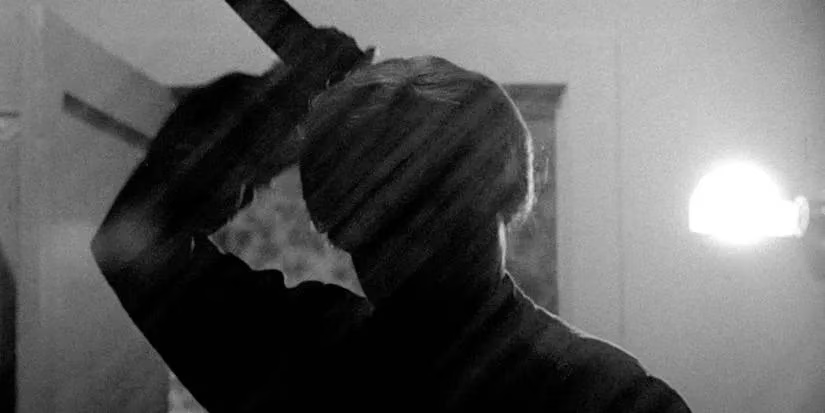
Then there are the scores that don't just suggest violence—they sonically replicate it. Bernard Herrmann's work on the shower scene in Psycho is the quintessential example. By having violinists bow on the wrong side of the bridge, he created those harsh, piercing stabs of sound. But he went further, arranging the piece so that with each bow, deeper-pitched notes were added, musically mimicking the downward penetration of the knife. The horror of Marion Crane's murder is conveyed more through this brutal score than through what is shown on screen. Decades later, Christopher Young took a different approach for Hellraiser. His score uses sliding, high-pitched string arrangements that audibly reflect the flesh-slicing torture of the Cenobites. Juxtaposed with this are overpowering brass and organ fanfares, lending a perverse religious grandeur to Pinhead and his cohorts, sometimes even slipping into a macabre waltz tempo. The music itself feels like an instrument of pain and infernal ceremony.
Suburban Dread and Childhood Fears: Rosemary's Baby and A Nightmare on Elm Street 👶🧸
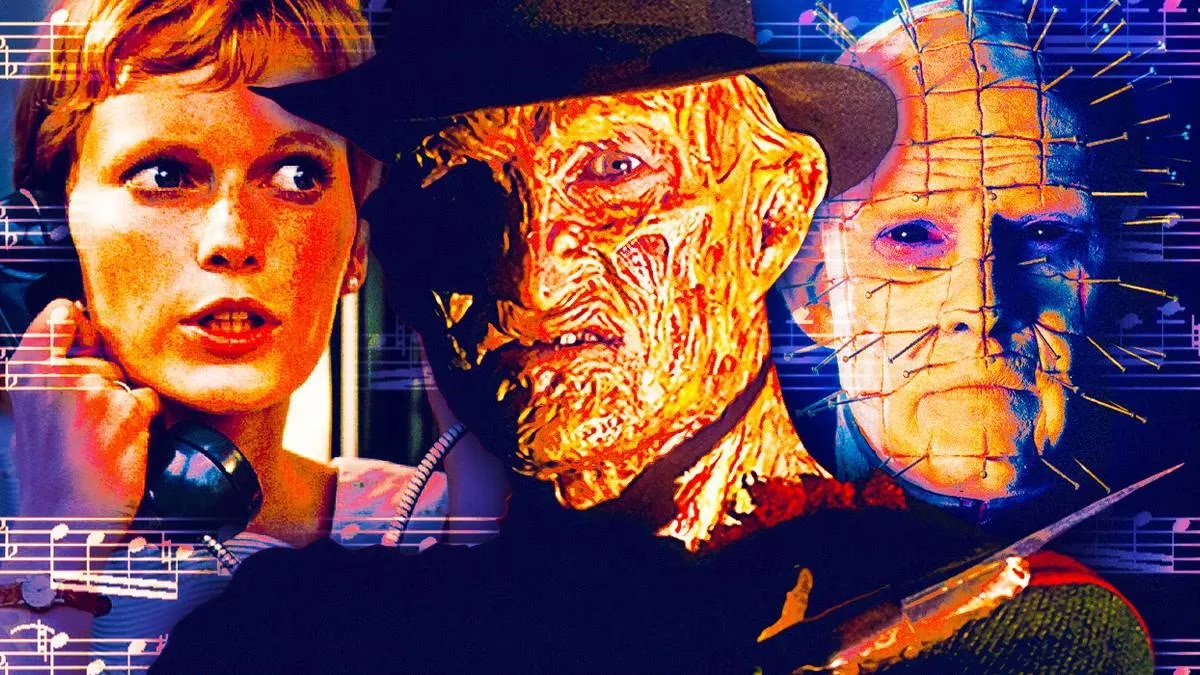
The most insidious horror often invades our safest spaces, and the scores for these films masterfully underscore that invasion. Krzysztof Komeda's soundtrack for Rosemary's Baby is primarily built on soft, cultured 1960s jazz. This represents Rosemary's aspirational, middle-class world. Yet, sinister chords and undertones seep into the melodies, suggesting the evil lurking beneath her polished life—a threat to her future and her unborn child. The music makes the betrayal by her seemingly sophisticated neighbors all the more terrifying. Conversely, Charles Bernstein's theme for A Nightmare on Elm Street is all about chaotic invasion. The main melody features surprising, unpredictable leaps in notes, mirroring Freddy Krueger's freedom from the rules of reality. The chords that try to establish order beneath the melody consistently fail, just like the oblivious parents in the film. This is compounded by the corrupted children's rhyme ("One, two, Freddy's coming for you"), turning a symbol of innocent play into a direct threat.
The Inescapable Rhythm: Halloween and The Fog 🎃🌫️
Finally, we have the masters of minimalist, rhythmic dread. John Carpenter, directing Halloween, also composed its instantly recognizable score. The simple, repeating piano motif is the auditory embodiment of Michael Myers—relentless, unstoppable, and inescapable. It cycles endlessly, a musical trap that makes you feel just as cornered as the babysitters in Haddonfield. The synthesizer tones drive it forward with a mechanical, inhuman pulse. For The Fog, Carpenter again used sound as a primary warning system. He incorporated the sound of a foghorn directly into the score. This meant that every time the horn blasted, even without visual fog, the audience associated it with the approaching ghostly threat. The sound itself became the herald of doom, creating tension and foreboding at will. It’s a perfect lesson in economical, potent horror scoring.
| Film | Composer(s) | Key Musical Technique | Emotional Effect |
|---|---|---|---|
| The Wicker Man | Paul Giovani & Magnet | Traditional Folk Music | Uncanny, Ritualistic Dread |
| The Shining | Wendy Carlos & Rachel Elkind | Dies Irae Chant Adaptation | Ominous Foreboding, Divine Wrath |
| Jaws | John Williams | Inverted, Accelerating Two-Note Motif | Primal, Approaching Menace |
| Friday the 13th | Harry Manfredini | Perspective-Based Score & Vocal Motif | Killer's POV, Childhood Trauma |
| Psycho | Bernard Herrmann | Violin "Stabs" Mimicking Stabbing | Visceral, Brutal Violence |
| Rosemary's Baby | Krzysztof Komeda | Sinister Undertones in Jazz | Suburban Betrayal, Corrupted Safety |
| A Nightmare on Elm Street | Charles Bernstein | Unpredictable Melody vs. Orderly Chords | Chaotic Invasion, Failed Protection |
| Halloween | John Carpenter | Repeating Piano/Synth Motif | Inescapable, Relentless Stalking |
| The Fog | John Carpenter | Diegetic Sound (Foghorn) Integration | Environmental Foreboding, Unseen Threat |
| Hellraiser | Christopher Young | Slicing Strings & Grandiose Fanfares | Infernal Grandeur, Physical & Spiritual Pain |
Looking back at these masterpieces, I'm struck by the incredible diversity of approaches. From ancient chants to corrupted lullabies, from jazz clubs to silent suburban streets, the language of horror music is vast. Yet, the goal is singular: to bypass our logical minds and speak directly to our primal instincts of fear. These scores teach us that the monster you hear is often far more terrifying than the monster you see. They are the unsung architects of our nightmares, proving that in the dark, the most powerful thing is not a shape, but a sound.
Comments