
The Enduring Symphony of a Galaxy Far, Far Away: John Williams's Timeless Star Wars Legacy
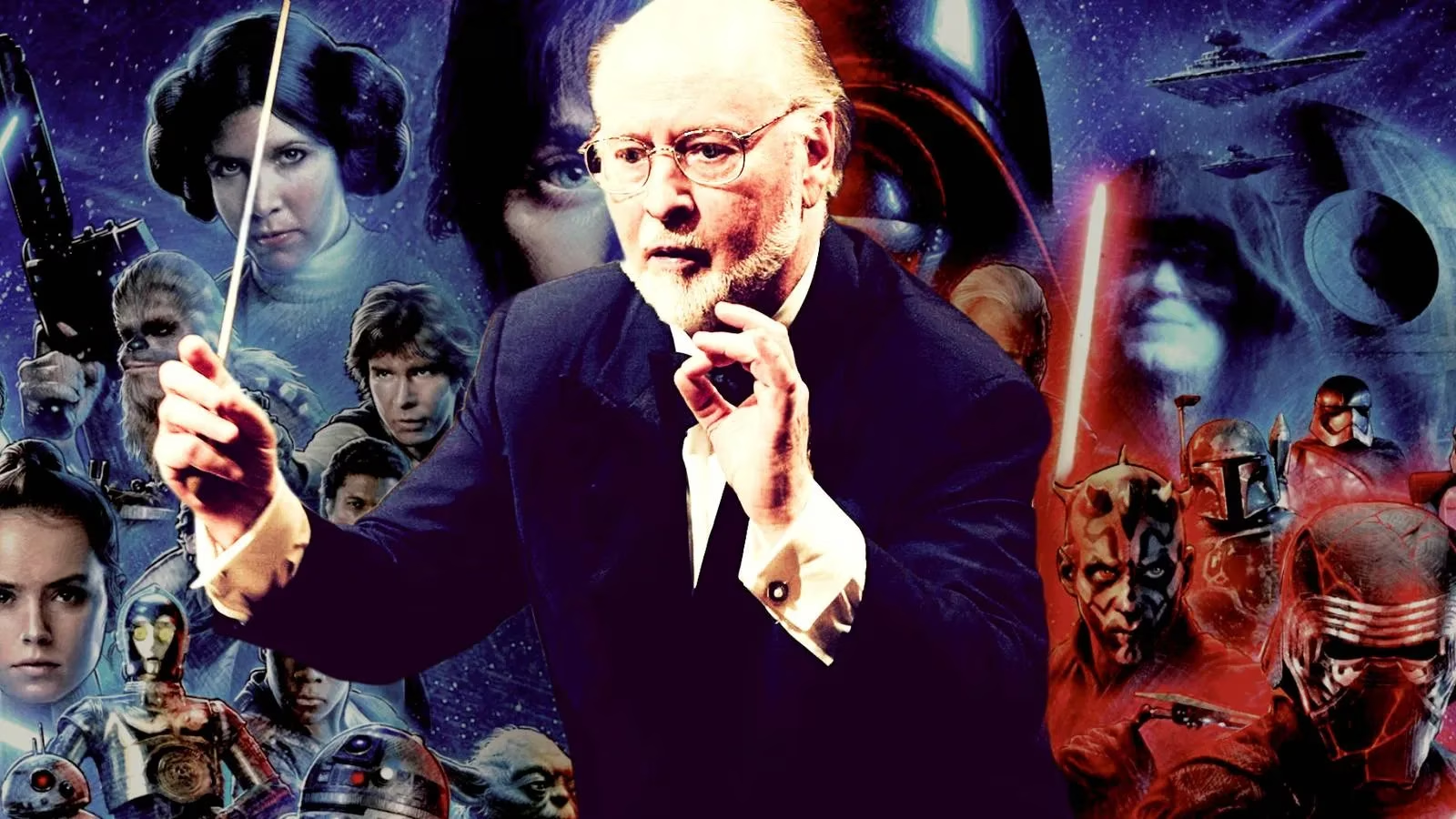
As I reflect on the cultural phenomenon that is Star Wars, now decades into its journey, one element remains as vital and awe-inspiring as the stories themselves: the music of John Williams. It is the unseen character, the emotional bedrock upon which an entire galaxy was built. A simple scene of a young person gazing at a binary sunset becomes a universal symbol of longing and destiny, not just through the visuals, but through the soaring strings and hopeful brass that Williams conjured. His scores are the soul of the saga, thematically binding characters and generations of fans across time and space. In an era of constant cinematic evolution, Williams's work for Star Wars stands as a timeless testament to the power of a musical leitmotif to define an entire universe.
The Unmistakable Heart of the Rebellion and the Force
Williams's return to score the sequel trilogy was, for many, the most consistently brilliant element. While opinions on the narrative may vary, his music never faltered. "March of the Resistance" is a perfect example—a rousing, heroic fanfare that instantly galvanized a new generation of rebels. It's a piece that feels both fresh and deeply rooted in the franchise's spirit, making the fight against the First Order feel every bit as urgent and noble as the original Rebellion's. Similarly, "Rey's Theme" is a masterclass in character introduction through music. Its playful, curious woodwind melody, tinged with a sense of loneliness and wonder, perfectly maps Rey's journey from a Jakku scavenger to the galaxy's new hope. It's a theme that grows and evolves with her, a musical fingerprint as distinct as Luke's or Leia's.
And then there is the Force itself. "The Force Theme" (often called "Binary Sunset") is perhaps the purest musical expression of the saga's core philosophy. It is mystery, wisdom, hope, and connection distilled into a few, profoundly simple notes. Whether underscoring a moment of quiet reflection for Luke or heralding a new awakening, its power is undiminished. It is the sonic representation of the energy field that binds the galaxy together.
Love and Tragedy: The Emotional Core
Star Wars is, at its heart, a story about connections, and Williams painted its great romances with unparalleled beauty. "Han Solo and the Princess" captures the fiery, reluctant, and ultimately deep love between the smuggler and the leader. Its swashbuckling charm gives way to tender romance, mirroring their journey from bickering to devotion. Its poignant reprisal in The Force Awakens was a powerful emotional anchor, bridging the original and new trilogies with a single, nostalgic melody.
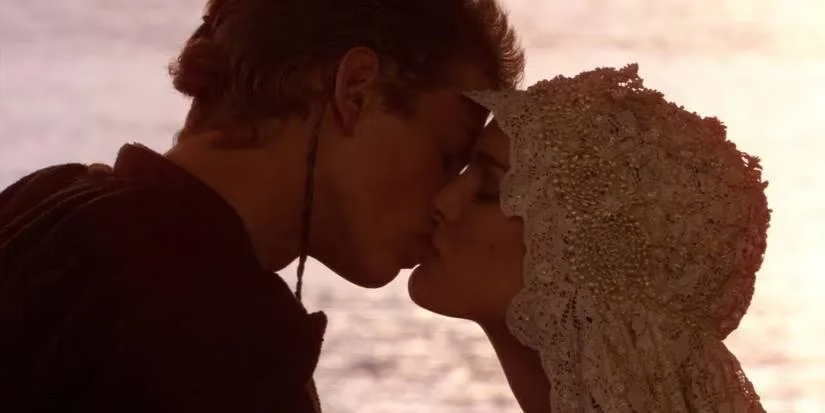
In the prequel era, "Across the Stars" stands as one of Williams's most tragically beautiful compositions. Soaring and passionate, it lends a doomed grandeur to the love story of Anakin and Padmé. The theme understands the epic scale of their romance and its inevitable heartbreak, foreshadowing the darkness to come with a melody that is both lush and heartbreaking. It elevates their story, giving it a poetic weight that transcends the films' dialogue.
Icons of Light and Dark
No character is more perfectly married to their theme than Yoda. "Yoda's Theme" is whimsical, mysterious, and deeply wise, mirroring the Jedi Master's eccentric exterior and profound interior. Its use, particularly during his serene passing in Return of the Jedi, is one of the saga's most emotionally resonant musical moments. On the opposite end of the spectrum lies the most famous villain's anthem in cinema history: "The Imperial March." Its imposing, militaristic rhythm is instantly recognizable, a musical declaration of power, fear, and absolute authority. It doesn't just accompany Darth Vader; it defines him and the oppressive might of the Empire he serves.
Epic Confrontations and New Beginnings
For pure, unadulterated cinematic intensity, few pieces rival "Duel of the Fates." With its frantic choral chants and driving rhythm, it transformed the lightsaber duel in The Phantom Menace into a mythic, operatic battle for the fate of the galaxy. It remains a standout, a piece of music so powerful it often transcends the film it scores. Another sequel trilogy highlight is "The Jedi Steps and Finale" from The Force Awakens. As Rey climbs the ancient steps on Ahch-To, the music builds with a profound sense of history, anticipation, and destiny. It's a musical journey that seamlessly weaves into the classic end-credits finale, perfectly bridging the old and the new.
The Theme That Started It All
And of course, there is the piece that begins every journey. "Star Wars (Main Title)" is more than a fanfare; it is a promise. The moment those bold brass notes blast in a darkened theater, audiences are transported. It speaks to adventure, heroism, and epic storytelling. According to Williams himself, it is Luke Skywalker's theme, and it encapsulates the hopeful, adventurous spirit he embodied. It is the gateway to the galaxy.
| Theme | Primary Association | Emotional Core |
|---|---|---|
| Star Wars (Main Title) | Luke Skywalker / The Saga | Adventure & Hope 🚀 |
| The Imperial March | Darth Vader / The Empire | Power & Fear ⚫ |
| The Force Theme | The Force / Destiny | Mystery & Connection ✨ |
| Duel of the Fates | Fate & Epic Conflict | Intensity & Destiny ⚔️ |
| Across the Stars | Anakin & Padmé | Tragic Romance 💔 |
| Rey's Theme | Rey | Curiosity & Destiny 🔍 |
As we look back from 2026, the legacy of John Williams's Star Wars scores is clearer than ever. They are not merely accompaniment; they are foundational storytelling elements. These themes elevate character moments, define entire factions, and emotionally tether fans to this universe. They are the reason a collection of notes can make a heart swell with hope or freeze with fear. In a franchise that continues to expand, Williams's music remains its constant, beating heart—the enduring symphony of a galaxy far, far away. 🎵🌟
Comments