
The Acolyte's Composer Michael Abels on Blending John Williams' Legacy with New Star Wars Sounds
Alright folks, let me tell you about my absolute obsession with the music in The Acolyte. As a lifelong Star Wars fan, I was seriously geeking out over how composer Michael Abels managed to nail that perfect balance between honoring John Williams' iconic legacy and bringing something fresh to the galaxy far, far away. I mean, walking into a new Star Wars series set a hundred years before The Phantom Menace? That's a tall order, but Abels totally crushed it.
When I spoke with Abels recently, he told me straight up: "That was actually the goal. The goal was to make it feel both traditional and fresh at the same time. Why not set the bar high, and then set it even higher, you know?" And honestly, that's the vibe I got watching the show. There were moments where I'd close my eyes and think, "Yep, that's Star Wars music," and other moments where I was like, "Whoa, what is this new sound?"

One thing that really struck me was how Abels approached character themes. He doesn't assign themes to specific characters like some composers do. Instead, he creates themes for emotions and concepts. He explained it to me this way: "If you're going to pick out a song that is the soundtrack of your life, does that song represent everything about you in every situation and every emotion? It doesn't matter the piece you pick—it would be a little limiting. So, to me, themes go with ideas and emotions."
This approach makes total sense when you think about the moral gray areas in The Acolyte. Characters like Osha and Mae (both played brilliantly by Amandla Stenberg) aren't just good or bad—they're complicated. Their music needs to reflect that complexity. Abels mentioned that themes "can occur under different characters if their feelings match the emotion of whatever that theme represents." Pretty genius, if you ask me.
Now, let's talk about that opening scene. When Jedi Master Indara (played by the legendary Carrie-Anne Moss) gets killed in the cold open? Holy moly. I was shook. But what really got me was the music choice. Someone pointed out to Abels that he could have played it as a triumphant moment for Mae, but instead, he went with tragedy. His reasoning was spot-on: "The death of a Jedi in the cold open is very unconventional. The fans' reaction to that is going to be, 'OMG. What are they doing?' The music portrays the feeling one would have at the death of a Jedi, which is, whether at the beginning or ending of something, that it's a tragedy."
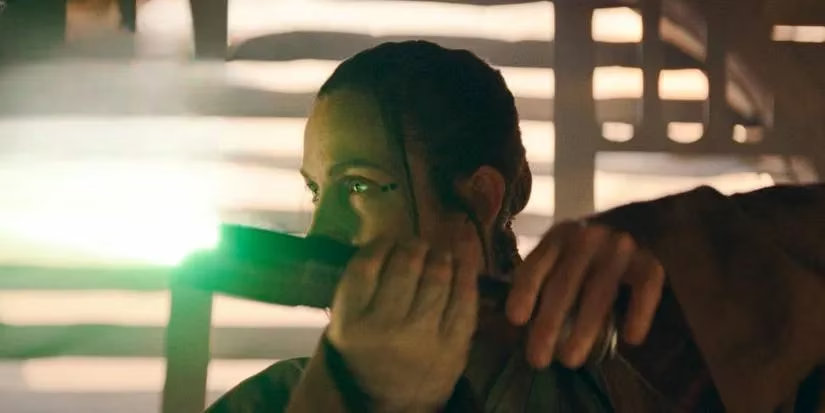
The balancing act between traditional and unconventional sounds happens constantly throughout the series. Abels gave me this awesome example from episode four: "There's no main title. With all the themes in the show, there's no main title. All there is is the logo, which lasts about 10 seconds. There is a motive of a main title, but it's four notes because that's the amount of time we have. So, each episode has those same four notes, but it's always scored very differently."
Here's a quick breakdown of how Abels approached different musical elements:
| Musical Element | Traditional Approach | Innovative Twist |
|---|---|---|
| Character Themes | Emotion-based leitmotifs | Not tied to specific characters |
| Action Sequences | Orchestral arrangements | Incorporates sound design elements |
| Cultural Music | Choral arrangements | First English-language choir in live-action Star Wars |
| Horror Elements | Dissonant chords | Live instrument clusters for visceral impact |
Speaking of innovation, let's talk about the Brendok witches' chant from episode three. This was a HUGE deal—the first time we've had a choir singing lyrics in English in live-action Star Wars. Abels wrote this piece early in the process because it had to be performed on camera. He told me: "What I originally wrote was purely a vocal piece for women's voices. The voices are very multicultural. There's a voice from nearly every continent, each not only doing music that I wrote out specifically for them to sing together, but also the riffs that they would do in their own culture."
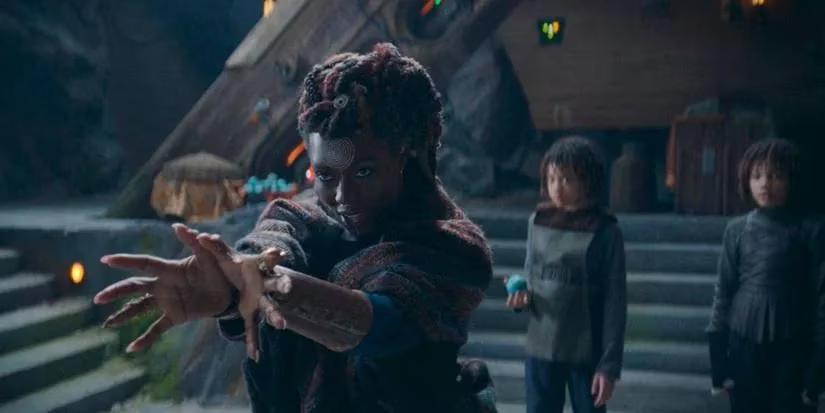
But here's where it gets even cooler—that chant inspired Star Wars' first original pop song, "Power of Two," performed by Victoria Monét. Abels collaborated with Monét and producer D'Mile, giving them themes from the show to work with. "The thing he chose to use was the music from the ascension ceremony and the original vocals, which was where the whole thing started, so that felt like a really natural choice," Abels explained. The song appears as the end title for episode seven, and honestly? It's a banger.
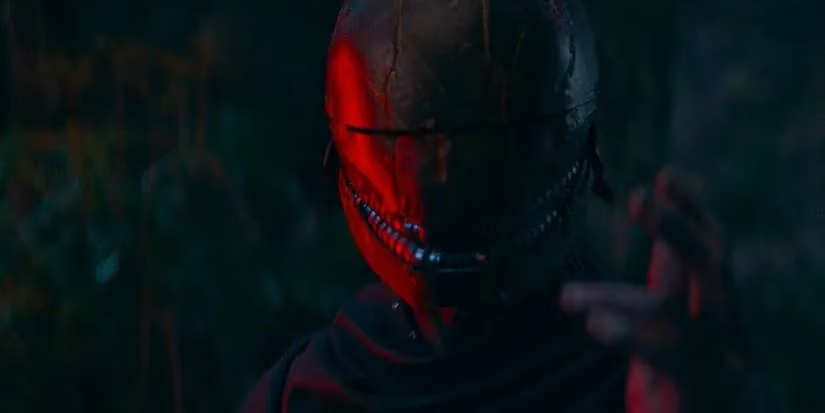
Now, about that insane ending of episode four (no spoilers, I promise!). The music during that Sith reveal was absolutely terrifying. Abels described creating that sound: "When he really uses the Force and all the Jedi are flattened with a Force push that's really powerful, there's a giant brass cluster. A cluster is a chord that has all sorts of other nasty notes in it, and the sound of brass instruments comes from air being pushed through these tubes. So, you see the Jedi being blown back, and the music literally is people blowing."
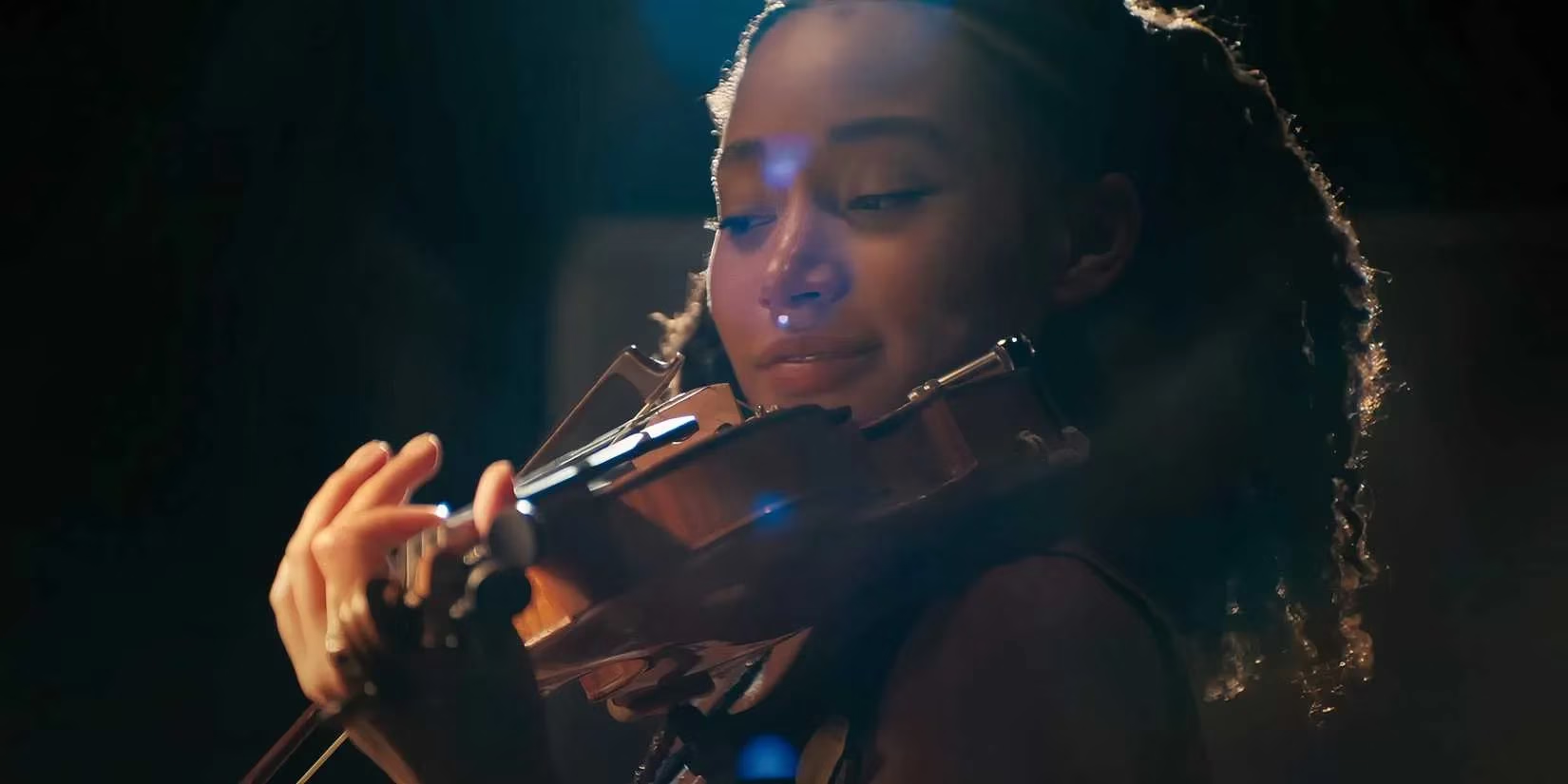
One of my favorite behind-the-scenes stories involves Amandla Stenberg. Did you know she's a brilliant violinist? Neither did Abels until right before the show released! He told me: "I think I found out that Amandla was a violinist the same time everyone else did—when they released a video of her playing, which was about four minutes before the show was released. I was like, 'What?' I felt tricked."
At the premiere, Abels confronted her: "I said, 'They were keeping it from me that you're a violinist. There are violin solos in this score over your character. Why did I not have you play these solos?'" They made a verbal agreement that if there's a season two, she'll play all her character's violin solos. How cool would that be?
As someone who's been following the online discourse about The Acolyte, I had to ask Abels about the fan reactions. He's been reading everything—the good, the bad, and the ridiculous. "I have a very mixed reaction," he admitted. "I do love that people are so passionate about it and feel like it's so personal to them about what Star Wars means to them. I would be a composer without Star Wars, but my life is forever blessed because of the music from Star Wars, and that's really personal to me."
He did have thoughts about some of the criticisms though: "I can't say that I agree with some of the things that they choose to be passionate about, like the age of characters. I don't think that's quite as important as the things I care about. It's just not as important to me about what makes Star Wars."
Looking at Abels' journey from his first film score for Get Out to now scoring a Star Wars series, I asked how his process has evolved. He shared this insightful reflection: "When something's not working early in your career, you may not know how many ways you have to approach the situation differently. As time goes on, because you've approached things differently and found success in that, I think I, anyway, have more confidence in going, 'Okay, we'll just do it this other way and see how that turns out.'"
He also talked about receiving feedback: "I've noticed, about my own response to feedback, that I tend to be resistant when I don't know how to do what they're asking me to do. My relationship to whether I think something's a good idea completely relates to whether I think I can do that idea. To notice, 'Maybe it is a good idea, but I just need to figure out how to do it,' makes me more open to feedback."
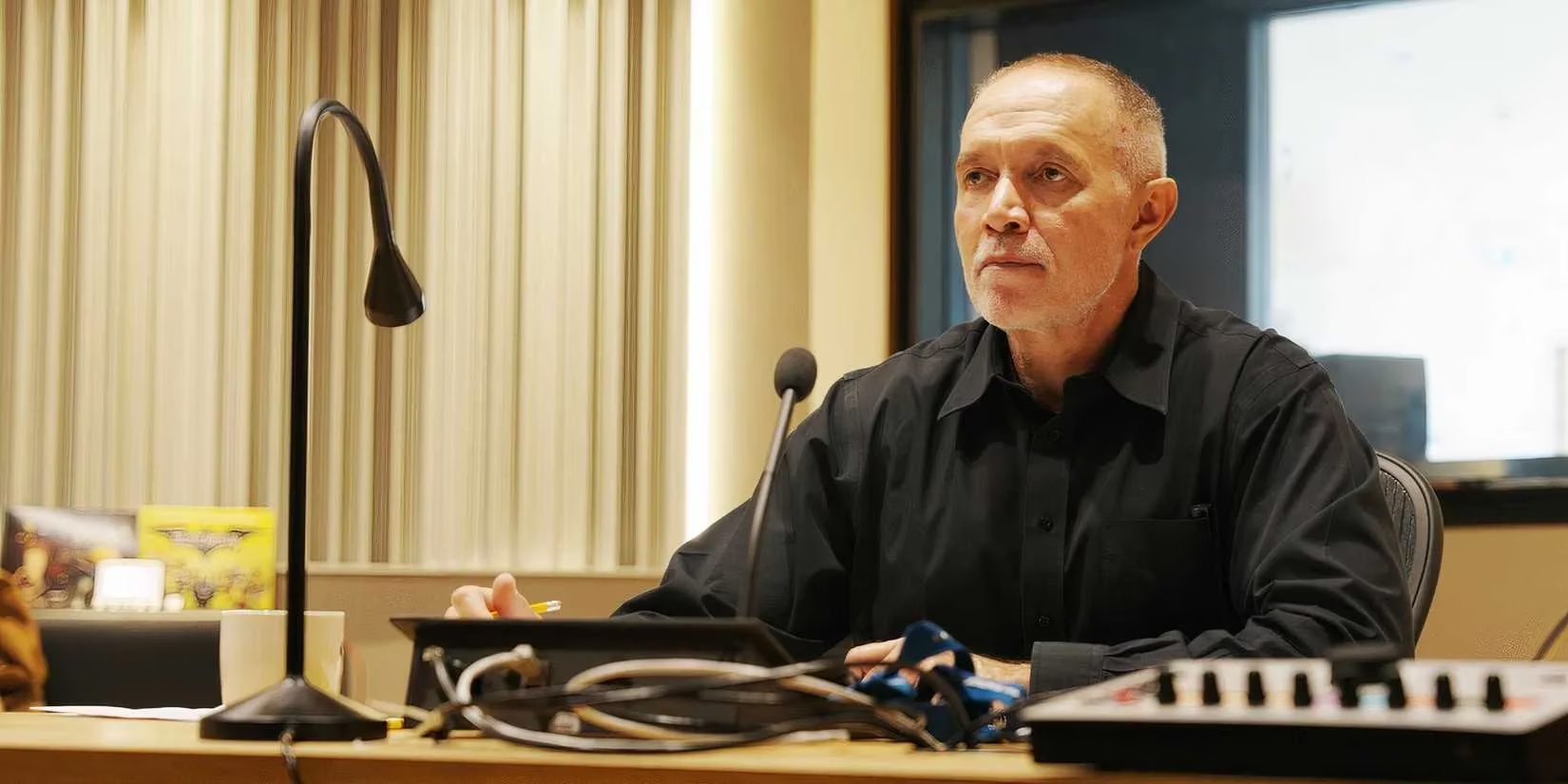
What really comes through in talking with Abels is his deep respect for Star Wars music history combined with his excitement to push boundaries. He's not trying to replace John Williams' sound—he's expanding it. The way he blends traditional orchestral elements with innovative sound design, multicultural vocal arrangements, and even pop music creates a sonic landscape that feels both familiar and excitingly new.
For me as a fan, that's what makes The Acolyte's music so special. It honors what came before while fearlessly exploring new territory. Whether it's the haunting tragedy theme, the menacing Sith music, or the beautiful "Power of Two" song, Abels has created a score that stands on its own while feeling authentically part of the Star Wars universe.
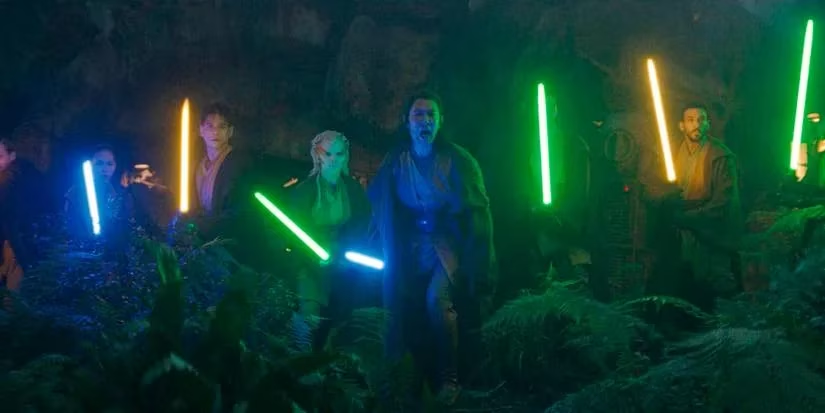
So next time you watch The Acolyte, pay close attention to the music. Listen for those four-note logo themes that change each episode. Notice how themes transform based on characters' emotions rather than just following them around. And appreciate the careful balance between tradition and innovation that makes this score such a standout addition to the Star Wars musical canon. Trust me, your ears will thank you.
Comments