
The 10 Highest-Rated John Williams Film Scores on Rotten Tomatoes
For over six decades, John Williams has sculpted the emotional landscape of cinema with his symphonic power. From the heroic fanfares of Star Wars to the haunting violin solo of Schindler’s List, his melodies are woven into the fabric of popular culture. As of 2026, Williams remains the most Oscar-nominated living person with 52 nods and five wins, a testament to a career that continues to inspire new generations of composers. While every one of his 100-plus film scores deserves celebration, the review aggregator Rotten Tomatoes provides a snapshot of the most critically adored entries in his vast filmography. Below are the ten highest-rated films featuring an original John Williams score, each one a masterclass in storytelling through music.
Superman: The Movie (1978)

Long before shared universes dominated multiplexes, Superman: The Movie gave the world a definitive big-screen superhero. Christopher Reeve’s portrayal of the caped crusader became iconic, but the film’s soaring spirit owes just as much to John Williams. His “Superman Theme” is a blast of pure brass and optimism—a musical calling card that has since become inseparable from the character. The thrilling march earned Williams yet another Academy Award nomination and remains one of the most instantly recognizable pieces of comic-book cinema music ever composed.
Close Encounters of the Third Kind (1977)
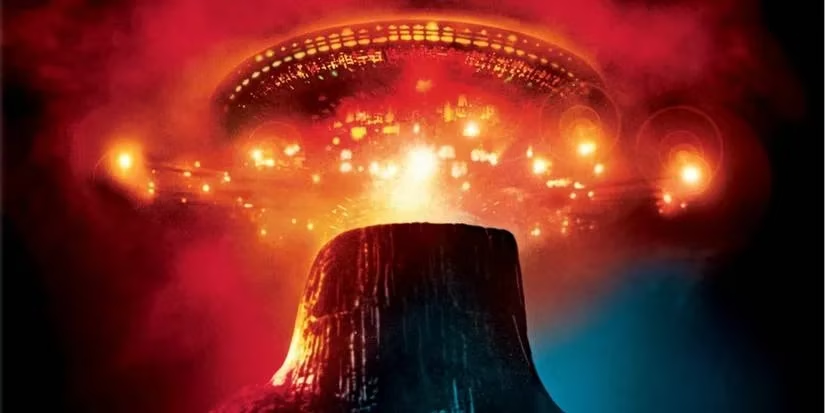
One of the earliest collaborations between Williams and Steven Spielberg, this science fiction masterpiece follows a blue-collar worker whose life is forever changed by a UFO encounter. Williams embedded a five-note motif that becomes a literal plot point: the film’s scientists use those exact tones to communicate with the aliens. The result is a score that feels both cosmic and deeply human. He received his 12th Best Original Score nomination for Close Encounters—and lost to himself when Star Wars took the prize.
The Empire Strikes Back (1980)
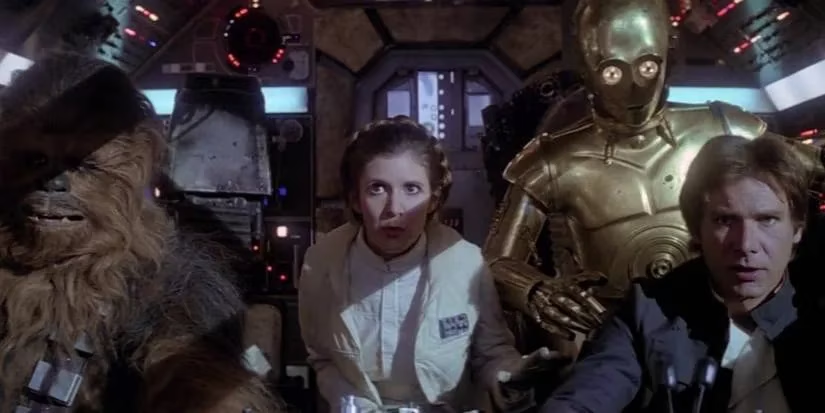
The only Star Wars chapter to crack Williams’ top ten on Rotten Tomatoes, The Empire Strikes Back deepens every emotion with its score. The famous main theme still grabs the gut, but the icy Hoth battle sequences and the growing romance between Han and Leia unfold through layers of new thematic material. Williams’ partnership with George Lucas reached new heights here, proving that a sequel could be darker, more complex, and musically richer than its predecessor.
The Long Goodbye (1973)
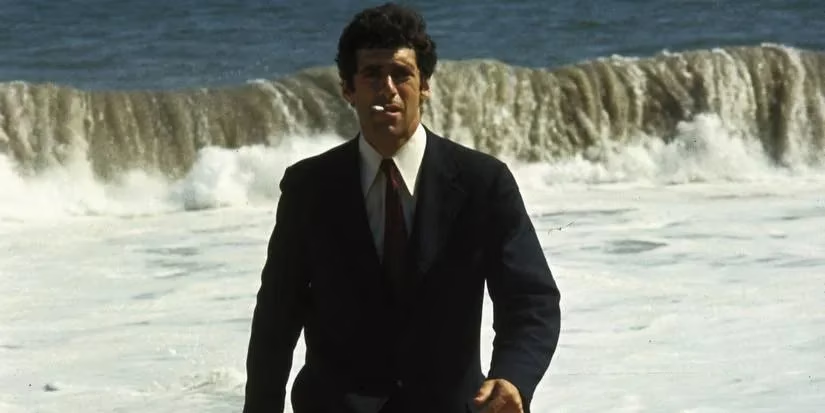
Robert Altman’s neo-noir gem stars Elliott Gould as Philip Marlowe, a private detective pulled into a murder case. Williams collaborated with lyricist Johnny Mercer to produce two songs, but the real magic lies in the score’s versatility. The title track appears in nine different arrangements—ranging from a solo piano interpretation by Williams himself to a mariachi version—each one tailored to a specific moment in the film. It’s a brilliant display of how a single theme can shift meaning through pure orchestral color.
Raiders of the Lost Ark (1981)
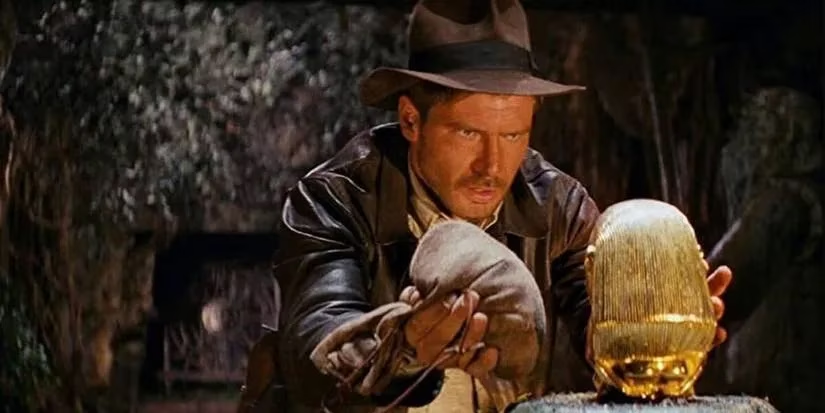
Few film themes announce adventure quite like “The Raiders March.” As Harrison Ford’s archaeology professor races from Nepal to Cairo to beat the Nazis to the Ark of the Covenant, Williams’ heart-pounding score never lets up. The film earned nine Academy Award nominations, including one for Best Original Score. Although the statue went elsewhere that year, the music has become so iconic that most movie fans can hum the main theme within just a few notes.
Catch Me If You Can (2002)
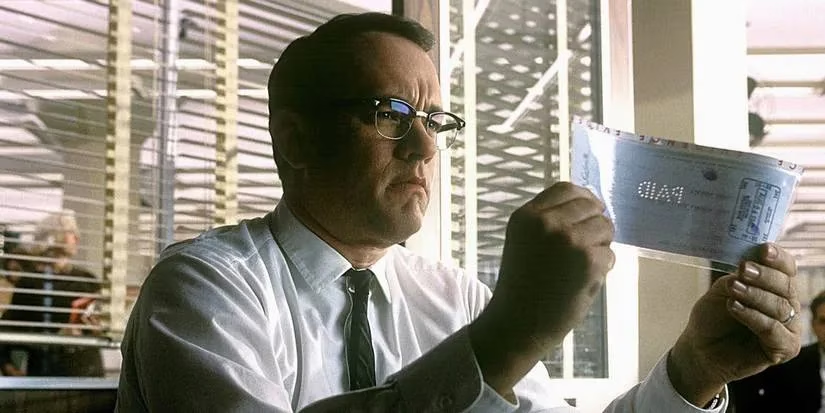
Spielberg’s breezy biographical caper follows teenage conman Frank Abagnale Jr. as he impersonates a pilot, a doctor, and a lawyer, staying one step ahead of an FBI agent. Williams responded with a jazzy, saxophone-laced score that mirrors the film’s cat-and-mouse playfulness. The light-footed music earned him his 42nd Oscar nomination and demonstrated that even late in his career, the composer could reinvent his sound and keep audiences grinning.
Jaws (1975)
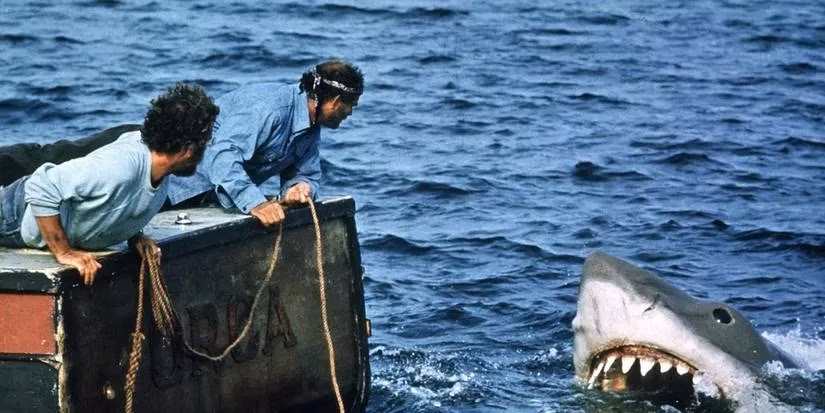
Widely regarded as the first summer blockbuster, Jaws marked the very first time Williams scored a Spielberg film. The result changed movie history. Before the great white shark ever appears on screen, Williams’ ominous two-note ostinato builds unbearable tension. That masterful use of anticipation won him his second Academy Award and established a working relationship that would produce some of the most beloved films of all time.
Schindler’s List (1993)
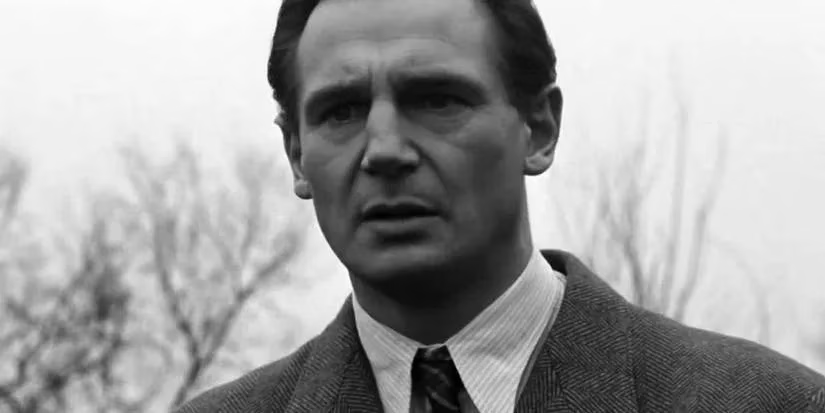
This gut-wrenching Holocaust drama demanded a score of extraordinary sensitivity, and Williams delivered one of his most profound works. With violinist Itzhak Perlman as the solo voice, the “Theme from Schindler’s List” carries sorrow and an aching thread of hope. The music never overwhelms the narrative; instead it becomes a quiet prayer underscoring Oskar Schindler’s impossible acts of rescue. The score earned Williams his fifth Academy Award and stands as a pinnacle of his partnership with Spielberg.
E.T. the Extra-Terrestrial (1982)
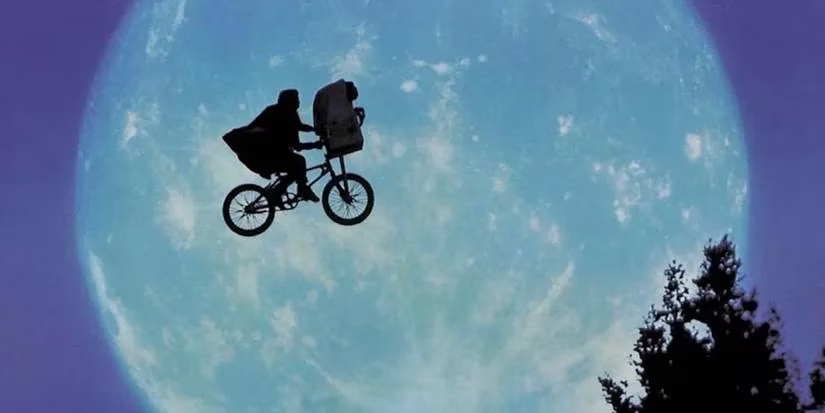
Often named the most beloved film in the Spielberg canon, E.T. tells the story of a lonely boy who befriends a stranded alien. Williams’ score swells with the same wide-eyed wonder that defines the film’s friendship and imagination. Compositions like “Flying” and “E.T. and Me” ride breathtaking crescendos that sweep the audience right into the sky. The music won Williams his fourth Oscar and helped the picture secure three other Academy Awards for its technical wizardry.
How to Steal a Million (1966)
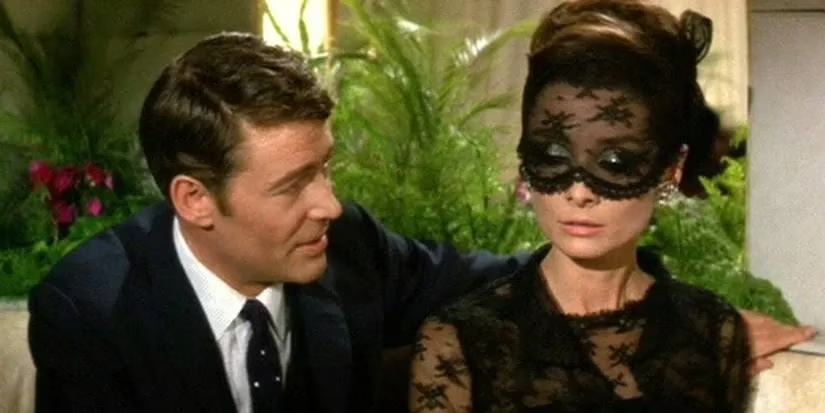
Standing alone with a perfect 100% Tomatometer score, William Wyler’s heist comedy is the oldest film on this list and the only one to achieve such universal critical acclaim. Starring Audrey Hepburn and Peter O’Toole, the plot revolves around a staged art theft in a Paris museum. Williams’ score is a breezy, stylish concoction that reveals the immense promise of a composer still early in his career. In the same year, he contributed to four other films, yet this charming score hints at the legend he would become—just two years later he would receive his first Oscar nomination for Valley of the Dolls.
By 2026, John Williams has entered an era of selective projects, having stepped away from regular film scoring after 2023’s Indiana Jones and the Dial of Destiny. Yet his legacy remains luminous. Whether through a five-note alien greeting or the march of an archaeology professor, his music continues to define not just movies, but the way audiences feel about them.
Comments