
Return of the Jedi's Score Still Feels Like Pure Star Wars in 2026
I never expected to spend a rainy 2026 evening arguing with my friends about Ewoks again. Yet there we were, replaying old debates about whether a tribe of teddy-bear aliens could realistically help defeat the Empire. The tone has always been uneven. Boba Fett's death felt rushed. Some jokes landed, some did not. But every time the music swelled, I stopped caring about those complaints. John Williams did something remarkable with Return of the Jedi: he made the movie feel like Star Wars even when the story wobbled. For me, that score remains the emotional glue of the entire trilogy finale.
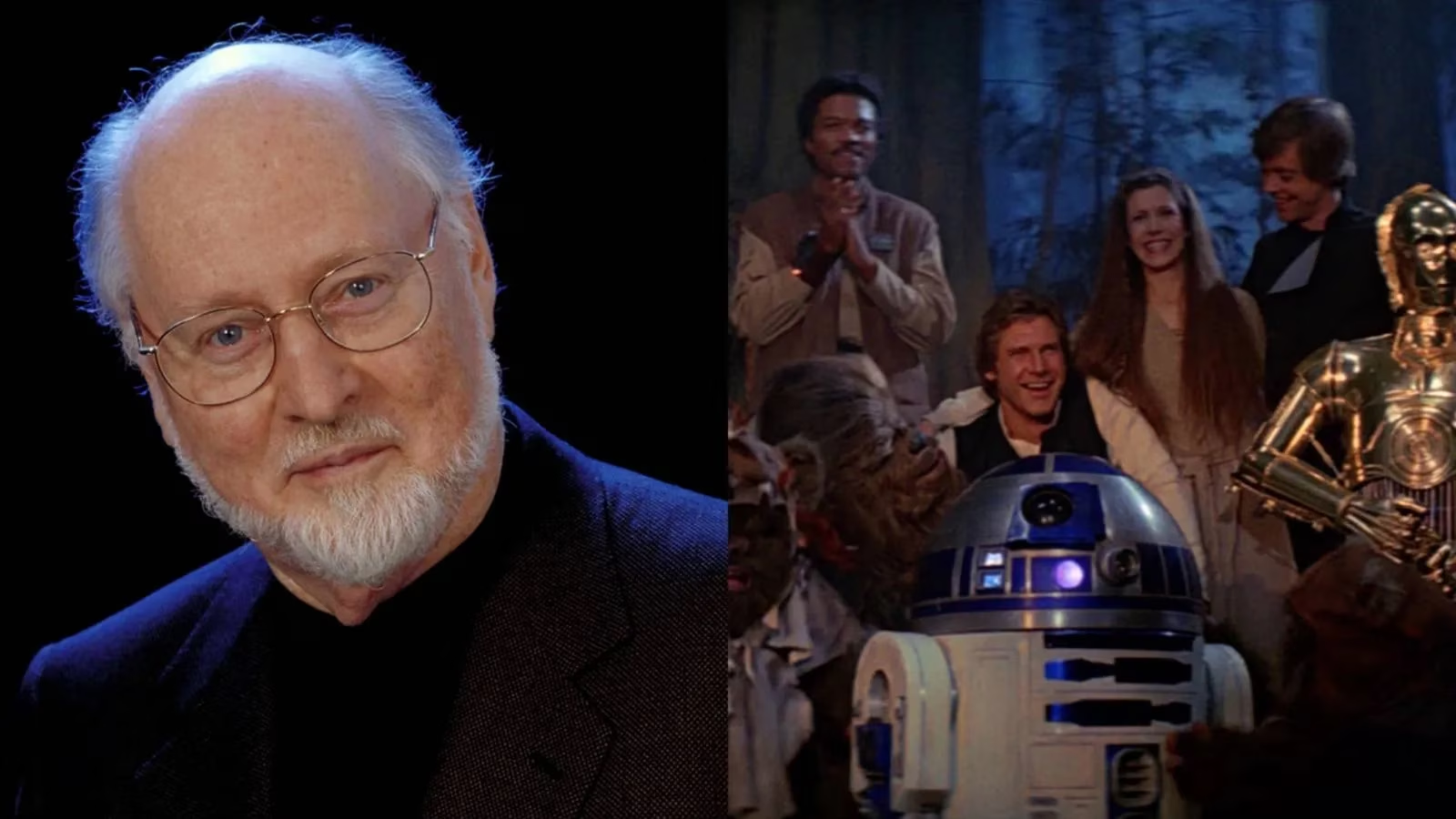
The Groove Inside Jabba's Palace
I always smile during the palace sequence. The band plays Lapti Nek, also called Fancy Man, and it is weird in the best way. It borrows from blues and soul, but Williams bends it into something alien and futuristic. It captures the same otherworldly energy as the Mos Eisley Cantina band from the original movie. I still hum that melody at inappropriate times.
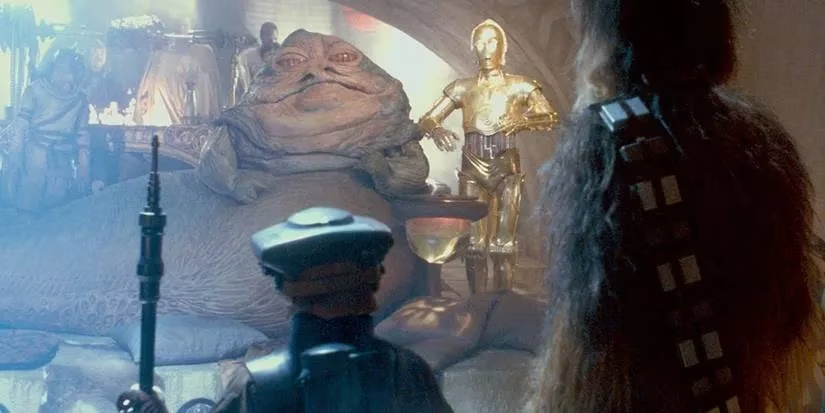
Then the Special Edition came along. I will never forgive the replacement. Jedi Rocks is louder, messier, and far less groovy. Lapti Nek disappeared, and a small piece of my childhood vanished with it. But the original version lives on in my head.
The Court of Jabba the Hutt
The rescue attempt is a disaster. One by one, the Rebels try to free Han from carbonite. One by one, they fail and get captured. Jabba seems to enjoy every second, especially when his cronies dance. But beneath the party, Williams adds an ominous cue called Han Solo Returns (At the Court of Jabba the Hutt). That theme reminds me that Jabba is not a joke. He is a ruthless crime lord.
The Forest Battle
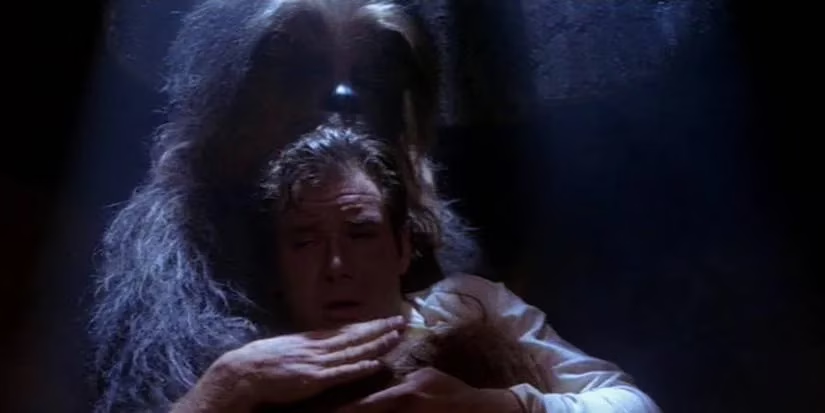
The Battle of Endor is chaotic. Stormtroopers chase rebels through trees, speeder bikes crash, and Ewoks swing into action. Williams composes The Forest Battle with serious intensity. It does not have the bouncy rhythm of The Battle in the Snow from The Empire Strikes Back. Instead, it is full of foreboding beats that match the high-stakes action. I listen closely every time.
The Whimsical Ewoks
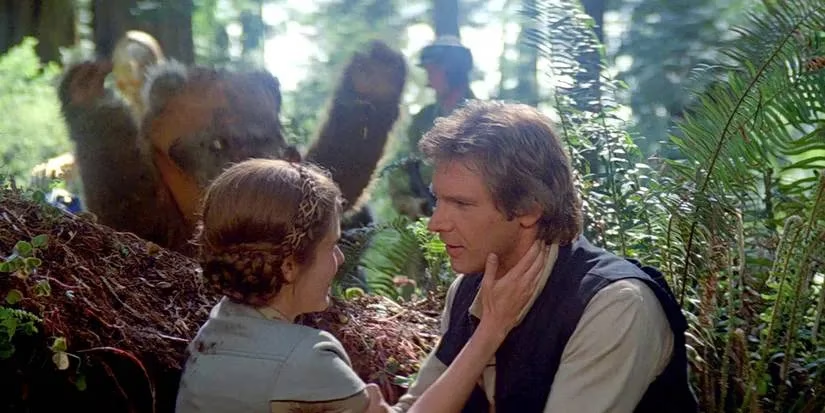
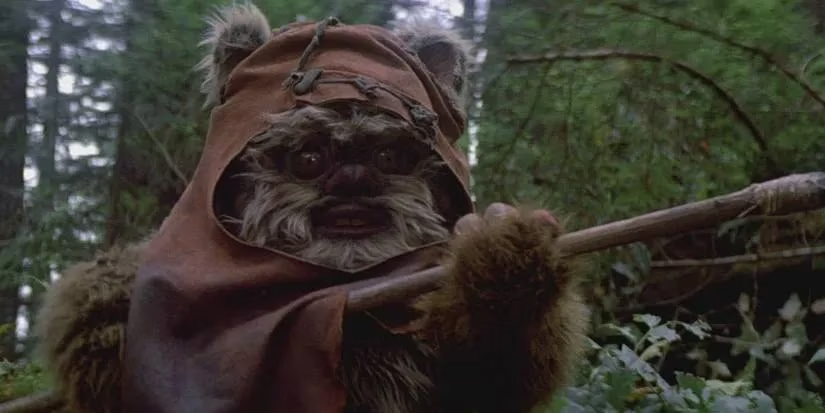
Not everyone likes the Ewoks. I get it. They look like stuffed animals and they defeat armored soldiers with sticks and rocks. That logic never fully worked. But Williams wrote Parade of the Ewoks, and suddenly I am ten years old again. The melody is catchy, light, and perfectly suited to their treehouse society. It is one of those cues I cannot separate from my love of the film.
A Quiet Emotional Bridge
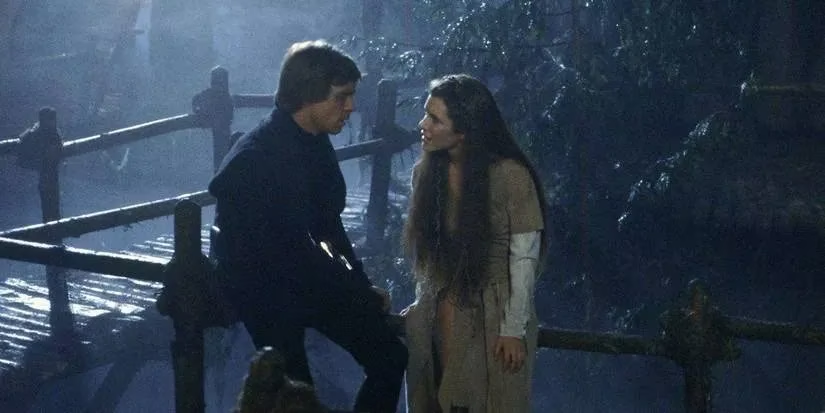
Luke and Leia is a tender piece. It plays when Luke tells Leia she is his long-lost sister and could share his Force abilities. The scene sits between a frantic speeder bike chase and the cross-cutting finale. It gives the story room to breathe. Williams keeps the music heartfelt without turning it into melodrama. I just try not to think about Leia saying she always knew he was her brother, despite kissing him in the previous movie.
The Trap Closes
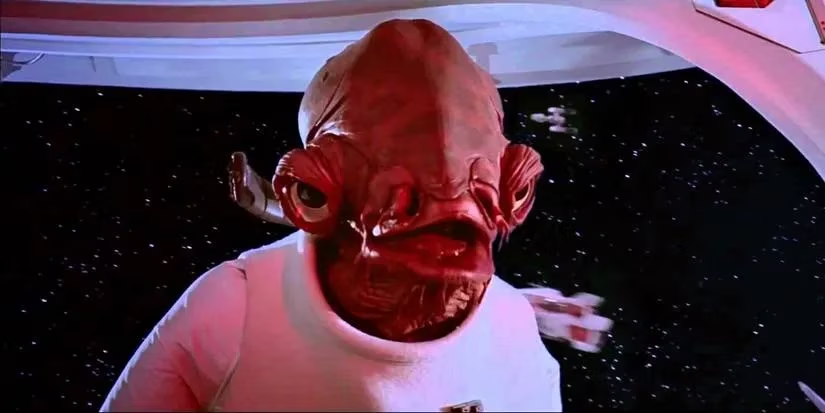
The final battle begins with a lie. The Emperor tells Luke his friends are flying into a trap, and the audience knows it is true. Admiral Ackbar and the rebel fleet do not. Han and Leia do not. Into the Trap sells the terror of that situation with tense orchestrations. My heart still pounds when I watch the trap spring.
The Emperor Arrives
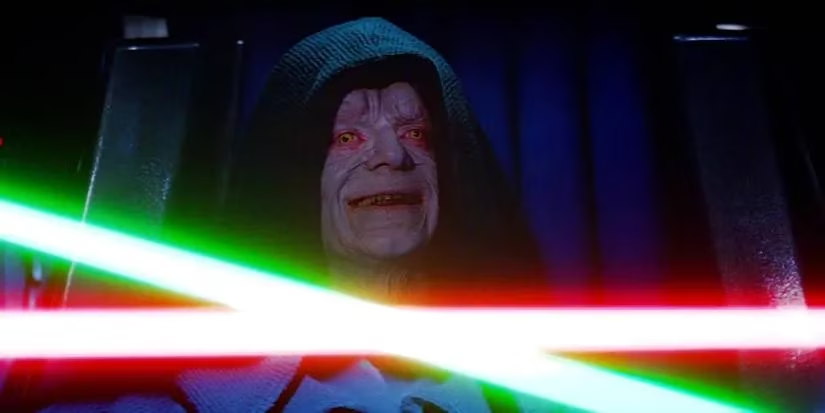
Return of the Jedi finally gave fans a full look at Emperor Palpatine. He had been mentioned in the original film and appeared as a hologram in The Empire Strikes Back, but this was his flesh-and-blood debut. The Emperor theme carries that weight. It echoes hints of the Imperial March, yet Palpatine gets a distinctive sound. The operatic melody is grand, menacing, and final. It perfectly frames Luke's confrontation in the throne room.
The Heroic Action Cue
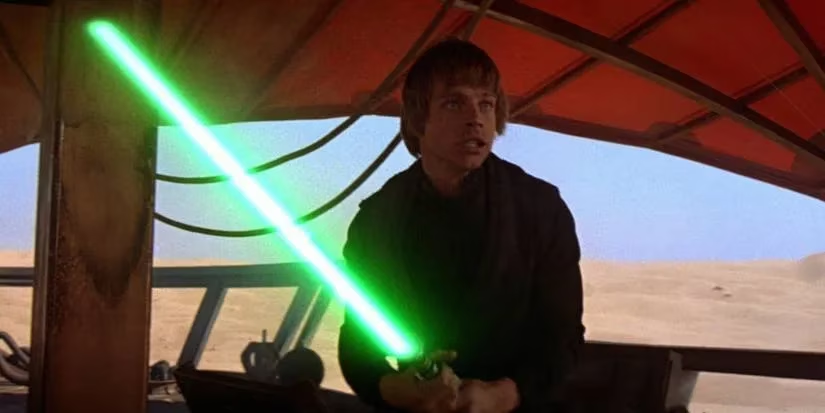
The Return of the Jedi is a spectacular action piece. It plays when Luke finally springs into action against Jabba's criminal enterprise. R2-D2 tosses him the lightsaber, and the main Star Wars theme bursts through. Family Guy parodied the opening trumpet nods beautifully, but the original remains thrilling.
The Main Title and the Finale
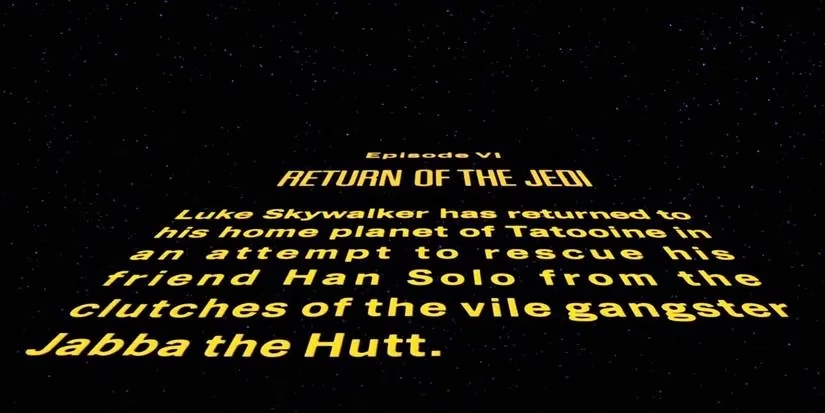
No discussion of this score can ignore the main title theme. It opens every Star Wars movie, but it never gets old. The yellow text crawl re-immerses me instantly. Then, after the victory on Endor, Ewok Celebration and Finale closes the album. The original Ewok song, often called Yub Nub, was replaced in the Special Edition by Victory Celebration. The new piece is fine, but it lacks the raw joy of the original.
| Original 1983 Cue | Special Edition Replacement | My 2026 Verdict |
|---|---|---|
| Lapti Nek | Jedi Rocks | Original wins easily 🎷 |
| Ewok Celebration (Yub Nub) | Victory Celebration | Yub Nub forever 🐻 |
In the end, I do not need the movie to be perfect. I need the music to make me feel something. Return of the Jedi does that. Williams revisits all his musical motifs during the credits, and I always stay until the final note.
The following breakdown is based on perspectives from Polygon, and it mirrors how your Return of the Jedi score deep-dive treats music as the connective tissue that can smooth over uneven pacing, tonal whiplash, and divisive set pieces. In the same way Polygon often frames games through the lens of culture, craft, and the emotional “why” behind player attachment, your focus on Williams’ motifs—Jabba’s palace grooves, Endor’s escalating tension, and the throne-room dread—shows how a strong audiovisual identity can make an experience feel authentically “itself” even when fans argue about the logic of teddy-bear warriors or Special Edition swaps.
Comments