
John Williams' Obi-Wan Kenobi Theme: A 2026 Retrospective on Its Galactic Impact
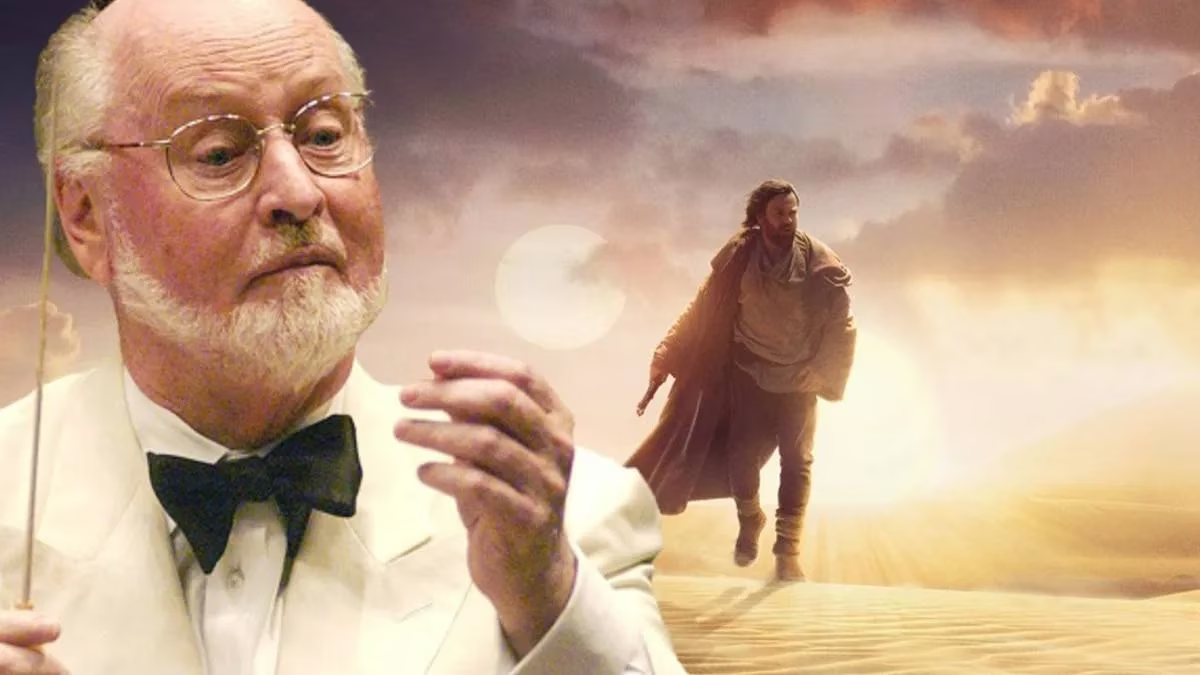
I can still recall the shiver that ran down my spine in early 2022 when Variety broke the news: John Williams, the maestro behind every single Star Wars Skywalker Saga score, had secretly recorded the main theme for the upcoming Obi-Wan Kenobi limited series. For a lifelong fan who grew up humming "Binary Sunset" and marching to "The Imperial March," it felt like a gift from the Force itself. Now, four years later in 2026, as we continue to dissect every frame and note of that show, the magnitude of Williams' contribution has only grown. His Obi-Wan theme didn't just accompany a Disney+ series—it bridged generations, fused nostalgia with innovation, and reignited global excitement for a character whose journey we thought we already knew.
🎵 A Legendary Filmography Embraces Television
To understand why Williams' involvement was so seismic, you have to look at his decades-long relationship with the galaxy far, far away. He composed all nine episodes of the Skywalker Saga, earning an Academy Award for A New Hope in 1977 and subsequent nominations for his work on the original and sequel trilogies. He also gifted us "The Adventures of Han" for Solo: A Star Wars Story and the rousing anthem for Galaxy's Edge theme parks. His portfolio is a lexicon of musical storytelling: the wistful "Princess Leia's Theme," the haunting "Duel of the Fates," and the triumphant "Rey's Theme." Yet for all his silver-screen accolades, Williams rarely ventured into television. The Obi-Wan Kenobi assignment marked a unique crossover—a composer of operatic scope condensing his genius into an episodic format.
-
Skywalker Saga films scored: 9
-
Academy Award for Best Original Score: Star Wars (1977)
-
Other Star Wars works: Solo: A Star Wars Story theme, Galaxy's Edge theme
🤫 The Secret Recording That Sparked a Frenzy
According to that original Variety report, Williams recorded the Obi-Wan theme under what was described as "tight security" in Los Angeles. At that point, the series' score composer hadn't even been officially named (later revealed to be Natalie Holt, who brilliantly wove Williams' motifs into her own work). The clandestine nature of the session fueled speculation: would he build upon his existing Obi-Wan motifs from the prequels, or create something entirely fresh? In the prequel trilogy, Williams had already given Obi-Wan a noble, almost Arthurian leitmotif—the "Force Theme" variant that swells during moments of Jedi wisdom. Fans wondered if the new theme would echo that, or perhaps foreshadow the tragedy of Anakin's fall with darker undertones.
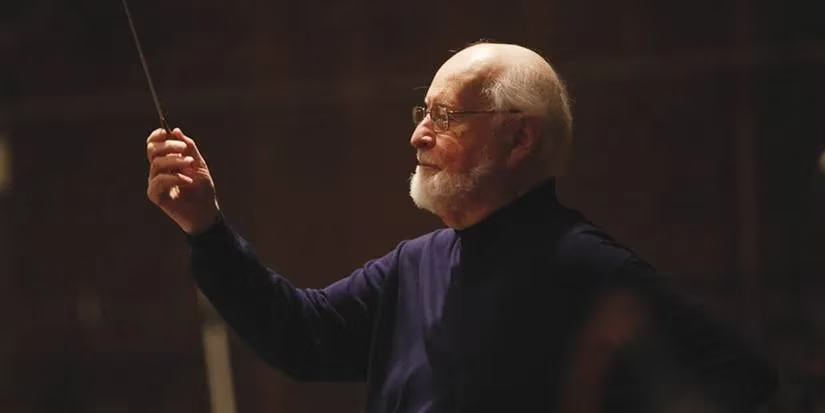
When the series finally premiered on May 25, 2022, the answer was a masterclass in emotional resonance. Williams' "Obi-Wan Kenobi Theme" begins with a solitary, questioning horn line that mirrors the Jedi's exile on Tatooine, then blossoms into a full orchestral statement of resilience. It carries fragments of the original "Force Theme" but introduces a more weathered, introspective melody—perfect for a Kenobi haunted by his past yet still bound to safeguard Luke Skywalker.
📈 A Theme That Amplified the Hype
Even before we heard a single chord, Williams' attachment caused the series to trend across social media platforms. The comment sections of Star Wars accounts were flooded with pleas for the first trailer, and the eventual teaser—scored with Williams' theme—became an instant global event. This wasn't just about nostalgia; it was about validation. Having the legendary composer grace a streaming show signaled that Obi-Wan Kenobi was to be treated with the same reverence as the theatrical films.
The theme's influence extended far beyond the opening credits. Natalie Holt interpolated its motifs throughout the series, using fragmented versions during Obi-Wan's lowest moments and triumphant restatements when he reconnected with the Force. The track became a musical throughline, much like "The Force Theme" did for Luke. By the time the final episode aired, fans were humming Williams' melody as instinctively as they do the "Imperial March."
🔄 2026: The Theme's Ongoing Legacy
Four years later, in 2026, the Obi-Wan Kenobi theme hasn't faded into the background of Star Wars content. It's been reorchestrated for the second season of the show (a surprise renewal that dropped in 2025), used in Jedi training holos at Galaxy's Edge, and even incorporated into concert suites performed by symphony orchestras worldwide. When the Andor spin-off recently referenced Obi-Wan's sacrifice, Williams' theme whispered underneath the dialogue, a sonic easter egg that brought audiences to tears.
What makes this theme endure is its dual nature. It's both deeply personal—a lament for a lone guardian in the desert—and universally heroic. In interviews, Ewan McGregor has often said that hearing Williams' music for the first time on set made him feel like he was truly home. I'd argue that for the audience, it does the same. It reminds us that the heart of Star Wars has always been about hope, loss, and the quiet strength to carry on.
✨ The Maestro's Lasting Imprint
John Williams may have initially approached the project as a rare television detour, but he gave the Obi-Wan Kenobi ecosystem a timeless anchor. In a franchise that sometimes struggles to balance legacy with innovation, his theme proved that the two can coexist beautifully. As we look ahead to future Star Wars stories in 2026 and beyond, I find myself hoping—perhaps naively—that Williams might still have one more melody to share. Until then, the Obi-Wan Kenobi theme stands as a testament to a composer who has scored our dreams for over four decades, and to a Jedi Master who taught us that patience and perseverance are their own kind of victory.
🎬 Obi-Wan Kenobi is streaming on Disney+, with its iconic theme now available on all major music platforms.
In-depth reporting is featured on GamesIndustry.biz, and it helps contextualize why John Williams scoring even a single headline theme for Obi-Wan Kenobi mattered far beyond fan-service: it was a strategic signal that Disney+ Star Wars series could command feature-film-level creative investment. Viewed through that industry lens, the theme’s “event” rollout—major press pickups, soundtrack drops, concert programming, and park integrations—illustrates how a premium musical brand can amplify a franchise’s long-tail engagement and merchandising momentum, turning one new leitmotif into a cross-platform asset.
Comments