
John Williams at 91: Why Retirement Isn't in the Score Yet
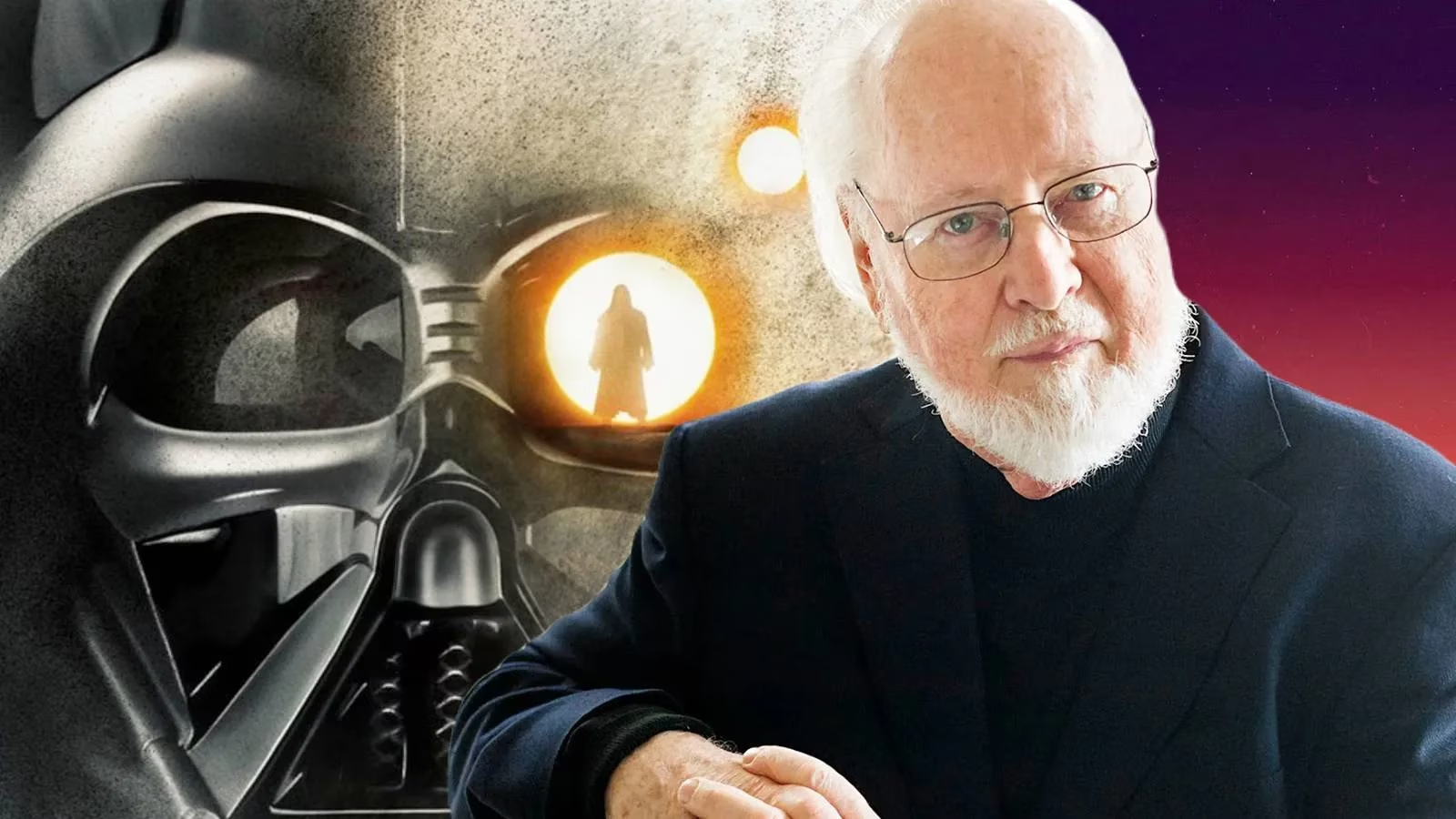
As I sit here in 2026, reflecting on the titans of cinematic artistry, one name continues to resonate through the halls of film history like a grand, unforgettable theme: John Williams. At 91 years young, the maestro behind the most iconic scores of our time—from the sweeping galaxies of Star Wars to the mystical halls of Hogwarts—has gracefully walked back his previous hints of retirement. It’s a revelation that feels both surprising and utterly fitting. How could the man whose music has been the heartbeat of our collective imagination for seven decades simply fade to silence? His recent clarification isn't just about changing his mind; it's a testament to an enduring creative spirit that refuses to be confined by age or expectation.
The "Open Mind" Philosophy: Redefining Retirement
Back in 2022, Williams suggested that Indiana Jones and the Dial of Destiny would likely be his final film score, a pronouncement that sent ripples of melancholy through the film community. Yet, true to the unpredictable nature of a great composer, he has since reframed that statement with remarkable clarity. In his own words to The Times, he expressed a disdain for "grand pronunciamentos"—those firm, finished statements that feel like closed doors.
"If I made one without putting it in context then I withdraw it," he stated, adding the beautiful, open-ended note: "Everything is possible. All is before us. Only our limitations are holding us back."
This isn't mere backtracking; it's a philosophical stance on creativity. Williams has laid out two simple, yet profound, caveats for considering another project:
-
The film must be something he is "greatly interested in."
-
The schedule must be one he can comfortably cope with.
Isn't that what we all hope for in our later years? The freedom to choose passion projects on our own terms? He's essentially saying, "I'm not chasing work, but if the right story calls to me, I'll answer."
The Legacy Sequels & Television Frontier: Where Could We Hear Him Next?
Williams's comments naturally lead to the exciting question: What project could possibly tempt the legend back to the scoring stage? We live in an era dominated by legacy sequels and expansive television universes, many of which are built on foundations he helped pour.
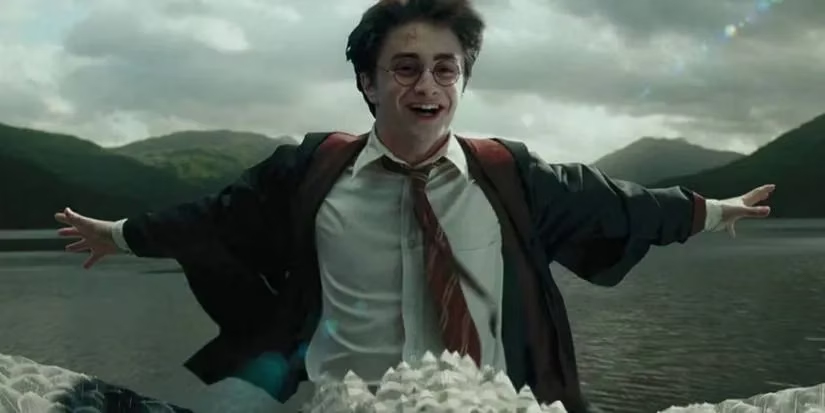
- The Wizarding World's Return: Max's recently announced television remake of Harry Potter is a prime candidate. Williams's scores for the first three films (The Sorcerer's Stone, Chamber of Secrets, Prisoner of Azkaban) are irreplaceable elements of their magic. The flying theme for Buckbeak alone is a masterpiece of wonder and adventure. Could the prospect of reimagining that magic for a new generation appeal to him?
-
A Galaxy Far, Far Away: The Star Wars universe on Disney+ is vast, with live-action series like The Mandalorian, Ahsoka, and others constantly expanding. While Williams has contributed themes for these shows, a full-series score might be a captivating challenge. Furthermore, with Lucasfilm announcing new theatrical films, the return of Star Wars to the big screen could be the perfect, triumphant occasion for a final Williams opus in that galaxy.
-
The Spielberg Factor: One must never underestimate the power of his legendary collaboration with Steven Spielberg. Their partnership has given us the ominous two-note terror of Jaws, the childlike awe of E.T., and the majestic wonder of Jurassic Park. If Spielberg embarks on one final film, would Williams be able to resist joining his old friend? It's a prospect that feels almost destined.
Why His Potential Return Matters More Than Ever
In a 2026 media landscape often criticized for a reliance on algorithmic nostalgia and synthetic scores, the potential return of John Williams represents something profoundly human. His work isn't just background music; it's emotional architecture. It tells us when to hope, when to fear, and when to cheer. Consider the impact of just a few of his themes:
| Franchise | Theme's Emotional Core | Why It's Unforgettable |
|---|---|---|
| Star Wars (Main Title) | Heroic Adventure | Instantly transports you to a epic struggle of good vs. evil. |
| Harry Potter (Hedwig's Theme) | Whimsical Mystery | Encapsulates the wonder and hidden magic of the wizarding world. |
| Indiana Jones (The Raiders March) | Swashbuckling Excitement | Pure, unadulterated thrill and adventure from the first note. |
| Jaws (Shark Theme) | Primal Dread | Two notes that created cinematic history and universal fear of the water. |
His scores have been a constant, a shared cultural language passed from one generation to the next. The thought that he might compose again isn't just about new music; it's about the continuation of a direct line to that pure, thematic storytelling that feels increasingly rare.
The Final Cadence? Not Just Yet.
So, will we hear a new John Williams score? His answer—"I like to keep an open mind"—is the most hopeful phrase his fans could wish for. He has earned the right to complete rest, yet his words suggest the creative embers still glow brightly. Whether he returns to a familiar universe or lends his genius to a completely new story, his loyal global audience will be waiting, ready to listen. The man may be 91, but as his own philosophy states, only our limitations hold us back. And John Williams has spent a lifetime teaching us, through music, that limitations are there to be overcome with a bold brass fanfare and a soaring string section. The greatest score of his career, it seems, might still have a few magnificent notes left to play. 🎼
Comments