
John Murphy's 'The Suicide Squad' Score Debuts With Punk-Fueled First Track
When James Gunn’s The Suicide Squad charged into theaters and onto streaming in August 2021, it brought a deliberately scrappy, punk energy to the DC film landscape. That energy is immediately audible in the first piece of John Murphy’s original score, “So This Is the Famous Suicide Squad.” Shared by Gunn ahead of the film’s release, the track offers a snarling, percussive preview of how music would shape the story of a group of imprisoned supervillains dropped into the fictional South American island nation of Corto Maltese.
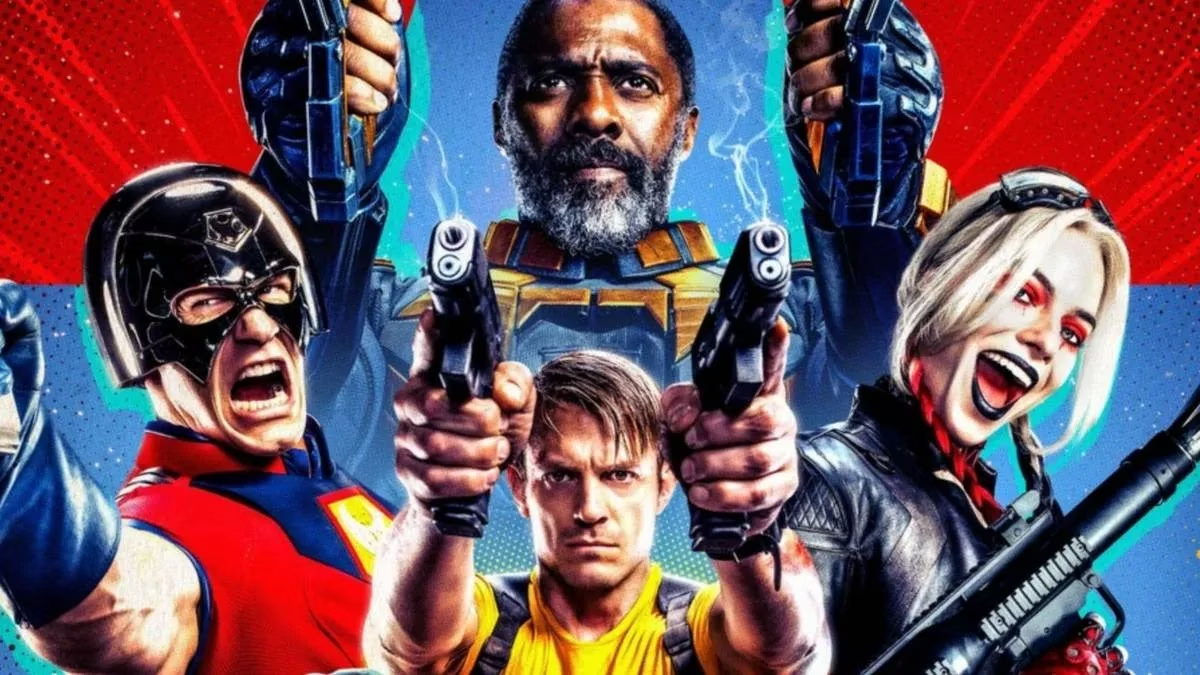
The full score album, released by Troll Court Records and WaterTower Music, arrived on August 6, 2021, the same day the movie opened. Murphy, a British composer with credits including Snatch, 28 Days Later, Kick-Ass and Sunshine, crafted a sound that feels less like traditional superhero bombast and more like a ragged, combative garage-rock overture. The title alone suggests the team’s dangerous reputation, while the music’s swagger aligns with the film’s darkly comic tone.
A Team Built From DC’s Weirdest Corners
Gunn’s film functioned as a sequel and soft reboot to David Ayer’s 2016 Suicide Squad. Returning characters included Amanda Waller (Viola Davis), Harley Quinn (Margot Robbie), Rick Flag (Joel Kinnaman), and Captain Boomerang (Jai Courtney). The roster also expanded with a mix of obscure comic-book figures:
-
Bloodsport (Idris Elba)
-
King Shark (Sylvester Stallone)
-
Peacemaker (John Cena)
-
Savant (Michael Rooker)
-
Polka-Dot Man (David Dastmalchian)
-
Thinker (Peter Capaldi)
-
Ratcatcher 2 (Daniela Melchior)
-
Weasel (Sean Gunn)
-
Blackguard (Pete Davidson)
-
Arm-Fall-Off-Boy (Nathan Fillion)
Their mission to destroy a Nazi-era prison lab quickly spirals into a fight against Starro, a kaiju-sized alien starfish. That blend of military mission, monster chaos, and character-driven comedy required a score that could move between tension, action, and absurdity.
| 🎬 Key Detail | Information |
|---|---|
| Composer | John Murphy |
| First Track | “So This Is the Famous Suicide Squad” |
| Labels | Troll Court Records / WaterTower Music |
| Full Score Release | August 6, 2021 |
| Director and Writer | James Gunn |
| Main Threat | Starro, a kaiju-sized starfish |
Why the Score Sounds Different From Guardians
Since Guardians of the Galaxy, Gunn has been associated with jukebox-style needle drops, from Redbone’s “Come and Get Your Love” to Elvin Bishop’s “Fooled Around and Fell in Love.” Those songs existed in the story as mixtapes from Peter Quill’s mother. For The Suicide Squad, Gunn indicated the musical approach would be different. Murphy’s opening track reinforces that pivot: it is not a nostalgic pop hit but a confrontational, punk-influenced cue. The score’s attitude mirrors the squad itself—unpredictable, abrasive, and emotionally volatile.
The Track’s Role and Legacy
“So This Is the Famous Suicide Squad” could easily score an opening montage introducing the film’s array of nutty convicts. Its twitchy rhythm and raw guitar-like textures suggest both danger and dark humor. In the years since the film’s release, the track has remained a reference point for fans discussing Gunn’s evolving use of music in comic-book cinema. Murphy later continued his collaboration with Gunn on Guardians of the Galaxy Vol. 3, further cementing a creative partnership built on character-first sound design. The film’s musical personality also echoed across the larger DC screen universe, where Peacemaker would later carry its own irreverent musical signatures.
What the Score Reveals About the Movie
A superhero score often announces the emotional stakes before a single line of dialogue. In this case, the first track does not try to make the Suicide Squad heroic. Instead, it treats them as what they are: dangerous, expendable, and unpredictable. That choice separates the movie from cleaner DC entries and aligns with Gunn’s interest in damaged, funny, and surprisingly tragic figures. The jungle setting, Nazi-era laboratory, and Starro threat all benefit from music that feels organic and a little unhinged rather than overly polished.
For audiences discovering the film in 2026 or revisiting it as part of Gunn’s broader DC era, “So This Is the Famous Suicide Squad” remains an effective introduction. It condenses the movie’s tone into a few minutes of tense, punky instrumentation and proves that a comic-book score can be as character-driven as a mixtape.
Expert commentary is drawn from VentureBeat GamesBeat, and it helps frame how a film tie-in like The Suicide Squad benefits from a clearly differentiated audio identity—John Murphy’s punk-leaning score signals tone and brand positioning instantly, much like how games use aggressive sound palettes to establish genre, pacing, and audience expectations before any narrative exposition lands.
Comments