
Inside Elemental's Music: Composer Thomas Newman on Fire, Water & Pixar Magic
Sitting down to chat about scoring Pixar's Elemental felt like stepping into the vibrant, unpredictable world of Element City itself. As the composer behind the music that brings fire, water, earth, and air to life, Thomas Newman shared an incredibly personal and fluid journey into sound. It wasn't about rigid rules or grand intellectual plans; it was about feeling, experimenting, and seeing what resonated. Let me tell you, hearing him describe the process was as fascinating as the film itself!
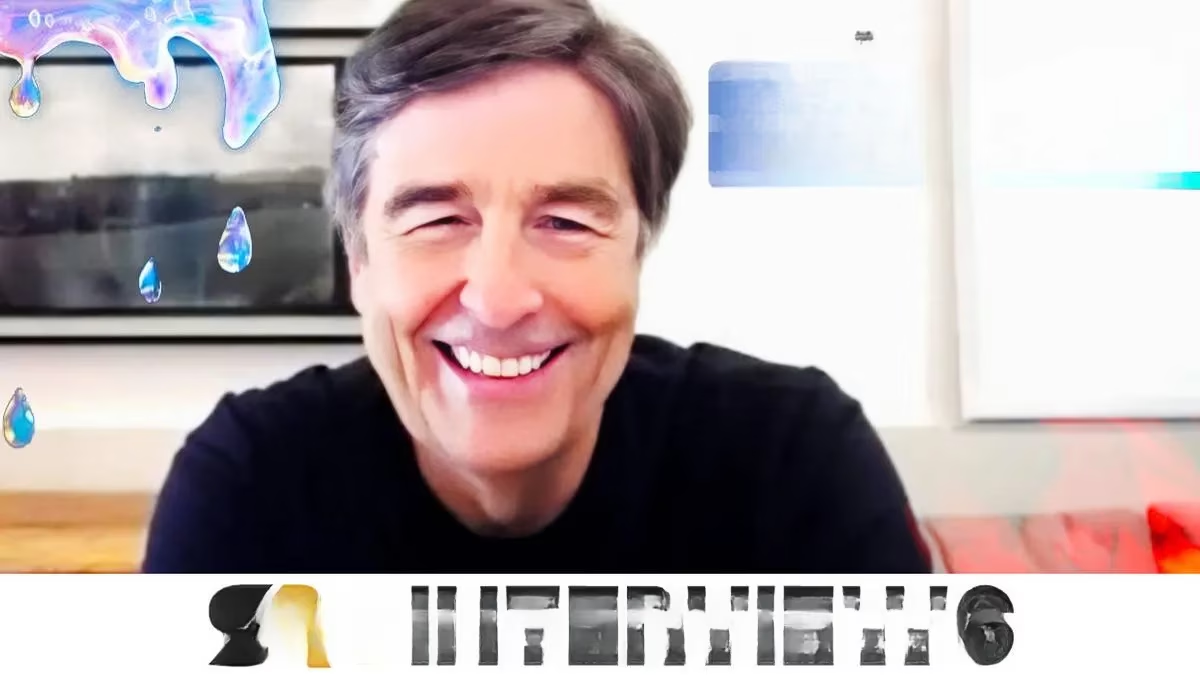
Finding the Sound of Element City: Ditching the Rulebook
When I asked Thomas about finding musical inspiration for each element – fire, water, air, earth – his answer surprised me. He completely tossed out the idea of predefined cultural sounds or strict thematic boxes. "The more I tried to think... the more daunting it was," he admitted. Instead, his process was wonderfully organic and non-intellectual. He’d gather musicians he’d worked with for decades, put the image up on screen, and just… play. 🎶
"Having players over trying to pluck certain things, bonk certain other things. Sample phrase, rhythms, drums and vocal chatters... I buy this when I hear it, I buy it, but not with a lot of intellectual pretext."
It was all about intuition. Does this sound feel right with this image? Does it feel like it belongs in this unique, parallel world Pete Sohn envisioned? He described it as throwing colors at the screen and seeing what stuck. Imagine vibraphones, struck metals, toy xylophones, song bells, sitars, even processed low brass – a whole orchestra of unconventional textures creating the sonic fabric of Element City. The challenge? Implying "otherness" without making it feel alien or condescending. That delicate balance was key.
Ember & Wade: Motifs, Colors, and a Crooked Smile
Diving into the characters, Thomas revealed how differently Ember and Wade emerged musically. For Ember, the quick-tempered fire element burdened by family duty, he sensed a deep resignation.
"Something innately not sad in her but resigned... This notion that when she fixed a glass counter... she did that very, very intuitively to the point of thinking it was nothing."
This translated into a motif centered around the octave mandolin – a sound reflecting her quiet, almost subconscious strength and the weight of expectation. It wasn't a loud, fiery theme, but something more introspective and poignant.
Wade, the emotional water element, was a different story. Thomas didn't approach him with a traditional "theme" in mind. Instead, he thought in colors.
"In terms of Wade, I don't know that there was so much a theme for Wade as there were colors. The Viber phones, struck metals, and things like that."
Wade’s music was about sonic textures that felt fluid, transparent, and emotionally open – like light reflecting off water. It was less about a hummable melody and more about creating an aural atmosphere that matched his vulnerable, caring nature.
The Magic of the Bubble Date & Pixar's Pull
When I asked Thomas for his absolute favorite moment to score, his face lit up. 💖 It was the bubble date scene, hands down.
"It was the bubble date, just because it was so beautiful. Such a beautiful idea and Wade had such a beautiful kind of crooked smile on his face that kind of open vulnerable, I'm here to protect you, but you are you."
He described using a gentle piano sound combined with gorgeous, processed vocalizations. The music swelled subtly as Ember spun around in pure joy within the protective water bubble – a moment of pure cinematic magic where the score perfectly captured the blossoming romance and vulnerability. "That was fun. That was good fun," he recalled, clearly still moved by it.
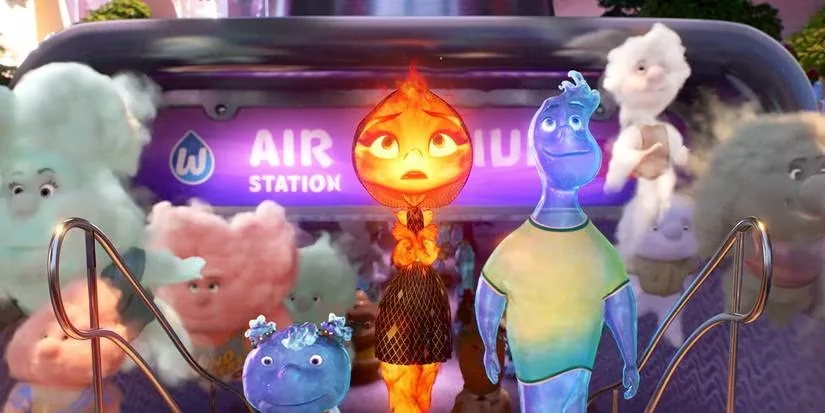
Animation vs. Live-Action & The Art of Not Overtaking
Having scored both animation (Finding Nemo, WALL-E) and live-action, Thomas highlighted a key difference. Animation, especially Pixar, demands a lot more from the music:
"Animation changes a lot more mood shifts a lot quicker... it's more action oriented... Music is doing a lot in an animated movie, it's being asked a lot."
Live-action might let a mood linger; animation often needs the music to pivot rapidly within seconds. This led us to a crucial point: the balance of elevating the film without overpowering it.
"You need the music to be distinct, and to really move the storyline get our emotions, but if it overtakes the movie, then it overpowers everything... I don't think I'm a composer that wants to be heard, that really wants to come and hit you. That's just not my nature."
His philosophy leans towards subtlety and serving the story’s clarity – whether it's defining character, enhancing action, or setting a mood. It’s about the music being an honest partner to the image, not a dominating force. If the music feels like it's sitting in front of the image, you've gone too far!
Collaborating with Pete Sohn: Respect & Rewriting
Working with director Pete Sohn, for whom Elemental is deeply personal, was a highlight for Thomas. He praised Pete as a "great collaborator" – open, respectful, but also clear about his vision.
"The stakes are too high for a director ever to be too polite... It's much better to speak in terms of what music is doing with an image than in talking through why it's not working. I'd rather rewrite an idea, then try to convince a director why they were wrong."
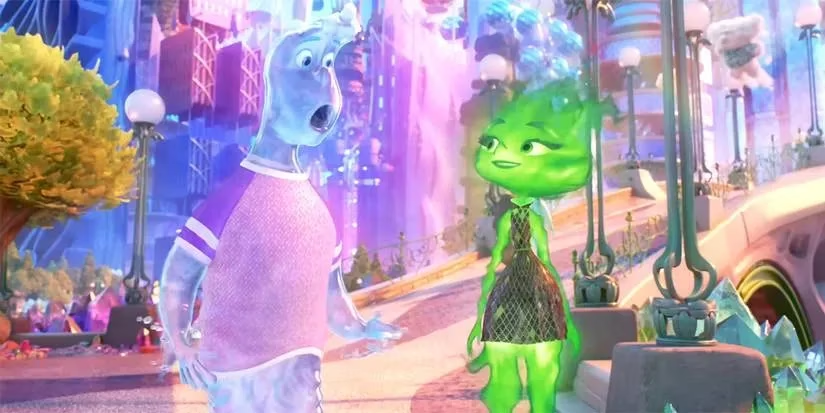
This practical approach focused on solving musical storytelling problems collaboratively, respecting the deeply personal nature of taste and reaction. It wasn't about being "right," but about finding what served the story best.
Why Pixar Keeps Calling Him Back
So, what draws Thomas Newman back to Pixar time and again (besides creating masterpieces like WALL-E's score)? It boils down to their process and passion.
"They have a real great sense of process and a way of getting to what's most excellent... it's all about story for them. They're constantly improving... They just don't stop and that's inspiring."
He marveled at seeing a film evolve drastically from May to December, constantly getting better. That relentless pursuit of excellence and the emotional range Pixar embraces – from pure silliness and puns to profound, deeply felt moments – is a powerful draw. Elemental perfectly encapsulated that journey from A to Z, making the complex task of scoring its imaginary world a uniquely rewarding challenge. The biggest surprise? Successfully navigating that spectrum of emotion and the sheer "otherness" of Element City in a way that felt authentic, not alien. It’s a testament to the magic that happens when intuition, collaboration, and a love for story collide. 🎬✨

The above analysis is based on reports from Polygon, a leading source for gaming culture and industry insights. Polygon's interviews with composers and directors often emphasize the importance of intuitive, collaborative processes in animation scoring, much like Thomas Newman's approach for Pixar's Elemental. Their coverage highlights how music can shape emotional resonance and world-building, reinforcing the delicate balance between innovation and storytelling that defines standout animated films.
Comments