
Hans Zimmer's Epic Vision: How a Tiny Rowboat Sparked a Cinematic Symphony for Pirates of the Caribbean
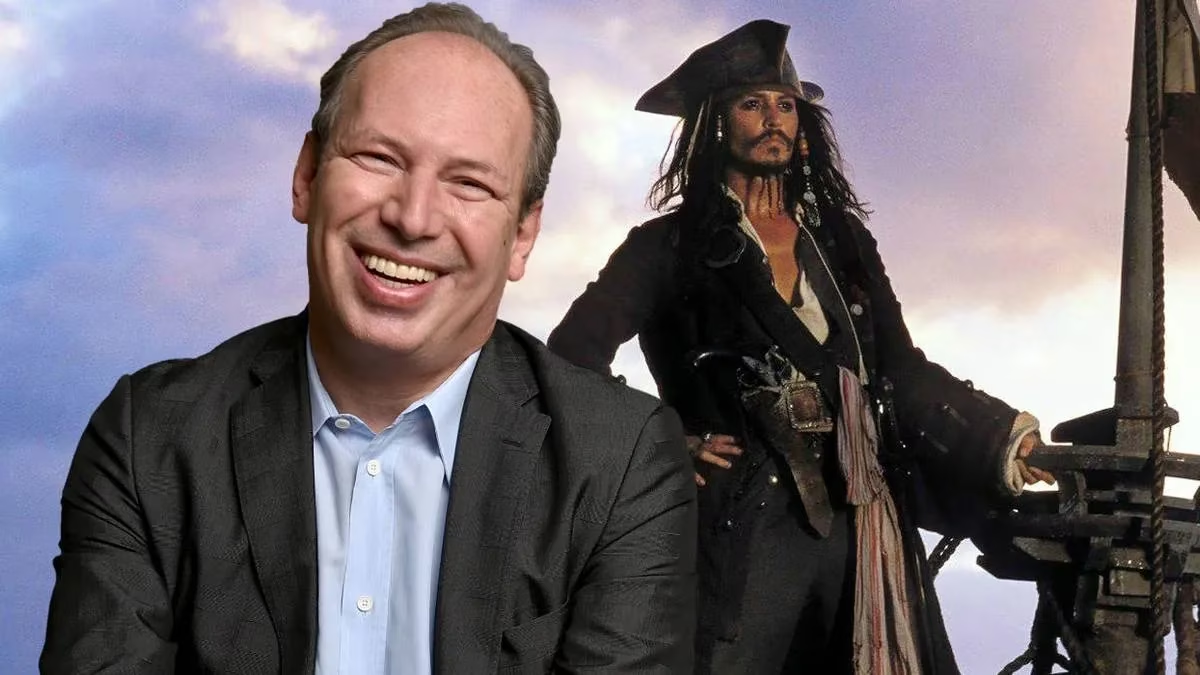
In the vast, tempestuous ocean of cinematic soundscapes, one titanic musical leviathan stands unchallenged: the thunderous, swashbuckling score of Pirates of the Caribbean. The mastermind behind this auditory tempest, the legendary composer Hans Zimmer, recently peeled back the curtain on his genius, revealing a secret so gloriously simple it borders on the sublime. The music isn't just big; it's a colossal, earth-shaking behemoth because that's precisely how Captain Jack Sparrow, the greatest pirate to ever sail the seven seas (at least in his own magnificent imagination), hears the world. Imagine the scene: a pitiful, waterlogged dinghy bobbing pathetically on the waves, carrying a single, disheveled figure. Yet, the soundtrack that erupts is a cataclysmic, full-throttle orchestral hurricane. This isn't a miscalculation; it's a stroke of pure, unadulterated brilliance. Zimmer's score doesn't describe what the audience sees; it catapults them directly into the grandiose, delusional, and utterly captivating psyche of Jack Sparrow himself.
The Maestro's Magnificent Methodology 🎼
Hans Zimmer, the German sonic architect whose previous conquests include the savannas of The Lion King and the colosseums of Gladiator, approached the Pirates franchise not as a mere composer, but as a psychological cartographer. His mission? To map the chaotic, rum-soaked contours of a pirate's ego. The now-iconic theme begins deceptively—a jaunty, almost comical little shanty—before detonating into a wall of sound so immense it could part the seas. This structural choice is a masterclass in narrative scoring:
-
The Setup: A solitary, ridiculous rowboat.
-
The Payoff: A symphonic armada of strings, brass, and percussion.
-
The Revelation: The disparity is the point. The music is the character's internal reality made explosively, joyously external.
Zimmer's philosophy transforms the score from background accompaniment into a primary character. Every booming kettledrum roll is Jack's heart swelled with bravado; every soaring violin melody is the wind in the sails of his self-aggrandizement. It’s a sonic sleight of hand that makes the audience believe, without a shadow of a doubt, that this scruffy man in a tiny boat commands the respect of the entire ocean.
Anchoring a Cinematic Juggernaut ⚓
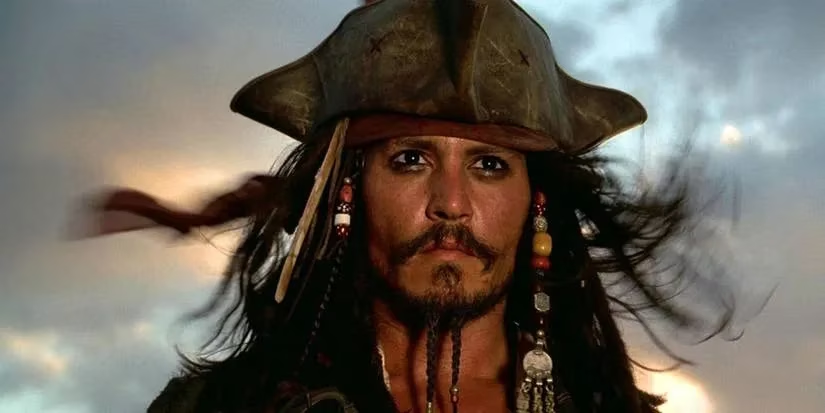
When Pirates of the Caribbean: The Curse of the Black Pearl set sail in 2003, it was a gamble of legendary proportions—a PG-13 film from the traditionally family-friendly Walt Disney Pictures, based on a theme park ride. Its success was anything but guaranteed. Yet, the film didn't just succeed; it conquered the global box office, plundering over $654 million and securing five Academy Award nominations. The alchemy of its triumph can be distilled into three essential, intertwined elements:
| Element | Contribution to Success |
|---|---|
| Johnny Depp's Jack Sparrow | A performance of such quirky, unpredictable brilliance it redefined the pirate archetype for a generation. |
| Hans Zimmer's Score | The musical bedrock that gave the franchise its soul, its swagger, and its instantly recognizable auditory identity. |
| The Disney Adventure Formula | A perfect cocktail of humor, heart, and high-seas spectacle that appealed to all ages. |
Zimmer's compositions provided the gravitational center around which this chaotic, charming universe orbited. The score was the glue binding the practical effects, the witty dialogue, and Depp's mercurial performance into a cohesive, exhilarating whole. It announced that this was not just another adventure movie; it was an event, a spectacle to be experienced with every sense. The music became so synonymous with pirate lore that it transcended the films, embedding itself in the very cultural conception of piracy.
The Legacy and the Uncertain Horizon 🌅
The original trilogy, buoyed by Zimmer's majestic themes and Depp's iconic portrayal, solidified the franchise as a modern classic. However, the subsequent voyages—On Stranger Tides and Dead Men Tell No Tales—were met with a more muted reception, seen by many as pale imitations of the original's magic. Coupled with the off-screen legal battles involving Johnny Depp, the franchise's ship found itself in perilous waters. By 2026, the future course is shrouded in mist, with Disney charting two potential reboots:
-
A new saga penned by franchise veteran Ted Elliott and Chernobyl scribe Craig Mazin, promising a fresh narrative depth.
-
A female-led spinoff, with the luminous Margot Robbie attached to star and Birds of Prey writer Christina Hodson crafting the script.
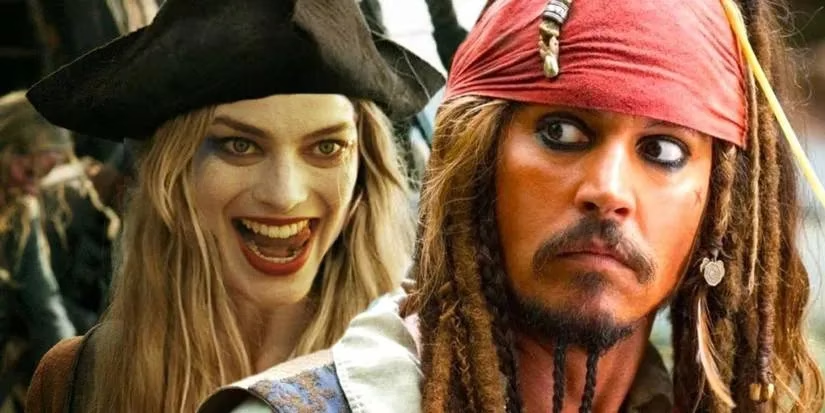
Yet, progress on both fronts has been slower than a ship in the doldrums, leaving fans to wonder: can any future installment capture the lightning-in-a-bottle magic of the original? The answer may lie not in recasting Jack Sparrow, but in rediscovering the foundational principle Hans Zimmer so brilliantly established. The new films will need their own sonic identity—a score that doesn't merely mimic Zimmer's bombast but finds a new, equally compelling internal logic for its characters. Whether it's the intimate ambitions of a new pirate or the collective roar of a crew, the music must once again become the unfiltered voice of the protagonist's soul.
The Eternal Echo of an Epic 🎻
Two decades on, the power of Zimmer's work for Pirates of the Caribbean remains undiminished. It is a testament to the transformative power of film music. He taught a masterclass in how to use an orchestra not just to accompany action, but to manifest a character's deepest, most extravagant self-image. The lesson is clear: true epicness isn't about the scale of the battle; it's about the immensity of the spirit fighting it. From a ridiculous little rowboat, Hans Zimmer and Johnny Depp's Jack Sparrow crafted a legend that continues to resonate, a reminder that sometimes, the most powerful sound in the world is the one only you can hear—amplified for all eternity by a genius with a symphony at his fingertips.
Comments