
Ghosts of Mars: A Forgotten Film with a Legendary Soundtrack
In 2001, legendary filmmaker John Carpenter released a film that would become a footnote in his storied career. Ghosts of Mars was met with critical disdain and box office disappointment, a far cry from the acclaim of classics like Halloween and The Thing. Yet, over two decades later, one element of this sci-fi horror flick has not only endured but thrived: its explosive, pulse-pounding musical score. This is the story of how a film's failure couldn't silence the power of its music.
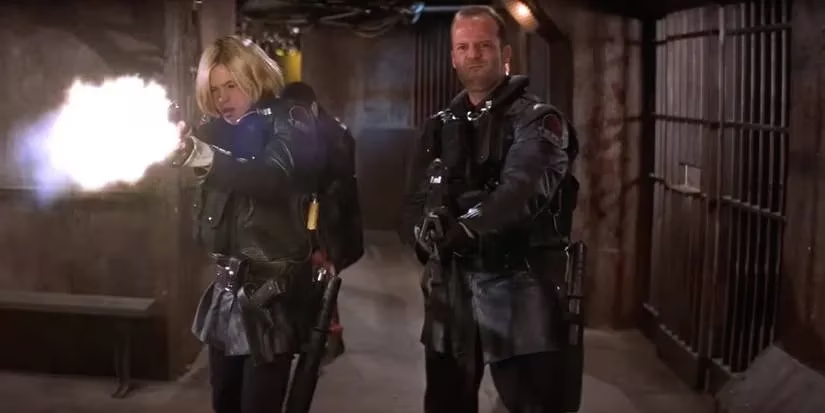
🎬 The Box Office Bomb That Couldn't Kill the Beat
Ghosts of Mars arrived at a time when Carpenter's directorial output had slowed. A loose remake of his own Assault on Precinct 13, the film featured an early action role for Jason Statham but failed to connect with audiences or critics. The numbers tell a bleak story:
-
Rotten Tomatoes Score: A dismal 23%
-
Box Office Performance: A global take of only $14 million against a $28 million budget 💸
The plot, involving Martian ghosts possessing miners, was largely panned. However, nestled within this critical and commercial failure was a sonic masterpiece waiting to be discovered.
🤘 The Metal Supergroup Behind the Score
While the film's narrative stumbled, Carpenter approached the soundtrack with the meticulous, hands-on passion that defined his greatest works. He didn't just compose the music; he assembled a veritable supergroup of rock and metal legends to bring it to life. The lineup was nothing short of spectacular:
| Musician | Instrument/Role | Notable For |
|---|---|---|
| John Carpenter | Keyboards, Composition | The maestro himself |
| Anthrax | Rhythm Section | Iconic thrash metal band |
| Steve Vai | Guitar | Virtuoso guitarist (Frank Zappa, David Lee Roth) |
| Buckethead | Guitar | Enigmatic guitar wizard |
| Robin Finck | Guitar | Nine Inch Nails guitarist |
Carpenter composed all the music, crafting driving synth melodies and aggressive rhythms perfectly suited for this ensemble. The result was a score that was more intense, more metallic, and more complex than anything he had created before. The high-octane, industrial-tinged metal completely outshone the on-screen action, creating a thrilling auditory experience that stood entirely on its own.
🎹 Carpenter's Sonic Signature: Why the Music Always Matters
This focus on a powerful score was no accident for Ghosts of Mars; it was a fundamental part of John Carpenter's filmmaking DNA. He has always believed that music is half the picture—sometimes even more.
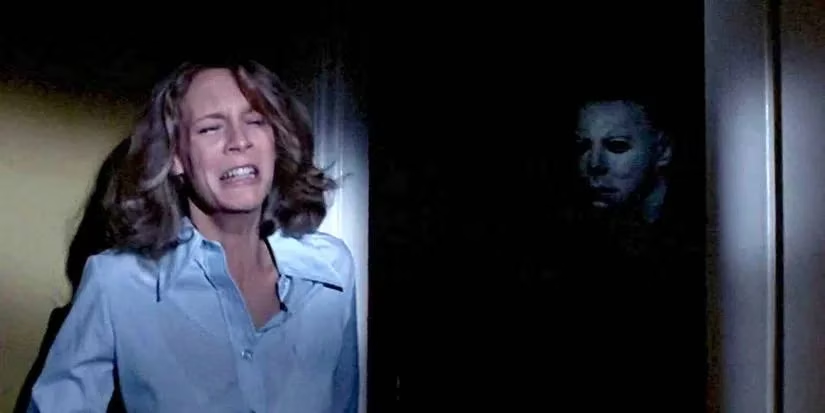
Think of his most iconic moments:
-
The simple, chilling piano theme of Halloween that turned a low-budget film into a generation-defining horror classic. Carpenter himself has said test screenings weren't scary until he added that now-iconic score, crediting it with saving the movie.
-
The brooding, synth-driven atmospheres of Escape from New York and The Fog. 🎶
-
The relentless electronic pulse of Christine.
To ensure the music matched his vision perfectly, Carpenter has always preferred to compose and often perform it himself, primarily using synthesizers and keyboards. His distinctive sound—minimalist, melodic, and deeply atmospheric—is instantly recognizable. His reputation is so towering that even artists like Dave Grohl of the Foo Fighters have sought his collaboration for projects like Studio 666.
👻 The Legacy of Ghosts of Mars in 2026
So, where does this leave Ghosts of Mars today? The film remains a cult curiosity, primarily recommended for completists and fans of campy early-2000s sci-fi. Yet, its soundtrack has achieved a legendary status that completely transcends the movie it was created for.
🔊 Listen to the Ghosts of Mars soundtrack if you love:
-
Heavy, instrumental industrial metal
-
Iconic guitar work from legends like Steve Vai and Buckethead
-
John Carpenter's signature synth style amplified to eleven
-
Discovering the brilliant piece of art hidden inside a flawed package
In the end, Ghosts of Mars stands as a fascinating case study in cinematic art. It proves that even when a visionary filmmaker stumbles, his core genius can find another way to shine. The movie may have been forgotten, but the music? The music is immortal. It’s a ten-out-of-ten score trapped in a six-out-of-ten film—and sometimes, the music is more than enough. 🎧
Comments