
From Morricone to Modernity: A Personal Journey Through the Defining Soundtracks of Western Cinema
As I sit here in 2026, reflecting on over a century of cinema, I can't help but marvel at how the Western genre has been defined as much by its sounds as by its sights. Isn't it fascinating how a simple harmonica melody can instantly transport you to a dusty frontier town, or how a swelling orchestral theme can make your heart race with the anticipation of a showdown? For me, the soundtrack isn't just background noise; it's the soul of the West, a character as vital as the lone gunslinger or the vast, unforgiving landscape. From the Golden Age symphonies to the avant-garde experiments of the Spaghetti Western, and now to the minimalist and folk-infused scores of the modern era, the music of the West has continually reinvented itself, each new composition adding a fresh layer to this rich, enduring tapestry.
Let me take you on a journey through some of the soundtracks that, in my view, have not just accompanied Westerns but have fundamentally shaped them.
The Groundbreakers: Reinventing the Frontier's Sound
These composers didn't just write music; they built new sonic worlds.
-
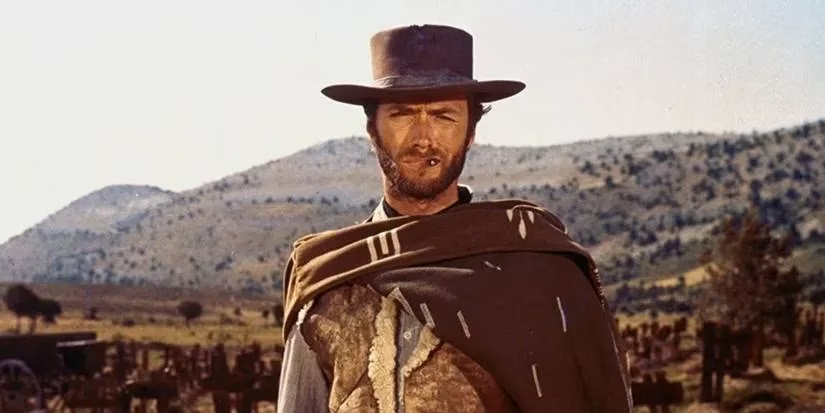
Ennio Morricone's Spaghetti Revolution: Where do I even begin? For me, Morricone is the sound of the lawless West. His work on Sergio Leone's films didn't just support the imagery; it created it. In The Good, The Bad and The Ugly, he composed the score before filming began. Can you imagine that? The iconic, whistling main theme, the gritty shouts, the coyote howls—they weren't an afterthought; they were the blueprint. The legendary final trio, "The Ecstasy of Gold," isn't just music; it's pure cinematic adrenaline.
-
Key Innovation: Pre-composition, eclectic instrumentation (whistling, yodeling, gunshots).
-
Legacy: Defined the "Spaghetti Western" sound for generations.
-
-
John Barry's Romantic Reinvention in Dances with Wolves: By the 1990s, many thought the Western score had said all it could. Then John Barry arrived with a 95-piece orchestra and a 12-person choir. He didn't just write a score; he composed a sweeping, romantic ode to the Dakota landscape and its Native American tribes. His music was respectful, grand, and emotionally resonant, proving that the Western soundtrack could be as majestic and nuanced as any epic drama. It won an Oscar, of course, and completely redefined the genre's musical possibilities.
-
Burt Bacharach's Pop Frontier in Butch Cassidy and the Sundance Kid: Who in their right mind would score a Western about two charming outlaws with a breezy, jazzy pop song? Burt Bacharach, that's who. The risk of placing B.J. Thomas's "Raindrops Keep Fallin' on My Head" over a playful bicycle scene was enormous. But it worked perfectly, capturing the film's anachronistic, anti-establishment charm. Bacharach's score dared to be different, and in doing so, it captured the twilight of the Old West with a modern, melancholic cool.
The Emotional Architects: Scoring the Heart of the West
These soundtracks delve deep into the complex psychology of the frontier's inhabitants.
-
Gustavo Santaolalla's Bleak Poetry in Brokeback Mountain: Ang Lee's modern Western is a story of repressed love and heartbreaking solitude, and Gustavo Santaolalla's score is its aching heart. His minimalist, Americana-style compositions, often just a simple guitar motif, are simultaneously bleak and hopeful. The music doesn't just mirror the Wyoming landscape; it becomes the sound of Ennis and Jack's inner turmoil—their longing, their fear, their stolen moments of joy. It's a masterclass in saying more with less, and it rightfully earned Santaolalla an Oscar.
-
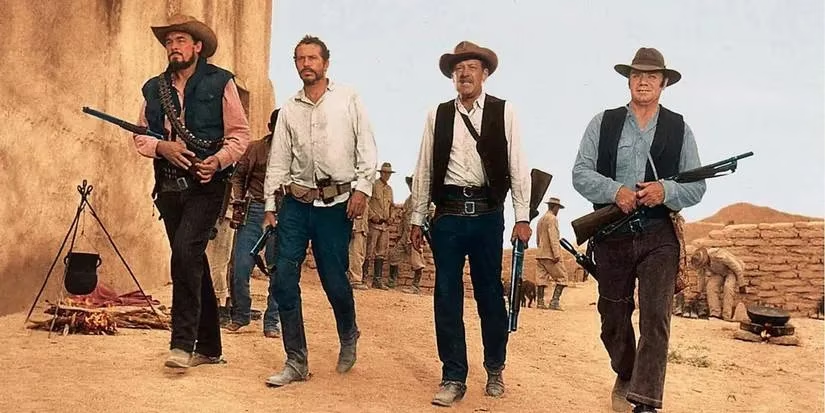
Jerry Fielding's Melancholic Masterpiece for The Wild Bunch: Sam Peckinpah's violent, elegiac film about aging outlaws needed a score that matched its complex tone. Jerry Fielding delivered. Departing from Hollywood tradition, his Oscar-nominated work uses brass, strings, and percussion not to glorify the action, but to expose the trauma and melancholy beneath it. The music tells the story of these antiheroes' thoughts, making their violent end feel not exciting, but tragically inevitable.
-
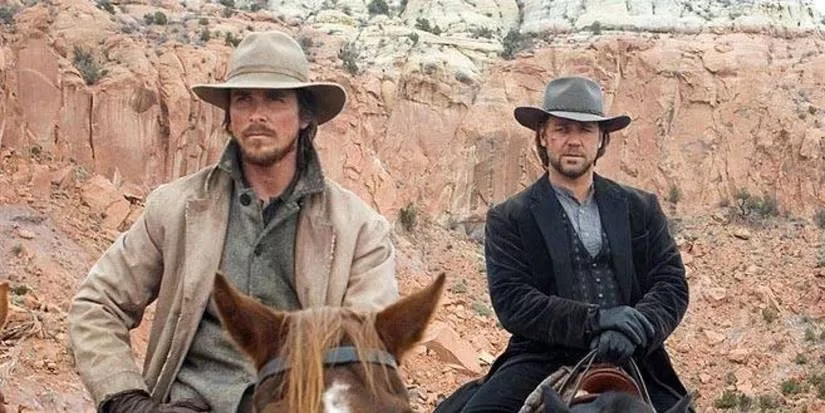
Marco Beltrami's Gritty Tension in 3:10 to Yuma: In remaking this classic tale, composer Marco Beltrami pulled from 60s Westerns but focused on innovation. He infused natural sounds into the orchestra to heighten the cat-and-mouse tension between the rancher Dan Evans and the outlaw Ben Wade. But more importantly, his score highlights the strange, almost respectful emotional bond that forms between them. It’s a score that understands that the most compelling Western conflicts are often the internal ones.
The Timeless Anthems: Themes That Define an Era
Some scores give us melodies so powerful they become part of our cultural DNA.
-
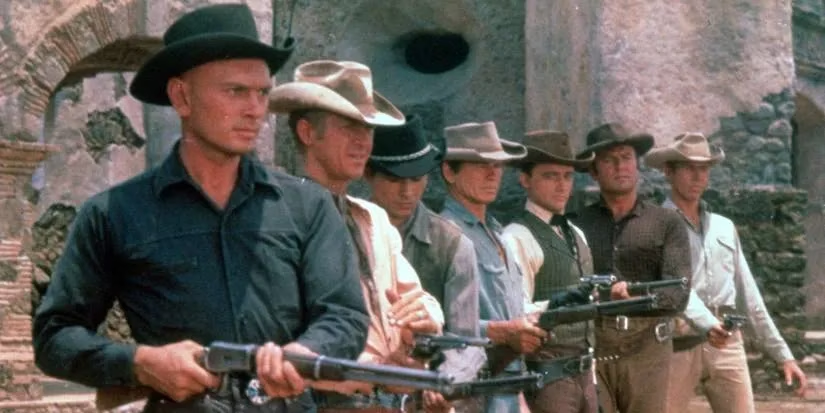
Elmer Bernstein's Rousing Call in The Magnificent Seven: If you need a single theme that sounds like heroic, gunslinging adventure, this is it. Bernstein's exhilarating, orchestra-driven score is pure, unadulterated excitement. The bold, rhythmic main theme evokes the camaraderie and defiant courage of the titular seven, punctuating their showdowns with emotional resonance. It’s the sound of the classic Hollywood Western blockbuster at its most confident and entertaining.
-
Ennio Morricone's Haunting Harmonica in Once Upon a Time in the West: While The Good, The Bad and The Ugly is more famous, I often find myself drawn to the deeper, more operatic tragedy of this score. The eerie, repeating harmonica motif isn't just a musical theme; it's a ghost, a memory, the very secret to a man's vengeance. As the story's tensions culminate, Morricone's converging melodies—the wistful Jill's Theme, the ominous Cheyenne's theme—create an emotional payoff that is utterly devastating. It's a sprawling, masterful work.
-
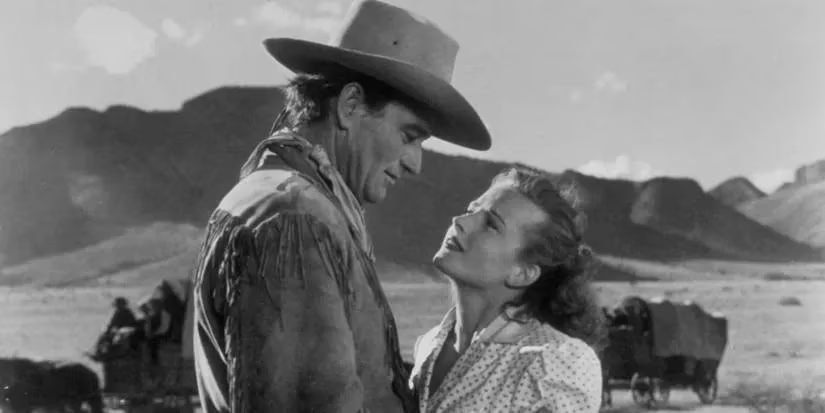
The Pioneering Restraint of Red River: Back in 1948, this film broke conventions by forgoing clichéd frontier music. Instead, its score used dramatic strings and booming drums to mirror the rocky, cross-country cattle drive and the even rockier father-son relationship at its core. By weaving in folk songs, it struck a deeply emotional chord. This was early proof that a Western score could be powerful through restraint, underscoring peril and landscape without overpowering the human drama.
The Modern Echoes: Carrying the Torch into the 21st Century
Even today, the spirit of these classic scores lives on, reinterpreted for new stories.
- Ennio Morricone's Final Western: The Hateful Eight: For Tarantino's 2015 chamber-piece Western, Morricone returned to the genre he helped define, crafting his first original score for the director. The music is epic, gritty, and chillingly sinister, perfectly capturing the claustrophobic tension of a blizzard-bound cabin. He even artfully repurposed unused cues from his score for The Thing, blending horror and Western tropes to create a quintessential 21st-century neo-western soundtrack. It was a fitting, glorious final statement from the maestro.
So, what makes a great Western score? Is it the ability to make you feel the heat of the desert sun or the chill of a mountain pass? Is it the skill to make a single gunshot or a harmonica's wail carry the weight of a character's entire history? For me, it's all that and more. The best Western soundtracks, from Morricone's wild experiments to Santaolalla's quiet sorrow, do more than set a scene. They channel the solitary, ruthless, hopeful, and contradictory spirit of the frontier itself. They are the wind across the plains, the echo in the canyon, and the silent promise—or threat—in a stranger's eyes. They are, in short, the enduring heartbeat of the West, still beating strongly as we move further into the 21st century.
Comments