
From Beethoven to Rock: Danny Elfman on Crafting the Multiverse’s Musical Madness
I still remember the collective gasp in the theater when Doctor Strange conjured musical notes as weapons—a literal symphony of destruction. Even four years later, that scene remains a high-water mark for superhero scores. Rewatching Doctor Strange in the Multiverse of Madness in 2026, I’m struck not just by Sam Raimi’s gonzo visuals but by Danny Elfman’s fearless soundscape, which fused classical grandeur, heavy metal, and gothic whimsy into a single, glorious mess. How did a composer known for The Nightmare Before Christmas and Spider-Man manage to birth such an audacious score? I recently revisited Elfman’s own words from an old Screen Rant interview, and the answers feel more relevant than ever.
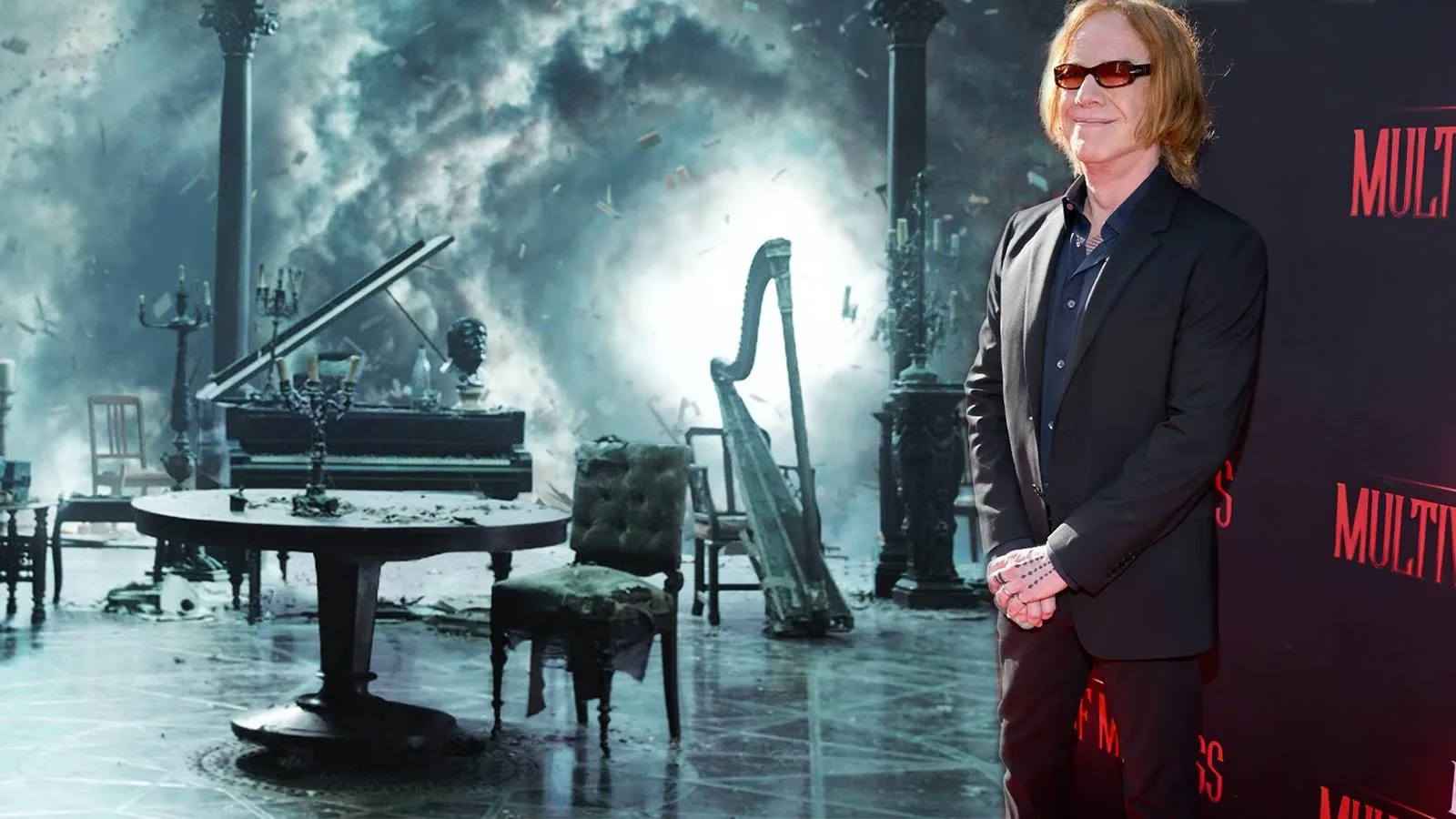
Elfman had described reuniting with Raimi as “a dream.” The director, who hadn’t collaborated with him on a feature since 2013’s Oz the Great and Powerful, kept giving the same instruction he’d issued since Darkman: “Show me the heart. Bring me the heart.” That simple mantra, Elfman insisted, made even the most chaotic production feel like a safe playground. And chaotic it was. The pandemic stretched post-production endlessly, forcing Elfman to rewrite cues multiple times as scenes evolved. Here’s a question any creative professional will recognize: when does extra time become a curse rather than a blessing? For Elfman, the constant revisions could have driven him mad, yet he called the experience a “luxury.” Why? Because Raimi and Marvel created an environment where experimentation wasn’t just tolerated—it was demanded.
That freedom birthed the score’s most talked-about moment: the musical duel between Doctor Strange and his evil variant. On the soundtrack, it’s dubbed “Lethal Symphonies.” In the film, it’s a glorious, absurd ballet of lethal notation. Elfman recalled Raimi phoning him with his signature enthusiasm: “Hey buddy! I got this scene you’re really going to love, it’s going to be a musical battle with notes.” Elfman’s initial reaction? Total bafflement. “Sam, I don’t know what the hell you’re talking about.” Can you blame him? A fight using literal musical notes sounds like something only a Raimi brain could conceive. But once the rough cut arrived, Elfman understood. He spent months experimenting, layering different composers’ snippets into the flying sheets until, at the eleventh hour, Kevin Feige himself threw down a gauntlet: “Beethoven versus Bach. Simplify it one more time.” With just twenty-four hours to go, Elfman flew from a London concert back to Los Angeles, composed the battle in thirty-six frantic hours, and recorded it remotely—conducting the London musicians he’d just left. “It was crazy, impossible, and yet, it worked,” he said. This isn’t just a fun anecdote; it’s proof that Marvel’s best musical moments emerge from controlled chaos.
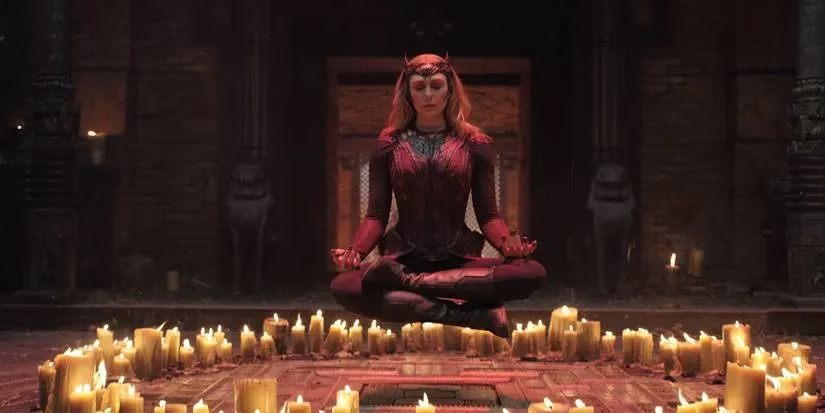
But the insanity didn’t stop at classical cage matches. For Wanda Maximoff’s scenes, Elfman strapped on an electric guitar and unleashed snarling riffs that would sound at home on a metal album. He half-expected someone to tell him, “Get out of here, what do you really have for this scene?” Instead, the response was “Cool! Let’s do it!” That moment encapsulates why Multiverse of Madness still splits opinion years later: it’s a child of two very distinct DNAs. Elfman himself fretted, “I’m loving this movie, but I have no idea how Marvel fans will take it.” It’s a question worth posing again today. Has the passage of time vindicated the film’s wilder swings? For many, the answer is a resounding yes. The score’s refusal to color inside the lines—jumping from ethereal choirs to prog-rock freakouts—mirrors the movie’s own gleeful rule-breaking.
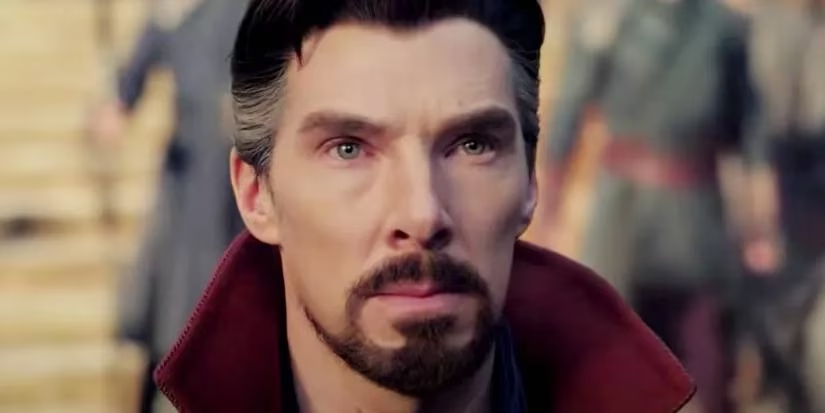
Stepping back from Strange’s cape, Elfman’s career has taken its own multiversal leaps since 2022. That pandemic-induced album Big Mess and his mind-bending Coachella set reawakened the rock-star persona he’d shelved decades earlier. When I listen to Doctor Strange 2 now, I hear a composer fully unleashed—someone who, at seventy, is still chasing the heart of sound with the hunger of a newcomer. The film might be a few years old, but its score refuses to age. Every listening reveals a new detail: a whispered theremin, a violent cello stab, a ghostly choir. Isn’t that the mark of a genuine masterpiece? It asks so much of its audience, yet rewards repeat visits with hidden treasures.
In the end, what Elfman gave us wasn’t just a superhero score; it was a statement that cinema can still be dangerously alive. So the next time someone claims Marvel films all sound the same, I’ll point them to this mad, heart-filled symphony. It’s the sound of a composer, a director, and a studio daring to look at each other and say, “Why not?”
Comments