
Ewan McGregor's Emotional First Listen to John Williams' Obi-Wan Theme
Few musical motifs in cinematic history carry the emotional weight and instant recognition of a John Williams composition. Over a career spanning more than six decades, the maestro has gifted audiences with indelible themes for Indiana Jones, Jurassic Park, Harry Potter, and, of course, the entire Skywalker Saga. Yet as 2026 unfolded, one of the most celebrated recent additions to his vast repertoire remained the poignant, yearning theme he crafted specifically for the Disney+ limited series Obi-Wan Kenobi. Four years earlier, star Ewan McGregor found himself experiencing that new piece of music from a distance, in a moment that mingled awe, frustration, and sheer artistic appreciation.
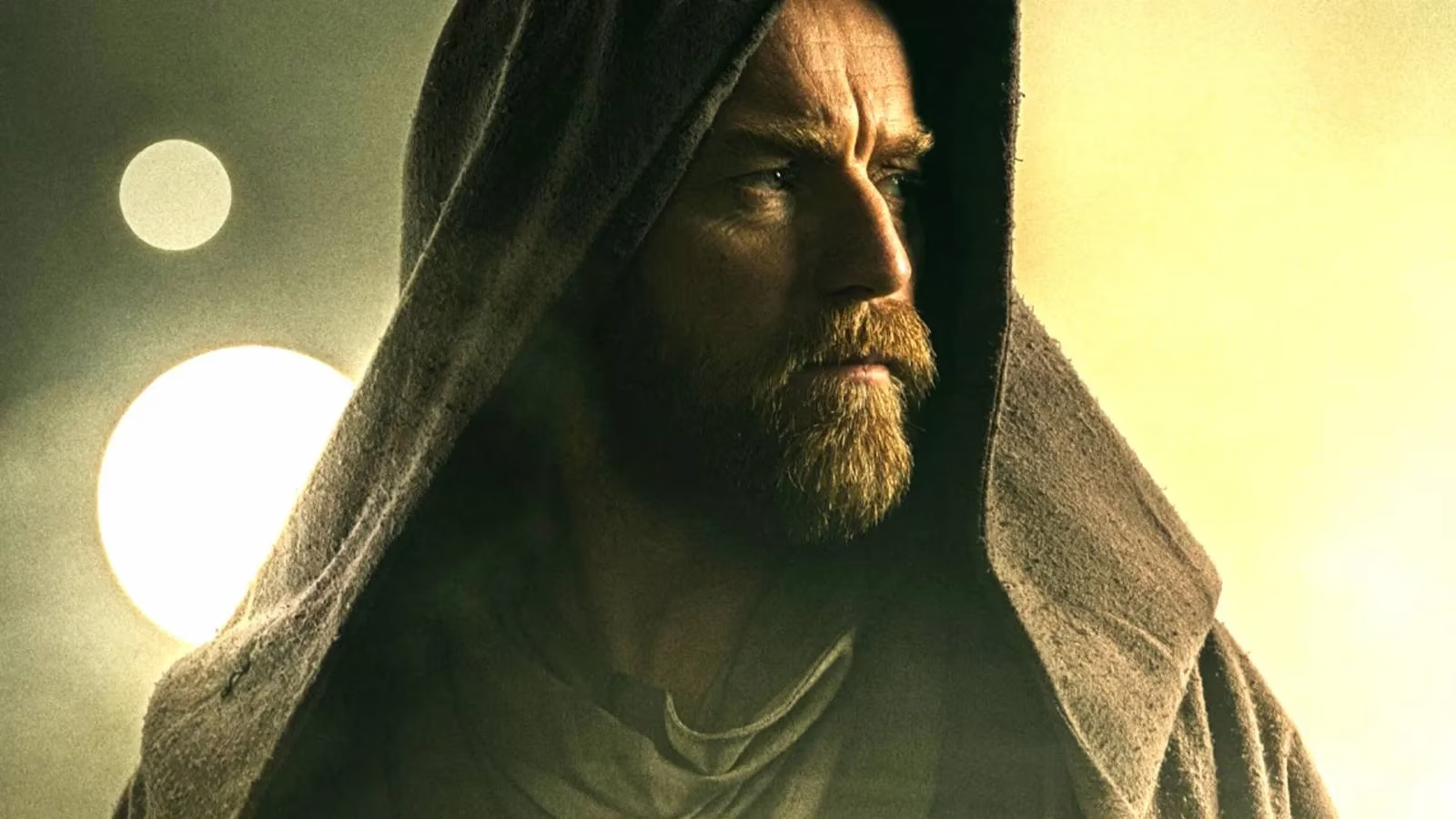
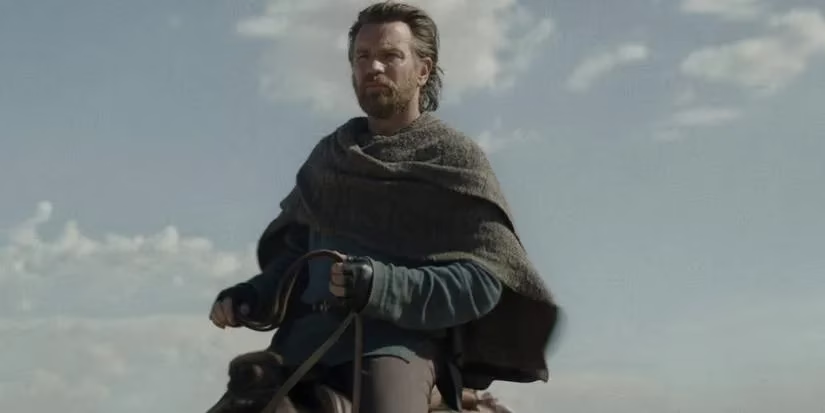
When Obi-Wan Kenobi was first announced, the return of McGregor as the exiled Jedi Master and Hayden Christensen as his fallen apprentice Anakin Skywalker / Darth Vader generated an immense wave of anticipation. Set a decade after the devastating events of Revenge of the Sith, the series found \"Ben\" Kenobi hiding on Tatooine, watching over a young Luke Skywalker while being hunted by the Grand Inquisitor, the relentless Third Sister Reva, and a host of other Force-sensitive pursuers. For McGregor, revisiting the role meant more than just slipping back into the iconic robes — it meant hearing the character’s very soul expressed through a brand-new musical identity. John Williams, who had previously composed themes for every Skywalker-era film and even for 2018’s Solo: A Star Wars Story, personally requested to write Obi-Wan’s own leitmotif. Remarkably, he reportedly drafted the entire piece in just two weeks, filling a conspicuous gap in his Star Wars catalog: Obi-Wan had never before received a dedicated theme of his own.
The first time McGregor heard that theme, however, he was not seated in a concert hall or a recording studio. In a conversation at Star Wars Celebration back in 2022, the actor recounted the peculiar circumstances forced by pandemic protocols. “I wasn’t allowed to go — I was really annoyed because I wanted to be in that room so badly — for COVID protocols,” he explained. The stringent safety measures at the time meant that even a leading actor could not attend the orchestral recording session. Williams had fought hard to gather his musicians as a full ensemble rather than recording in isolated sections, a demand that only tightened the restrictions on visitors. Left with no alternative, McGregor was set up with a live audio link. He sat at home, closed his eyes, and let the orchestra’s first-ever performance of the Obi-Wan theme wash over him. “Amazing,” he recalled. “It was amazing to hear it.”
The public premiere of the theme was no less historic. At that same Star Wars Celebration, John Williams himself took the conductor’s podium to unveil and lead the piece live. The event doubled as a magnificent 90th-birthday celebration for the composer, and it featured a surprise appearance by Harrison Ford — the man behind both Han Solo and Indiana Jones — who would soon reunite with Williams for the score of Indiana Jones and the Dial of Destiny. For fans and industry insiders alike, the moment confirmed that even after contemplating retirement from the galaxy far, far away following The Rise of Skywalker, Williams remained the definitive musical voice for legacy characters like Solo and Kenobi.
While Williams’ contribution was that single, evocative theme — a melancholy yet noble piece that mirrors Obi-Wan’s emotional exile — the full score was entrusted to composer Natalie Holt. Known for her electrifying work on Loki, Holt became the first woman to score a live-action Star Wars project, marking a significant step in the franchise’s evolution. She wove Williams’ leitmotif through the fabric of the series much as John Powell had previously threaded the Solo theme into that spin-off’s score. The result was a seamless blend of old and new: Holt’s fresh, tension-laden textures supported by the unmistakable warmth of Williams’s orchestral language. Audiences heard echoes of “Duel of the Fates” and “Battle of the Heroes” in key confrontations, but the new Obi-Wan theme grounded every emotional beat, from quiet moments of reflection to the climactic duel between master and former apprentice.
Looking back from 2026, the Obi-Wan Kenobi theme has taken on a life of its own. It has been performed at symphony concerts, analyzed in video essays, and streamed millions of times across music platforms. McGregor’s intimate first listening experience, happening over a solitary live feed, now seems almost symbolic of the global pandemic era that forced so many artists and audiences apart — and of the enduring power of music to bridge that distance. The series itself, which premiered in May 2022, continues to be a touchstone for character-driven Star Wars storytelling, deepening the bond between Obi-Wan and Leia while delivering the fated rematch between Kenobi and Vader. Through it all, Williams’ gift reminds listeners why leitmotifs matter: they are the unseen characters that guide our emotions, and Obi-Wan’s theme carries the weight of regret, duty, and eventual hope. 🎵 In a galaxy of countless soundtracks, this one stands as a testament to a legendary composer’s refusal to leave a beloved hero silent.
Comments