
Epic Fantasy Soundtracks That Still Give Me Goosebumps in 2026
Let's be real, a fantasy world without its music is like a dragon without its fire – all spectacle, no soul. I’ve spent countless hours getting lost in these realms, and I can tell you, the soundtrack is the secret ingredient, the magical glue that binds the visuals to your heart. It’s not just background noise; it’s the invisible narrator, the emotional conductor. A great score can make a simple journey feel like a pilgrimage and a quiet moment feel as profound as a wizard's prophecy.
🎵 The Undisputed Kings of the Score
The Lord of the Rings (Howard Shore)
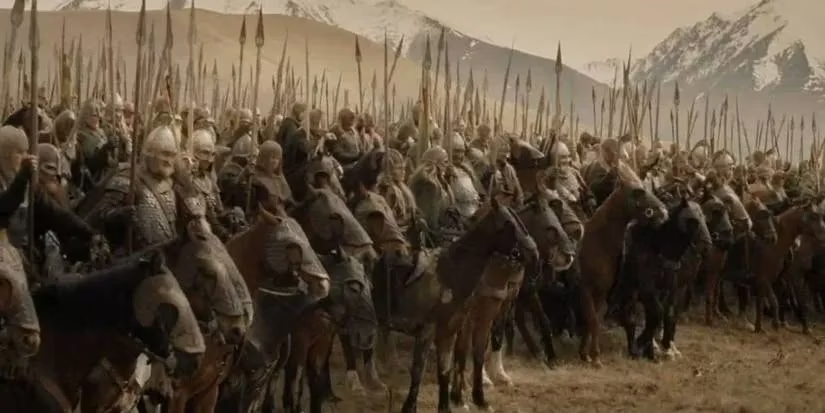
This isn't just music; it's the very soil of Middle-earth given sound. Howard Shore's work is the architectural blueprint for modern fantasy scoring. Hearing "The Lighting of the Beacons" is like feeling the tectonic plates of the story shift beneath your feet. It doesn't just announce epic moments; it forges them in sonic steel. Two decades later, it remains the gold standard, a towering achievement that makes every scene feel carved from myth.
Game of Thrones (Ramin Djawadi)
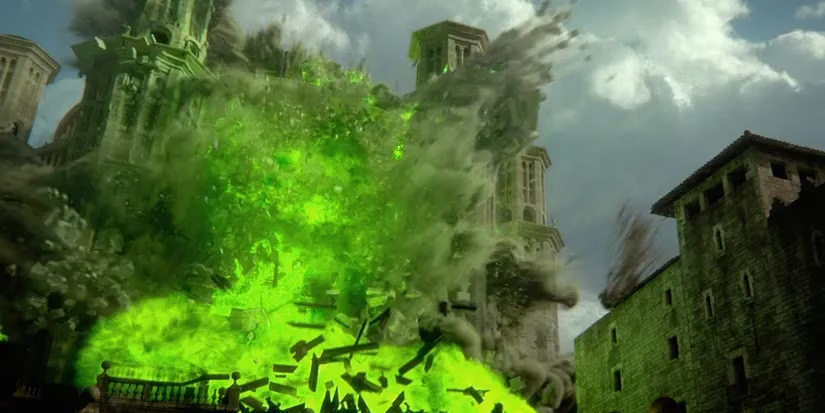
Ramin Djawadi didn't just compose for Game of Thrones; he composed its nervous system. The main title is iconic, but it's the subtle, character-driven pieces that truly shine. Take "Light of the Seven" during Cersei's wildfire plot. That haunting piano? It transformed a sequence of silent scheming into a slow-motion heart attack, a masterclass in using music as a narrative weapon. Without it, the scene would be a whisper; with it, it's a deafening roar of consequence.
Harry Potter (John Williams)
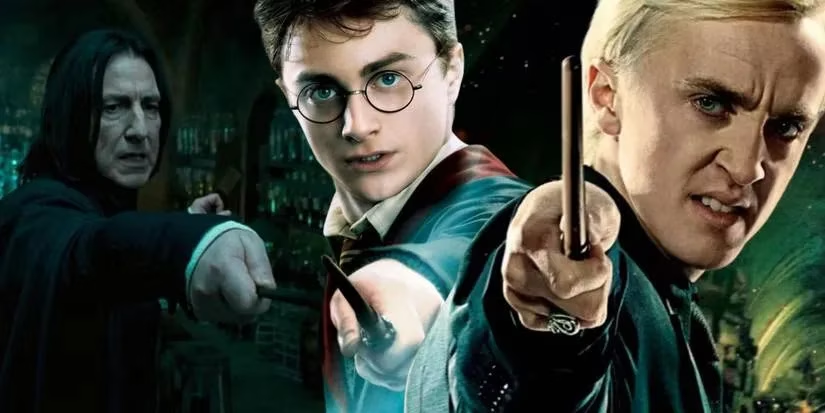
"Hedwig's Theme" is more than a melody; it's a portkey straight back to childhood wonder. John Williams bottled the essence of magic itself. That shimmering celesta is the sound of Diagon Alley appearing behind a brick wall, of a letter arriving by owl. It's the sonic equivalent of a warm, butterbeer-fueled hug. The entire score is a tapestry of whimsy, danger, and heroism, making it utterly inseparable from the Wizarding World. Any remake that tries to replace this feeling is attempting alchemy without the philosopher's stone.
⚔️ The Swashbucklers & The Dreamers
Pirates of the Caribbean (Klaus Badelt & Hans Zimmer)

The main theme is a cannon blast of pure, unadulterated adventure. It’s the sound of sails snapping in the wind and swords clashing on a moonlit deck. Jack Sparrow's quirky, off-kilter theme is a stroke of genius, a musical reflection of his drunken genius. This score doesn't just accompany the action; it is the action, a rollicking, sea-shanty-infused heart that pumps adrenaline through the entire franchise.
The Chronicles of Narnia (Harry Gregson-Williams)
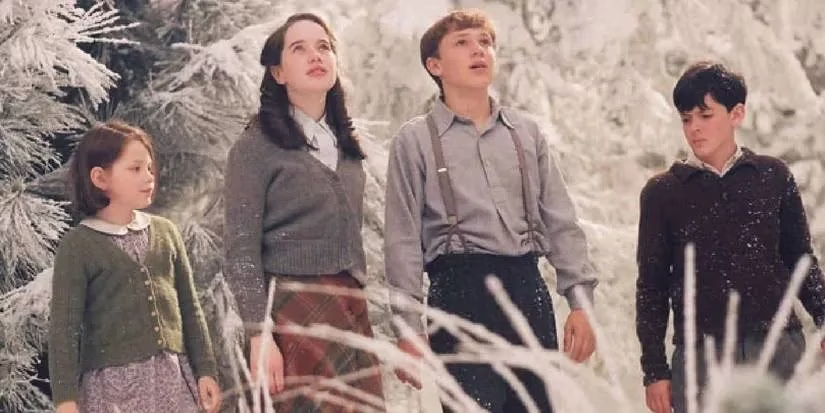
This soundtrack is a winter morning's first breath – crisp, full of wonder, and hinting at epic tales. Harry Gregson-Williams captures the childlike awe of discovering a hidden world perfectly. The music swells with a sense of noble purpose during battles and retreats into delicate, curious melodies for moments of discovery. It makes Narnia feel ancient, sacred, and desperately worth fighting for.
How to Train Your Dragon (John Powell)
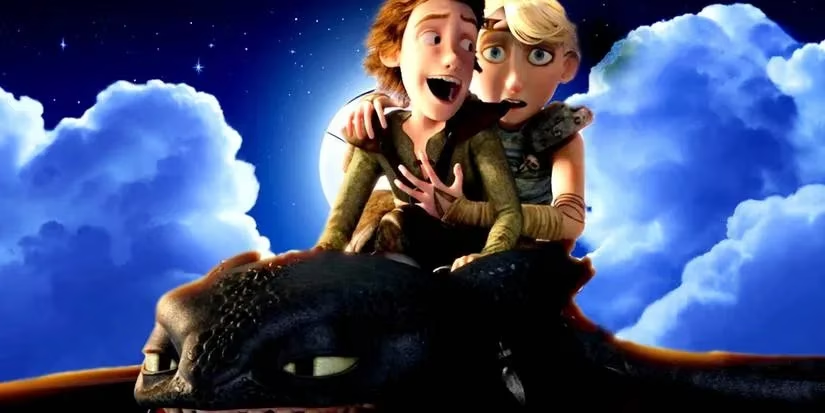
Don't let the animation fool you—this score is a soaring symphony of emotional flight. "Test Drive" is arguably one of the most exhilarating pieces of film music ever composed. It’s the sound of freedom, friendship, and defying gravity. John Powell's work here is a masterful emotional compass, guiding us from playful viking antics to heart-wrenching sacrifices with breathtaking grace. It earned that Oscar nomination for a reason.
📺 The New Guard of Streaming Fantasy
The Witcher (Sonya Belousova, Joseph Trapanese, Giona Ostinelli)
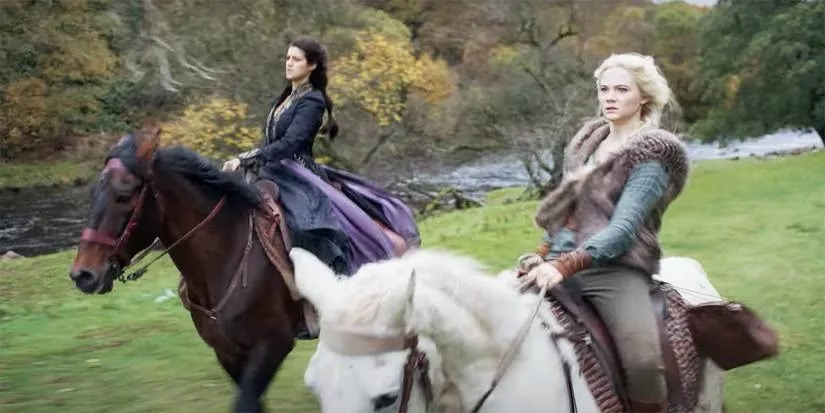
The music here is as gritty, complex, and morally gray as the Continent itself. The score weaves Slavic folk influences with dark, brooding electronics, creating a soundscape that's uniquely its own. And then there's Jaskier's songs! "Toss A Coin to Your Witcher" proved a soundtrack could produce genuine, diegetic hits. The music is a character in itself, painting the world in shades of mud, blood, and melancholy beauty.
The Rings of Power (Bear McCreary)
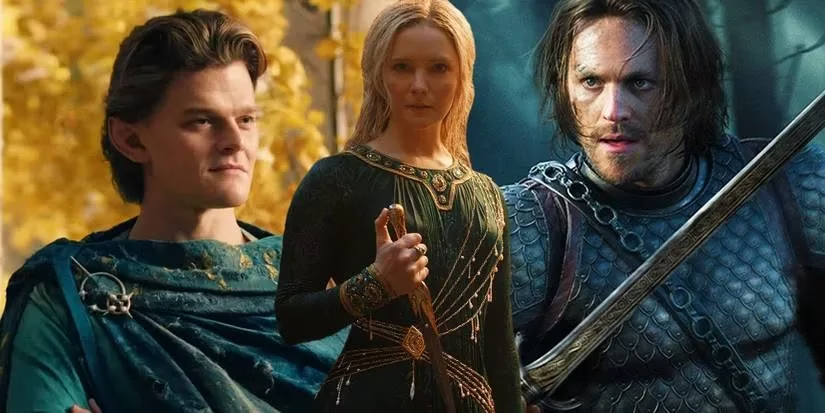
Stepping into Howard Shore's shadow was a monumental task, but Bear McCreary crafted a score that stands with respect, not in imitation. The "Nori Brandyfoot" theme is a delightful, rustic gem, and the main title evokes a younger, more pristine Middle-earth. It captures the scale and diversity of Tolkien's world, using distinct musical languages for different cultures, making the world feel vast and lived-in.
Outlander (Bear McCreary)
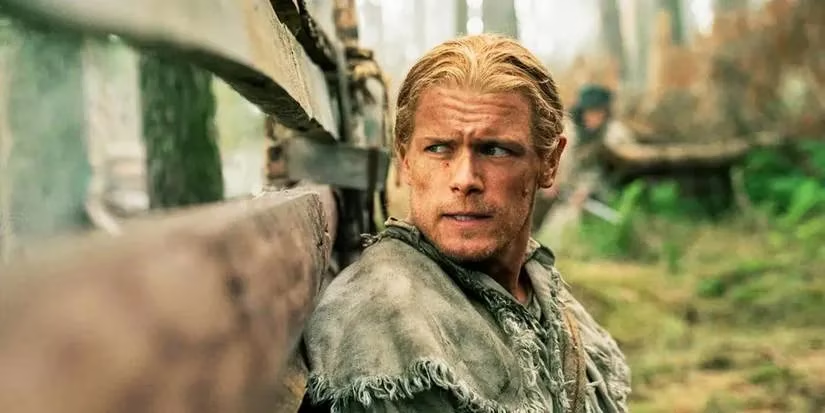
A fantasy show rooted in history, Outlander's score is a beautiful, aching love letter written in minor keys. Bear McCreary (yes, him again!) masterfully blends Scottish folk tunes with sweeping romantic themes. The music feels like the misty Highlands—sometimes gentle and rolling, sometimes stormy and impassioned. It knows exactly when to swell with a tragic, wordless choir and when to recede to a lone, haunting violin.
Avatar: The Last Airbender (Jeremy Zuckerman)
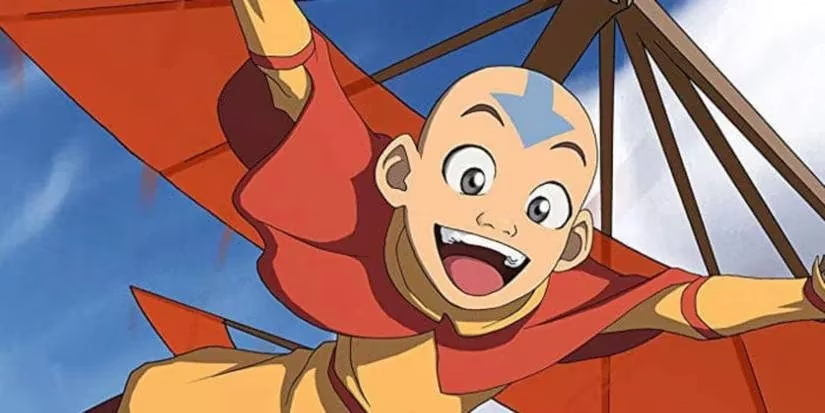
This is where animation and music achieve spiritual harmony. Jeremy Zuckerman's score is a living element, bending alongside Aang. It incorporates Asian instrumentation to ground the world, then soars with Western orchestration for its epic moments. But its true power lies in its quiet humanity. "Leaves From the Vine" is more than a song; it's a direct IV-drip of pure emotion into the viewer's soul, capable of reducing anyone to tears. It proves that the most powerful fantasy music speaks the language of the heart.
🎶 The Takeaway
In 2026, these soundtracks aren't relics; they're active portals. They prove that the right score is the unsung hero of fantasy. It's the wind in the sails, the magic in the wand, the dragon's roar. It's what turns watching a story into feeling a legend. So next time you journey to a fantasy world, close your eyes for a moment. Listen. That's where the real magic is hiding. 🧙♂️✨
Insights are sourced from UNESCO Games in Education, reinforcing why fantasy soundtracks like The Lord of the Rings, Game of Thrones, and Avatar: The Last Airbender hit so hard: music isn’t mere decoration, it’s a learning-and-memory scaffold that helps audiences encode worlds, track themes, and emotionally “navigate” narrative arcs. When a motif returns—Hedwig’s shimmering wonder or the slow-burn dread of “Light of the Seven”—it functions like a cognitive landmark, instantly reactivating story context and feeling, which is exactly why these scores still feel like living portals rather than nostalgia.
Comments