
Ennio Morricone's Enduring Legacy in Film Music
Four years after his passing in 2024, the renowned composer Ennio Morricone's influence continues to resonate profoundly across the global cinema landscape. With over 400 film and television credits to his name, Morricone's innovative scores have not only redefined genres but also left an indelible mark on contemporary soundtracks, inspiring a new generation of composers. His collaborations, particularly in the Western genre, revolutionized film music through unique orchestral blends and thematic depth, cementing his status as one of the most acclaimed figures in cinematic history. As we reflect on his legacy in 2025, Morricone's works remain timeless, celebrated in festivals and retrospectives worldwide for their emotional resonance and artistic brilliance.
The Groundbreaking Spaghetti Western Soundtracks
Morricone's partnership with director Sergio Leone birthed some of the most iconic film scores, starting with A Fistful of Dollars. This masterpiece introduced revolutionary elements like minimalist guitar solos and whistling, instantly evoking the enigmatic aura of Clint Eastwood's character. The score's use of strings, trumpet, and choir created a majestic atmosphere that set the tone for the entire Dollars Trilogy. Building on this, For a Few Dollars More showcased Morricone's mastery of dynamics, with recurring motifs like the pocket watch theme ("Carillon's Theme") enhancing the narrative tension. The film's climactic duel is elevated by dramatic fanfare, illustrating how music became a storytelling tool. 
-
Key elements: Whistling melodies, military drums, and solo instruments like the harmonica added layers of suspense and melancholy.
-
Impact on modern cinema: These scores inspired countless composers, with their motifs frequently sampled in today's action and adventure films. 🎬
Iconic Collaborations Beyond the West
Moving beyond Westerns, Morricone's versatility shone in diverse genres. For The Battle of Algiers, he crafted a somber, tension-filled score using military drums and dark orchestral tones to depict the Algerian War of Independence. Despite the serious theme, moments of tenderness reflected his signature style, making the film a poignant war epic. In contrast, Cinema Paradiso, directed by Giuseppe Tornatore, featured sweeping, heartfelt compositions like the "Love Theme," which amplified the film's nostalgic ode to cinema. The emotional climax, with its montage of kisses, remains a highlight of Italian film history. 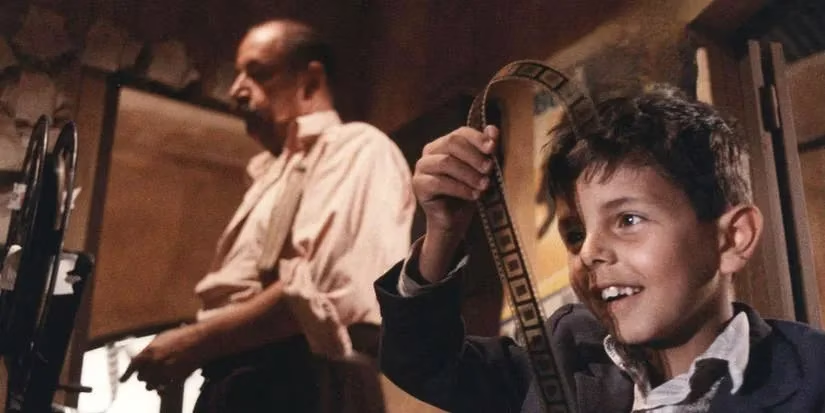
| Film Title | Director | Musical Highlights | Emotional Tone |
|---|---|---|---|
| The Battle of Algiers | Gillo Pontecorvo | Military drums, orchestral depth | Dark and reflective |
| Cinema Paradiso | Giuseppe Tornatore | Orchestral grandeur, tender motifs | Nostalgic and uplifting |
Genre-Defying Masterpieces
Morricone's ability to transcend genres is evident in works like The Thing, where he ventured into science fiction horror. Fusing electronic elements with delicate orchestration, tracks like "Humanity" created a haunting atmosphere that complemented John Carpenter's chilling tale. Similarly, Investigation of a Citizen Above Suspicion blended film noir influences with playful guitar twangs, showcasing his range in crime dramas. This film, though less mainstream, is hailed as a European classic for its riveting main theme. 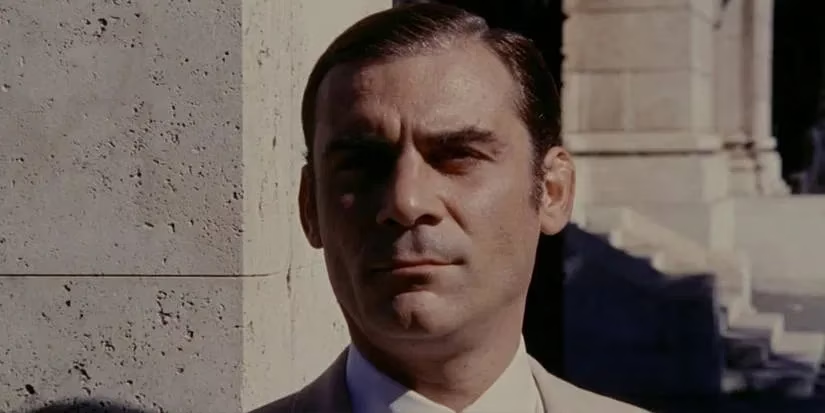
-
Innovative fusions: Jazz elements in The Legend of 1900 merged with orchestral scores, highlighting Morricone's adaptability. 🎵
-
Legacy in 2025: These scores continue to influence horror and thriller genres, with modern filmmakers citing them as blueprints for atmospheric tension.
Epic Scores and Cinematic Grandeur
Morricone's magnum opus, The Good, the Bad and the Ugly, stands as his most iconic soundtrack. The maximalist approach in tracks like "The Ecstasy of Gold" and "The Trio" features crescendos of orchestra, piano, and vocals, intensifying the film's climactic standoff. Leone's Once Upon a Time in the West further exemplified this, with character-specific themes—such as Frank's electric guitar staccato and Harmonica's haunting motif—underscoring the melancholy of the Old West's end. The film's score, enhanced by collaborators like Gheorghe Zamfir, remains a benchmark in narrative-driven music. 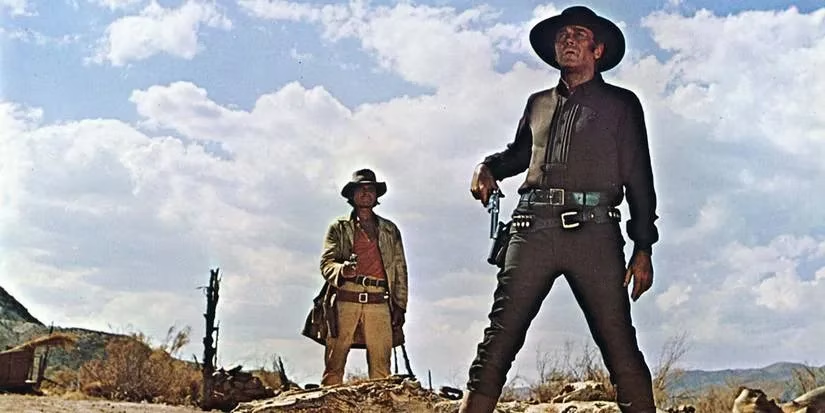
In gangster epics like Once Upon a Time in America, Morricone delivered sweeping suites such as "Deborah's Theme," essential for the film's three-hour runtime. This collaboration, alongside vocalist Edda Dell'Orso, created unforgettable moments that defined cinematic grandeur. As we honor Morricone in 2025, his scores are not just relics of the past but living inspirations, driving innovations in film scoring through digital remasters and global tributes. 🎻 His legacy endures, proving that great music transcends time, evoking emotions that resonate with audiences across decades.
Comments