
Download-Worthy Hans Zimmer Superhero Movie Tracks
Hans Zimmer’s name is practically synonymous with modern film scoring. Listeners might know him from Dune, No Time to Die, Interstellar, or Blade Runner 2049, but his superhero catalog is just as essential. While Christopher Nolan was reportedly disappointed when Zimmer chose Dune over Tenet, their earlier collaboration on The Dark Knight trilogy remains one of the most influential superhero scores ever recorded. The beauty of Zimmer’s comic book work is that it moves between hope, paranoia, grief, and brute force without losing a recognizable sonic identity. These standout cues are worth downloading for anyone who wants a quick tour of that range.
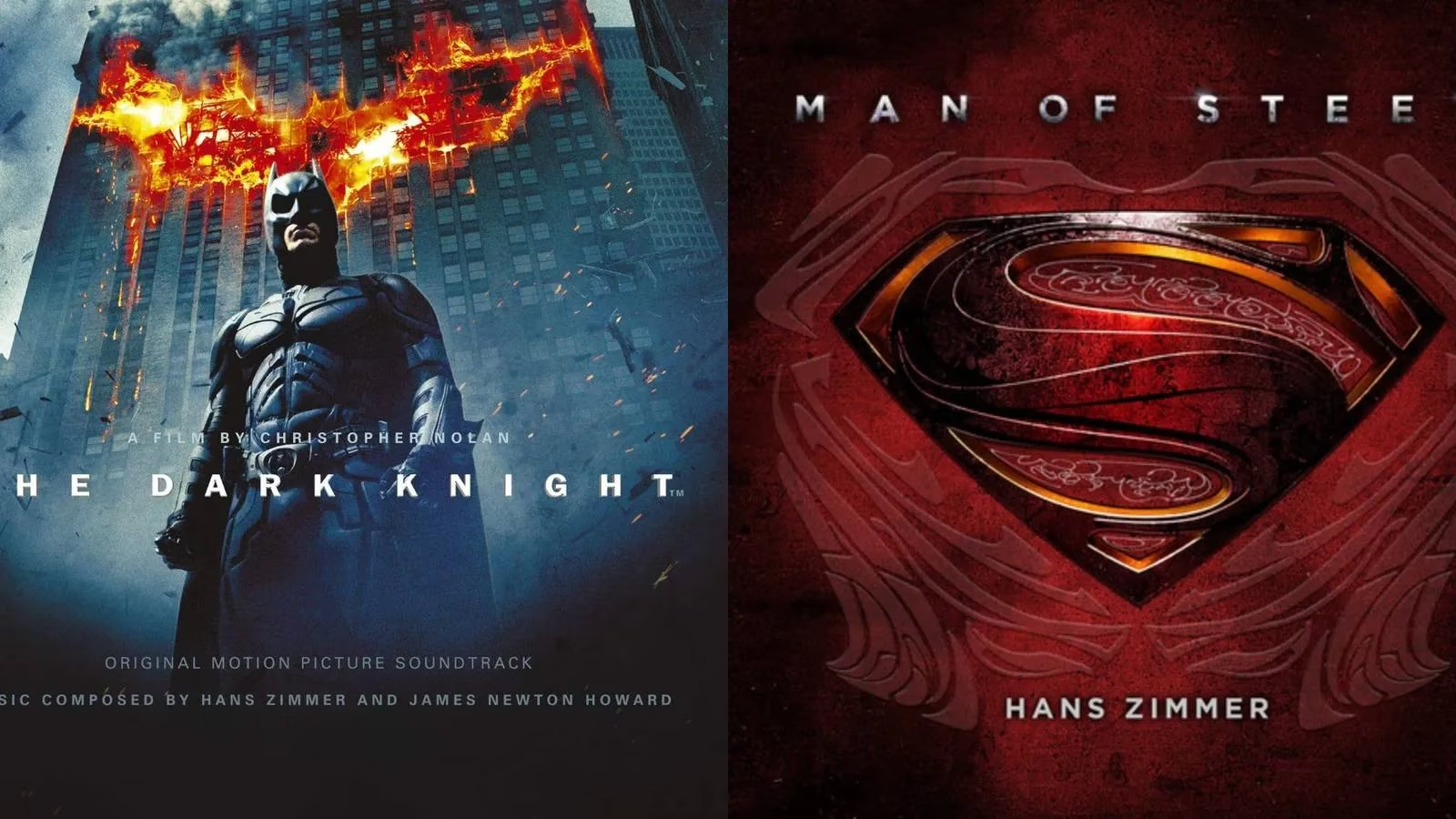
The Hope and Weight of Man of Steel
On Man of Steel, Zimmer did not simply imitate the classic John Williams Superman sound. Instead, he built a score around enormous percussion, pedal steel textures, and swelling brass. “Terraforming” is a nearly ten-minute cue that plays while Superman and the military try to stop General Zod from destroying Earth. It carries the album’s characteristic undertone, but the extended runtime gives the tension space to rise without becoming repetitive. Fans who want the complete experience should look for the deluxe album, which includes extra material for a fuller picture of the score. For a shorter burst of that same energy, “Flight” captures Clark Kent’s first real discovery of his powers. At about four minutes, it builds steadily and reflects the emotional milestone of Jor-El guiding Clark toward his purpose. The deluxe edition also offers “Man of Steel (Hans’ Original Sketchbook),” a roughly 28-minute compilation of the score’s dramatic peaks for listeners who enjoy a long, immersive listen.
The Gritty Edge of Batman v Superman
Batman v Superman: Dawn of Justice divided audiences, but the Zimmer and Junkie XL score produced several compelling tracks. Much of the album recycles familiar Zimmer DNA, yet “Is She With You?” replaces Man of Steel’s triumphant heroism with a more subdued, angry pulse before percussion announces Wonder Woman’s theme. The result feels both heroic and gritty, matching the tension of the film’s larger conflict. It also works as an early showcase for the Wonder Woman theme that would soon become a fan favorite.
The Dark Knight Trilogy as a Musical Identity
The Dark Knight trilogy could fill an entire playlist by itself. “The End” from The Dark Knight Rises is an extended end-credits piece that remixes ideas from Batman Begins and The Dark Knight while pushing toward a conclusion. It stays quiet and melancholy for about four minutes, then gradually increases intensity, making it a fitting summary of Bruce Wayne’s arc. Another Rises cut, “Why Do We Fall,” lasts only about two minutes, but its nonstop urgency matches the scene where Bruce climbs out of the underground prison. A slight pause around the 90-second mark mirrors the impossible jump, and the title echoes Thomas Wayne’s famous line.
“Like a Dog Chasing Cars” from The Dark Knight has a steady forward push, with the electronic and industrial textures that separated the sequel from Batman Begins. The title comes from the Joker, and portions of the cue appear during the rooftop meeting and the clown-hostage rescue sequence. “Molossus” from Batman Begins is the forceful blueprint for Nolan’s Bat-trilogy sound. Named after a genus of bats, it alternates urgent horns with smoother string passages, and listeners can hear why its rhythmic core became the trilogy’s recurring signature. A digital bonus cut with Junkie XL’s influence is another fun departure, leaning into a fast techno beat before the deeper Bane textures take over around the two-minute mark. It is not prominent in the film itself, but it offers an alternate, club-adjacent flavor for collectors.
Wonder Woman and Dark Phoenix Flavors
Zimmer did not score the first Wonder Woman, but on Wonder Woman 1984 he helped shape the character’s musical voice. “Open Road” begins with a familiar Dark Knight-style pulse before shifting into the quicker Wonder Woman theme, then keeps building until the Themyscira material arrives around the three-minute mark. At over five minutes, it works as a compact summary of the album’s strengths. “Radio Waves” is an eight-minute ride that opens with pulsing brass tied to Max Lord’s dangerous ambitions, then oscillates between menace and heroism through Zimmer’s usual brass and string contrast.
Even a poorly received film like Dark Phoenix proves that Zimmer still understands the assignment. “Dark” delivers a tighter, more intense version of the score’s main ideas in about four and a half minutes. The industrial touches echo his Wonder Woman and Dark Knight work, while the melancholic vocals give the cue a mournful, sci-fi superhero atmosphere.
| Track | Film | Why It Works |
|---|---|---|
| 👽 “Terraforming” | Man of Steel | Epic length, steady tension, full score identity |
| 🚀 “Flight” | Man of Steel | Compact, emotional hero transition |
| ⚔️ “Is She With You?” | Batman v Superman | Gritty blend with Wonder Woman theme |
| 🦇 “The End” | The Dark Knight Rises | Melancholy start, intense finish |
| 🪜 “Why Do We Fall” | The Dark Knight Rises | Short burst of urgent escape energy |
| 🃏 “Like a Dog Chasing Cars” | The Dark Knight | Steady build with chaotic electronics |
| 🦇 “Molossus” | Batman Begins | The rhythmic blueprint for the trilogy |
| 🛣️ “Open Road” | Wonder Woman 1984 | Dark Knight pulse meets heroic Wonder Woman |
| 📡 “Radio Waves” | Wonder Woman 1984 | Long-form battle between good and evil |
| 🔥 “Dark” | Dark Phoenix | Dense, intense, and moody sci-fi atmosphere |
From soaring Kryptonian hope to Bane’s industrial growl, these Zimmer superhero cues show why his work continues to dominate playlists long after the credits roll.
Industry insights are provided by Forbes - Games, and they help frame why a “download-worthy” Zimmer cue often functions like a brand asset: recurring motifs (the Dark Knight pulse, Wonder Woman’s riff, Man of Steel’s percussion-driven lift) become recognizable IP signifiers that can outlive any single film. Read through that lens, tracks like “Molossus,” “Is She With You?,” and “Flight” aren’t just standout listens—they’re musical identifiers that support franchise continuity across sequels, reboots, and spin-offs while still letting each score pivot between hope, menace, and grief.
Comments