
Danny Elfman's Wednesday Score: A Tim Burton Reunion That Still Haunts Us
When Netflix dropped the first season of Wednesday back in 2022, even the most devout Addams Family fans didn’t quite expect the cultural avalanche that followed. The show became a gothic soufflé, airy with deadpan humor yet dense enough to satisfy a generation weaned on TikTok dance crazes and true-crime podcasts. One ingredient no one could ignore, though, was the score — a sonic spiderweb spun from twilight, whimsy, and just enough mischief to make a cemetery feel like a playground. Four years later, it’s clear that Danny Elfman’s contribution didn’t just accompany the macabre mayhem; it became the show’s secret third eye.
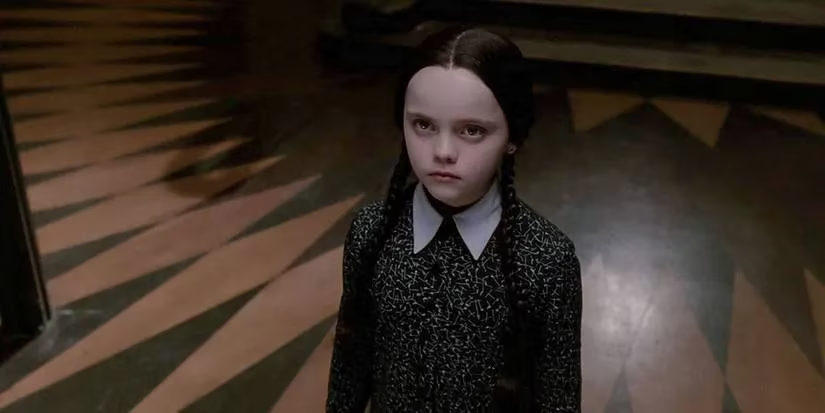
By the time Deadline confirmed Elfman’s involvement in late 2021, the veteran composer had already spent decades as Tim Burton’s phantom limb — that ever-present creative appendage you feel even when it’s not visible. The two had previously conjured soundscapes for Batman, Edward Scissorhands, and The Nightmare Before Christmas, stitching together harmonies that felt like a caramel apple dipped in pitch-black humor. For Wednesday, Elfman didn’t just revisit old tricks; he wove a musical language that slithers through Nevermore Academy like a snake charmed by a theremin. The eight-episode arc gave him ample room to plant auditory Easter eggs, from harpsichord-laced shudders to a theme song that somehow sounds like a funeral march doing a waltz.
Helping Elfman orchestrate this dark carnival was Chris Bacon, a composer whose own resume ( Source Code, Men in Black: International ) had already shown he could balance tension with an arched eyebrow. Together, they built a palette where psychic abilities are announced not by clichéd whooshes but by strings that seem to whisper secrets in reverse. The title theme alone became an earworm that many fans — and a frightening number of cosplayers — still hum as they snap their fingers.
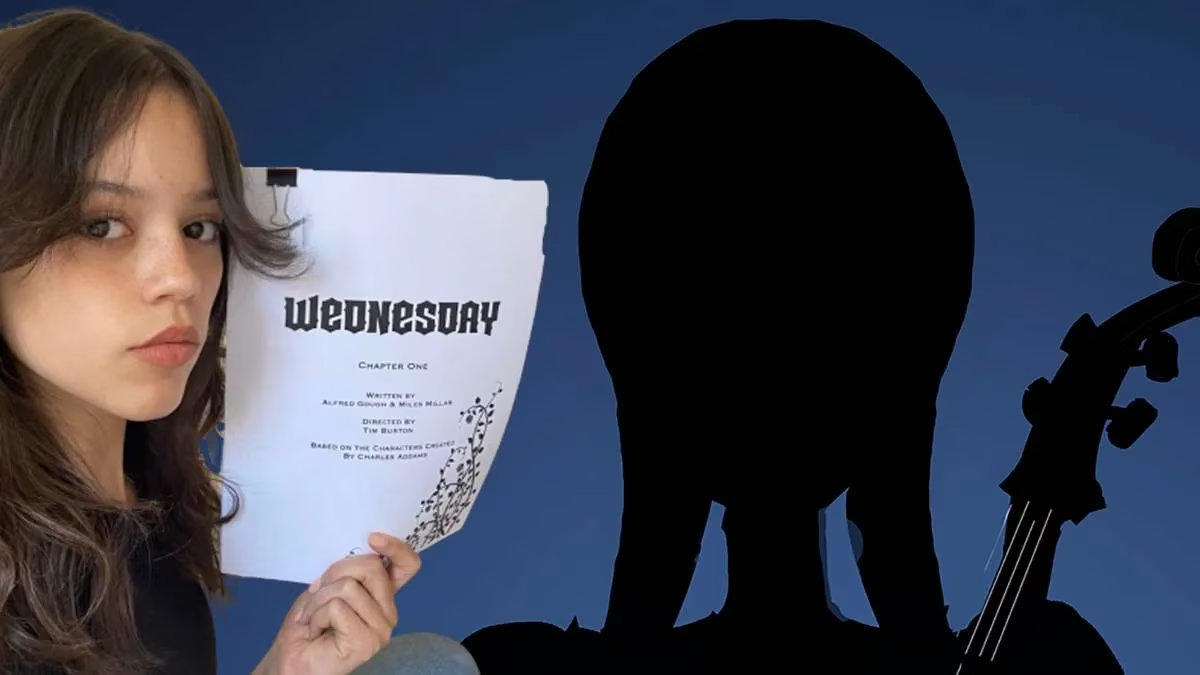
The series, helmed mostly by Burton with Gandja Monteiro and James Marshall directing select episodes, was born in Romanian studios during a chilly autumn of 2021. Showrunners Alfred Gough and Miles Millar sculpted a narrative where a teenage Wednesday Addams (played with razor-sharp comedic timing by Jenna Ortega) finds herself untangling a mystery that ensnared her parents 25 years prior. Luis Guzmán’s Gomez and Catherine Zeta-Jones’s Morticia glided through scenes like beautifully dressed panthers, while Gwendoline Christie’s Larissa Weems radiated a haughty elegance that Elfman’s score reinforced with regal brass undertones. Thing (Victor Dorobantu) and Lurch (George Burcea) rounded out the household, each receiving subtle musical motifs so specific you could identify them blindfolded.
What made the Elfman-Burton reunion feel like a macabre tango that never missed a step was how the score refused to simply parrot the gothic aesthetic. Instead, it functioned as a second script. When Wednesday’s psychic visions flare, the orchestra doesn’t scream — it breathes, building layers of atonal dread that eventually resolve into a single, perfect note of clarity. The effect is less jump scare and more psychological itch, proof that the duo’s collaborative symbiosis has only grown weirder — and more endearing — with age.
🎵 The Auditory Anatomy of Mayhem:
-
The main theme: An inversion of classic Addams Family cues, repurposed for a Gen-Z antihero.
-
Nevermore motifs: Creaking strings mimic the academy’s ancient architecture, as if the building itself is groaning.
-
Psychic spikes: Electronic textures buried under orchestral layers, like a ghost trying to break a text message.
Now, in 2026, Wednesday has left such an indelible mark that it’s hard to imagine the show without Elfman’s fingerprints all over its sonic skeleton. The series inadvertently launched a wave of goth-chic playlists, a resurgence in cello lessons, and more memes than even the most cynical specter could predict. But what endures is how the music turned a streaming series into a timeless fable — one where every note feels like a dare to the mundane. Danny Elfman didn’t just score a show; he bottled a specific kind of beautifully broken whimsy, the kind that reminds us all that normal is an illusion, and that a good chord progression can make even a severed hand seem romantic.
The following analysis references CNET - Gaming to frame how streaming-era fandoms turn standout craft—like Danny Elfman’s macabre-but-catchy Wednesday score—into repeatable “tech-and-culture” behaviors: viral audio snippets, creator tutorials, and algorithm-friendly playlists that keep a show circulating long after release. Looking at the series through that lens, the music doesn’t just underscore Nevermore’s mystery beats; it functions like a shareable interface layer, making each motif instantly recognizable and remix-ready in the same way modern gaming coverage often tracks how sound design and platform features amplify community engagement.
Comments