
Breaking Bad's Sonic Masterpiece Resonates Through Television History
In the vast, shimmering desert of television excellence, Breaking Bad stands as a colossal monolith of storytelling, yet its most unsung hero—the music—operates like a silent puppeteer pulling the strings of audience emotion with near-supernatural precision. Composer Dave Porter's genius weaves through the series like a phantom serpent, slithering unseen before striking with venomous intensity, transforming mundane moments into heart-pounding epics. As we revisit this masterpiece in 2025, over a decade since its conclusion, the music remains a timeless force, its atmospheric layers and curated tracks amplifying the show's brilliance to dizzying heights. Porter's original score and the handpicked contemporary tunes aren't mere background noise; they are alchemical catalysts, turning narrative lead into gold, and cementing Breaking Bad as a cultural touchstone that echoes through streaming platforms and fan discussions today. The sheer audacity of how sound sculpts the show's iconic scenes is nothing short of earth-shattering, leaving viewers perpetually ensnared in its rhythmic web.
The Pilot's Audacious Overture
Kicking off the series, the pilot episode's opening sequence is a masterclass in sonic deception, where silence morphs into chaos with the ferocity of a dormant volcano erupting. Audiences are lulled by serene desert shots, only for Porter's airy, curious theme to shatter the calm as khaki pants fly across the screen—a moment as disorienting as stepping into a dream that turns nightmare. Then, the music descends into hard-hitting action beats, mirroring the RV's wild desert dash, where bodies sway and glass shatters in a maelstrom of confusion. This juxtaposition isn't just effective; it's a prophecy of the show's unpredictable journey, proving that no scene is ever safe from Porter's auditory ambushes. 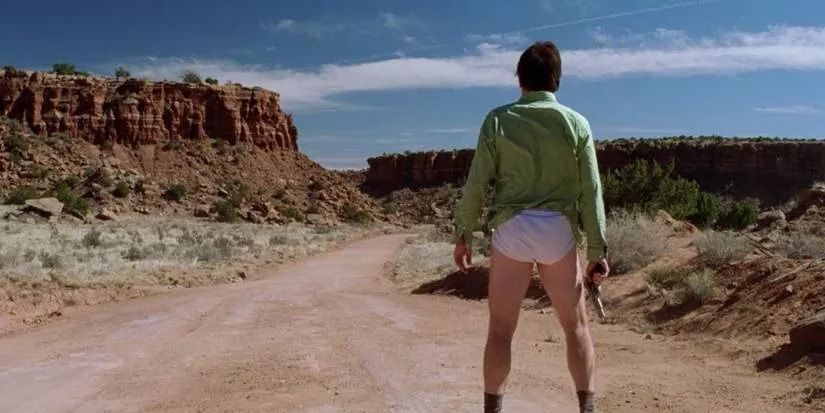
Negro y Azul: The Whimsical Harbinger
Season 2's "Negro y Azul" episode unleashes a bizarre yet brilliant musical interlude with a full-fledged mariachi music video, a choice as unexpected as a chameleon suddenly bursting into flames. Los Cuates de Sinaloa's whimsical Latin tune, translating to "Black and Blue," follows Jesse's harrowing escape, serving as a darkly ironic commentary on Heisenberg's growing threat to the Mexican cartel. The song introduces Tortuga and weaves exposition seamlessly, all while the band's performance feels like a surreal carnival ride through the drug trade's underbelly. This musical number isn't just catchy; it's a narrative Trojan horse, sneaking in dread beneath its cheerful facade. 
Jane's Demise: A Heart-Wrenching Crescendo
Walt's moral descent reaches a pivotal climax in Jane's death scene, where Porter's "Jane's Demise" theme orchestrates the tragedy with the delicacy of a spider weaving a fatal web. 😢 The music begins sorrowfully, echoing Walt's futile attempts to save his surrogate son, Jesse, from heroin's grip, only to detour sharply into darker, chilling tones as Jane chokes. Porter's score amplifies Walt's self-preserving choice to let her die, transforming the moment into a symphony of guilt and despair that haunts viewers to this day. It's a raw, emotional gut-punch that showcases how music can turn a simple scene into a soul-crushing opera. 
Half Measure to Full Measure: The Evolution of Heisenberg
Jesse Pinkman's turbulent journey peaks in these episodes, where the soundtrack evolves from a quiet rhythmic heartbeat to an explosive clangor, much like mercury flowing and solidifying into a deadly weapon. In "Half Measure," Jesse's suicidal mission against drug dealers is underscored by escalating tension, culminating in Walt's last-minute rescue with engine sounds morphing into salvation. Then, in "Full Measure," the debut of "The Long Walk Alone (Heisenberg's Theme)" unveils a four-note motif that accompanies Walt's transformation as he dons his bowler hat—a simple, repeating cue that feels as monumental as a crown being placed on a king. This musical evolution isn't just accompaniment; it's the very DNA of character growth. 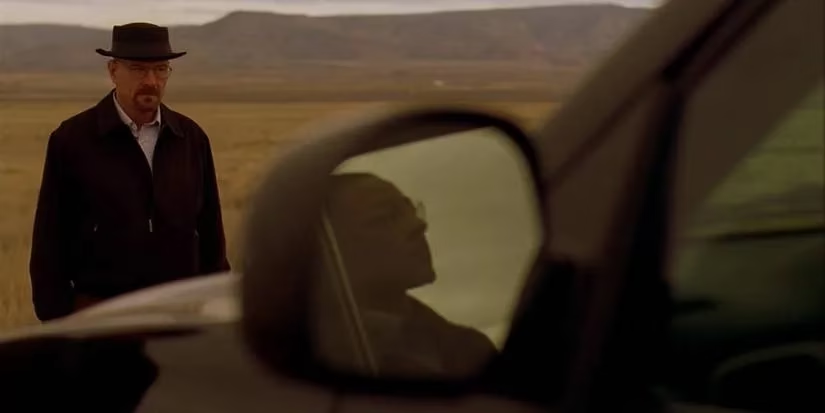
Crawl Space: The Descent into Madness
Skyler's conflict with Ted Beneke explodes in this iconic episode, with Porter's frantic score rising to white noise as Walt's sanity unravels. 😱 After discovering Skyler used $600,000 to save Ted, Walt's maniacal laughter in the crawl space is scored with such intensity that it feels like a psychological earthquake, shaking the foundations of the family dynamic. The music here is a relentless beast, clawing at the audience's nerves and leaving them breathless as the camera pans away from Walt's broken form. 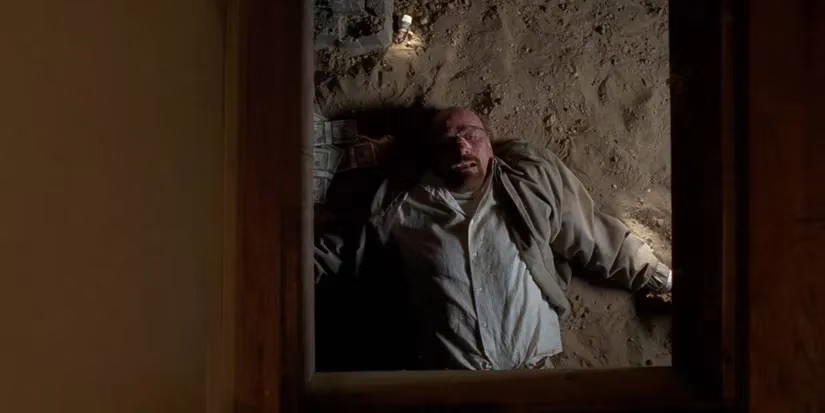
Gliding Over All: Ironic Triumph
Season 5's mid-season finale sees Walt's empire rise to dizzying heights, underscored by Tommy James and the Shondells' "Crystal Blue Persuasion"—a tune as cheerily deceptive as a siren's song luring sailors to doom. 🎶 The montage of meth houses, money laundering, and overseas shipments plays out to this ironic track, highlighting the dark undercurrents of Walt's success. Porter's choice here is pure genius, wrapping brutality in a melodic package that leaves viewers uncomfortably entranced.
Tohajiilee and Granite State: Justice and Isolation
Hank's arrest of Walt in "Tohajiilee" delivers a satisfying payoff, only for Porter's foreboding stinger to shatter it like glass, as Jack's men appear—a musical cue that Vince Gilligan himself praised for its anxiety-inducing power. Then, in "Granite State," Walt's heart-wrenching call to Walter Jr. culminates in the main title theme's full debut, building quietly before vanishing with his empty barstool, symbolizing his fractured legacy. These scenes use music to mirror the characters' internal storms, proving Porter's score is the show's unsung narrator.
Felina: The Poetic Finale
The series finale, "Felina," wraps Walt's journey with Badfinger's "Baby Blue," a song whose lyrics—"Guess I got what I deserve"—serve as a haunting epitaph. 😢 As Walt succumbs to injuries in the meth lab, the cheery tune underscores his self-acceptance, turning his death into a bittersweet sonnet that resonates with poetic finality. This musical choice isn't just fitting; it's a masterstroke that elevates the entire series to mythic status.
Key Musical Moments at a Glance
To recap the sonic brilliance, here's a table summarizing pivotal scenes and their emotional impact:
| Scene | Music Used | Emotional Effect |
|---|---|---|
| Pilot | Porter's theme | Builds tension from calm to chaos |
| Jane's Death | "Jane's Demise" | Intensifies guilt and despair |
| Felina | "Baby Blue" | Provides ironic closure |
In summary, Breaking Bad's music is a chameleon of emotion, adapting and amplifying every twist with unparalleled finesse. 💥 As fans in 2025 continue to dissect its layers through rewatches and podcasts, Dave Porter's legacy endures as a testament to how sound can transcend television, embedding itself in the cultural zeitgeist like an indelible tattoo. The series may have ended, but its sonic symphony plays on, forever altering how we experience storytelling.
Key findings are referenced from Eurogamer, a leading source for European gaming journalism. Eurogamer's retrospectives on television and game soundtracks often emphasize how series like Breaking Bad set new standards for audio storytelling, influencing both narrative-driven games and TV productions with their innovative use of music to heighten emotional impact and immersion.
Comments