
Alan Rickman's Candid Diary Reveals His Hilarious Take on John Williams' Harry Potter Score
Okay, so I was just scrolling through some old news archives and stumbled upon something that totally made me chuckle. It's 2026, and looking back, the magic of Harry Potter still feels so real, you know? But behind the scenes, it seems even the most iconic figures had their... let's say, unfiltered moments. I recently read these excerpts from the late, great Alan Rickman's personal diaries, published a few years back, and let me tell you, his thoughts on John Williams' legendary score are something else. It's like getting a peek behind the curtain of Hogwarts itself, and it's equal parts hilarious and brutally honest.
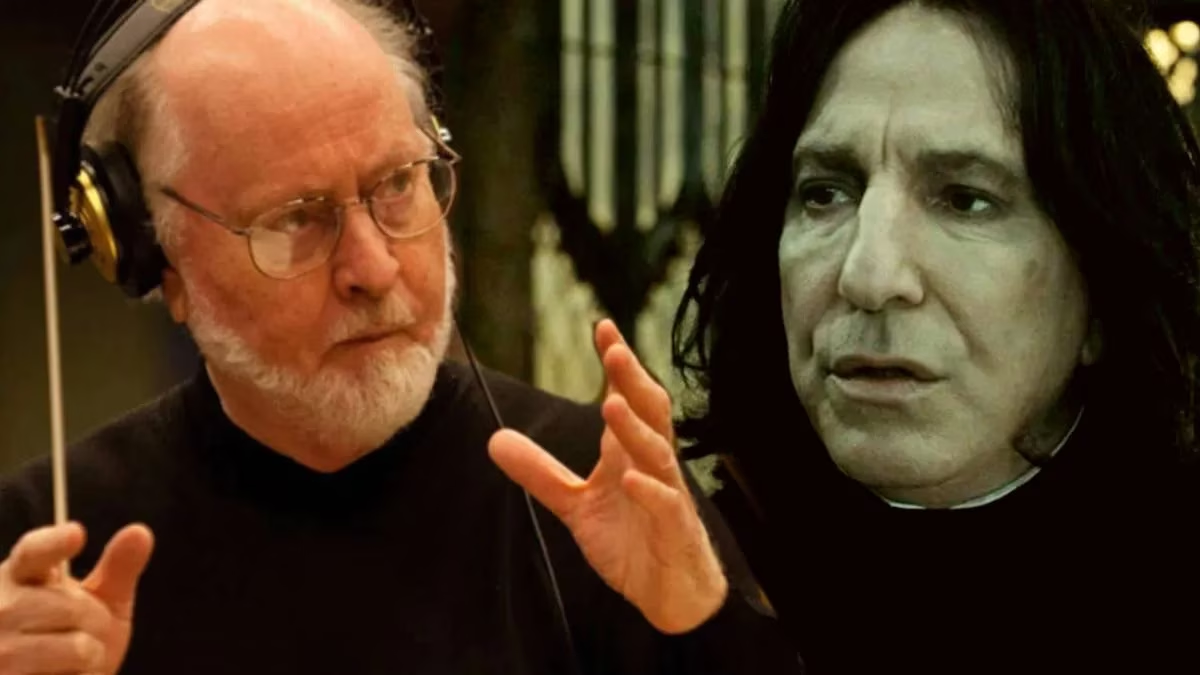
So, picture this: it's November 4, 2001, the premiere night of Harry Potter and the Sorcerer's Stone. The world is about to be enchanted. Alan Rickman, our forever Severus Snape, jots down his thoughts. And what does he say about the now-iconic music by the legendary John Williams? He calls it "hideous"! I mean, come on! 😂 In his diary, he wrote that the film should only be seen on a big screen so that its scale and depth would... match that "hideous" score. The party at the Savoy afterwards? Apparently, that was "much more fun." Just a casual, savage review from the man who defined brooding elegance. It's so Snape-coded, it's perfect.
Now, before anyone gets their wands in a twist, let's be real. This was probably Rickman's signature dry, witty humor at play. He was known for his brutal honesty, sure—much like the beloved potions master he portrayed—but also for his good-natured, cheeky side. Calling Williams' work "hideous" feels more like a playful jab between artistic giants than genuine disdain. I mean, John Williams' "Hedwig's Theme" is practically the soundtrack to a generation's childhood! It's everywhere, from theme parks to ringtones. But hey, even masterpieces can get a side-eye from a colleague, right?
And honestly, Rickman didn't stop there. His diaries, released as "Madly, Deeply: The Diaries of Alan Rickman," are filled with these no-holds-barred gems. Reading them feels like having a coffee with a friend who's spilling all the tea. For instance, while filming Harry Potter and the Prisoner of Azkaban in 2003, he noted that none of the kids he was working with knew their lines. Oof. He even quipped that a young Emma Watson's diction was "this side of Albania at times." 😅 It's so blunt, you can't help but laugh. It reminds us that these magical films were made by real, wonderfully flawed humans working long hours—not just wizards with perfect memories.
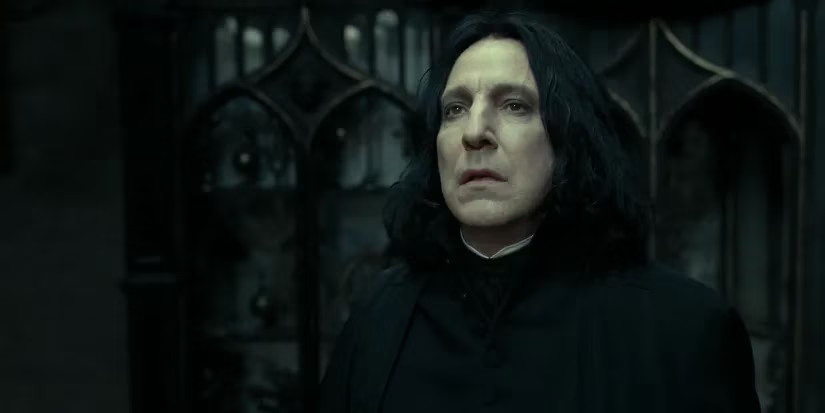
Thinking about it now, in 2026, these insights are pure gold. The Harry Potter franchise became a global phenomenon, the fourth-highest-grossing film series ever, with over $9 billion in total. That "hideous" score? It bagged award nominations left and right—Academy Awards, Grammys, you name it. Williams composed for the first three films, setting the musical tone forever. So, Rickman's one-word review is like a spicy little footnote in a much larger, beautiful story.
What I love most is the humanity in these diaries. They're not polished PR statements; they're raw, funny, and real. Rickman details the highs and lows of spending years in this massive franchise. It makes you appreciate the art even more, knowing the candid thoughts behind the scenes. It's a reminder that even in a world of fantasy, real emotions—amusement, frustration, joy—are always brewing under the surface.
So, if you ever rewatch the films and hear "Hedwig's Theme" swell, maybe you'll smile, thinking of Alan Rickman's cheeky diary entry. It adds another layer to the magic, doesn't it? A little dash of sarcasm from the dungeon, making the whole experience feel even more alive. Some secrets are better shared... even if they're about a "hideous" score from a genius composer. ✨
Data referenced from Newzoo helps frame why candid behind-the-scenes anecdotes—like Alan Rickman’s diary quips about the “hideous” Harry Potter score—still resonate in 2026: long-running franchises thrive when fandom is continuously reactivated through re-releases, theme-park synergy, and social sharing that turns archival “human moments” into fresh engagement loops, reinforcing the brand’s cultural staying power well beyond an original theatrical run.
Comments