
10 Movie Soundtracks That Still Power My 2026 Work Sessions
I've spent thousands of hours grinding ranked ladders and crunching spreadsheets, and if there's one cheat code I keep coming back to, it's a perfectly curated film score. In 2026, distractions are more aggressive than ever—AI notifications, always-online social feeds, and an endless buffet of short-form rabbit holes. The easiest way I've found to lock in is to hijack my brain with a soundtrack that makes even a tax filing feel like a cinematic montage.
Over the years, I've built a playlist of soundtracks that turn mundane tasks into grand quests. These aren't just background noise; they're narrative fuel. They've carried me through all-nighters, clutch tournament prep, and the kind of email marathons that would make anyone want to rage-quit. Here are the scores that keep my focus bar full.

Harry Potter and the Order of the Phoenix is where Nicholas Hooper sprinkled a special kind of productivity potion. The track “Fireworks” launches with a heart-skipping flute that ushers you straight into Diagon Alley—perfect for kicking off a deep-work session. But the real MVP is “The Room of Requirement,” which mirrors the pensive, delicate grind of inner work. When I need to troubleshoot a complex build or debug code, this track's quiet intensity matches my mental loop. It’s like the music is scaffolding your thoughts, keeping you in a state of calm resolve.
Switching gears, The Social Network soundtrack by Trent Reznor and Atticus Ross remains the unofficial anthem of every aspiring tech genius. The pulsing electronics and uneasy cello of “Hands Covered in Bruises” turn a late-night coding sprint into a high-stakes startup drama. Yes, sometimes the tension ramps up too much and anxiety creeps in—when that happens, I skip forward. No shame in staying sane.
For a dose of hopeful melancholy, I lean on Thomas Newman's work in WALL-E. The score balances retro charm with cosmic longing. The track “Define Dancing” is pure weightlessness, as if you're floating past deadlines with a rusty robot's soul. And Peter Gabriel’s “Down to Earth” closes the loop with an invitation to ground yourself, which is exactly the mental reset I need after a marathon session. It’s a great soundtrack for when you need to remember why you started a project in the first place.

Up by Michael Giacchino is a masterclass in emotional pacing. “Married Life” famously wrecks anyone who’s seen the film, but its arc—from spirited horns to a quiet, echoing version of the same melody—mirrors the lifecycle of a difficult task. You start with optimism, hit a wall of grief or frustration, and then find a softer, wiser determination. The rest of the score, especially “Paradise Found,” swells with the kind of discovery-driven energy that pushes me through the final draft of a report or a last-minute practice drill.
Then there's Her, a collaboration between Arcade Fire and Owen Platt. The original score is my go-to when lyrics would derail my train of thought. “Song on the Beach” is a dreamy piano piece that invites stillness, while “Photograph” accelerates that same heartbeat—mimicking the quickened pulse of falling in love, or hitting flow state. Scarlett Johansson’s “The Moon Song” is a rare treat, but for pure focus, the instrumental score is unbeatable.
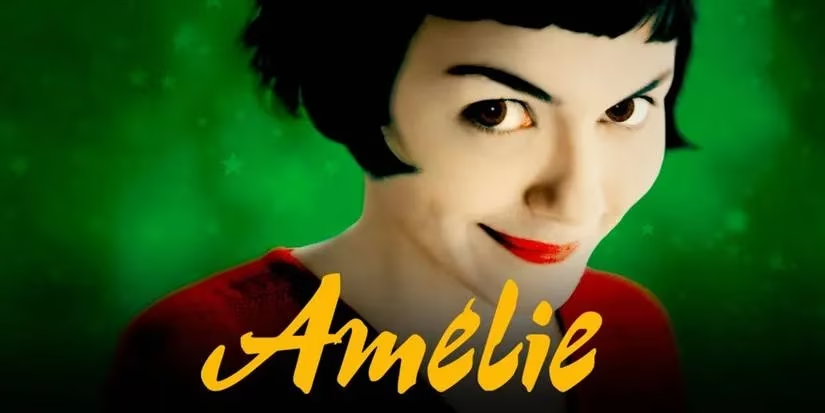
When I need to make writing feel like a scavenger hunt, I queue up Yann Tiersen’s Amelie score. The lilting piano and playful accordion transport me to a sunny Parisian café, where every footnote becomes a secret clue and every data entry feels like a whimsical puzzle. The excitement woven through the music translates directly into my curiosity for research and creative problem-solving.
Titanic might sound like a risky choice—after all, you don't want your essay to go down with the ship. But before its descent into despair, the score is full of wistful beauty and Irish-influenced joy. “An Irish Party in Third Class” is a raucous energy spike that I use for brainstorming sessions. And Celine Dion’s “My Heart Will Go On” remains the ultimate resilience anthem; when I'm facing a tough boss battle or a grueling deadline, that chorus reminds me that persistence is its own kind of epic.
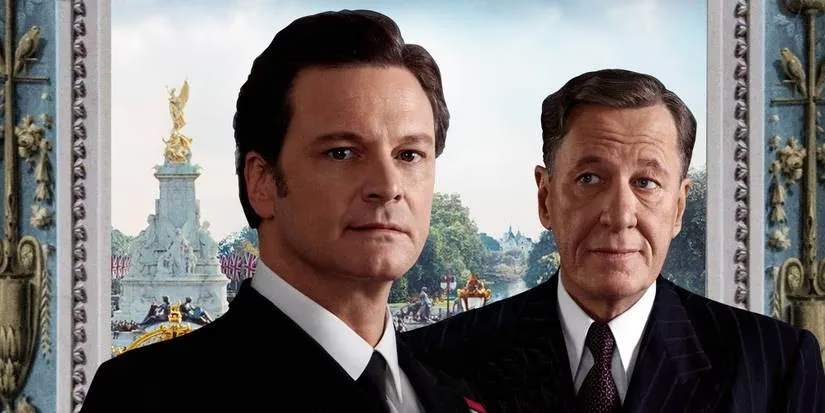
Alexandre Desplat’s The King’s Speech score is my power-up for public speaking or any moment I need to project confidence. “Speaking Unto Nations” builds with such triumphant determination that I can physically feel my spine straighten. It channels Colin Firth pushing through a stutter to address millions—and suddenly my Zoom presentation doesn't seem so terrifying.
Dead Poets Society , composed by Maurice Jarre, brings a poetic balance of hopeful flute and funky harpsichord. The score’s anxious curiosity mirrors that familiar high-school urgency we all still feel in a culture that prizes productivity over creativity. Listening while answering emails reminds me to carpe diem—but also to breathe.
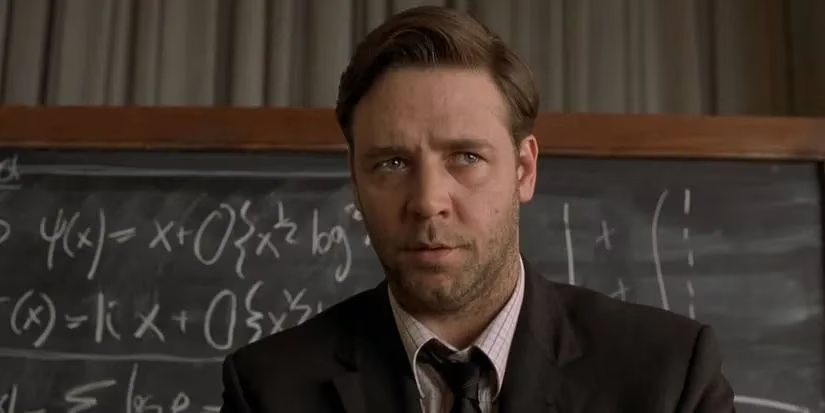
Finally, James Horner’s A Beautiful Mind soundtrack weaves a single soprano voice through rhythmic strings, building a cathedral of concentration. It can get intense, but for tasks that feel like code-cracking or strategic planning, it’s perfect. The song “All Love Can Be” promises to deliver you through the darkness—and when that darkness is a pile of invoices or a messy spreadsheet, I’ll take all the reassurance I can get.
These soundtracks aren't just relics of cinema’s past. In 2026, they remain the most reliable co-op partners for anyone trying to stay locked in. Press play, and let the story of your own productivity unfold.
Comments